
Subscribe
to receive news by email
Poll
Will the Trump Administration Shift U.S. Policy in Favor of Palestine?
- No (86%)
- Yes (14%)
 Loading ...
Copyright © 2026 Arab America
Go topTunisian Wedding Traditions
By: Nadia Boughanmi / Arab America Contributing Writer
Tunisian weddings are a unique celebration to the country. The wedding process is a week long and puts a heavy emphasis on the bride, and her enjoyment of her “wedding era.” From gifts to mahram (dowry) to spa days to multiple dress changes, Tunisian weddings are a time to show out.
Day One: Saboun
The first day consists of getting the bride’s belongings ready. Ironing her clothes, packing her accessories and preparing her to make the move to her new beginning. They also typically take care of decorating the bride’s family residence so that she can be handed over to her groom at her childhood home. They then put together the decorations for the house the bride will be moving to with her groom after the wedding is over.
Day Two: Hazzén el Farch
The second day is all about unpacking and storage. Now that the house decoration is complete the bride’s family will unpack her belongings and display the new gifts her groom’s family had sent. It is meant to signify that she is moving onto not only a new home, but a new chapter of her life.
Day 3: Hammam
Both the bride and the groom attend a separate hammam. The bride brings her closest female friends, family and members of the groom’s family. The groom does the same but with male members. The groom gets scrubbed from head to toe. Moroccan black soap, rose water and loofahs are used to ensure any dead skin or dirt is removed from the groom’s body.
The bride has a much more lavish experience. This is compared to an elevated spa day. It begins with the bride’s female family and friends giving her a music procession from her childhood home to the hammam. The bride is dressed in a safsari and dances alongside her loved ones to the darbouka beats. She is also getting scrubbed with the same items as the groom. Then she gets sugar-waxed for smoother skin. Clay face masks and rosewater are used for glowy, clear skin that is wedding day prepped.
Day 4: Henna
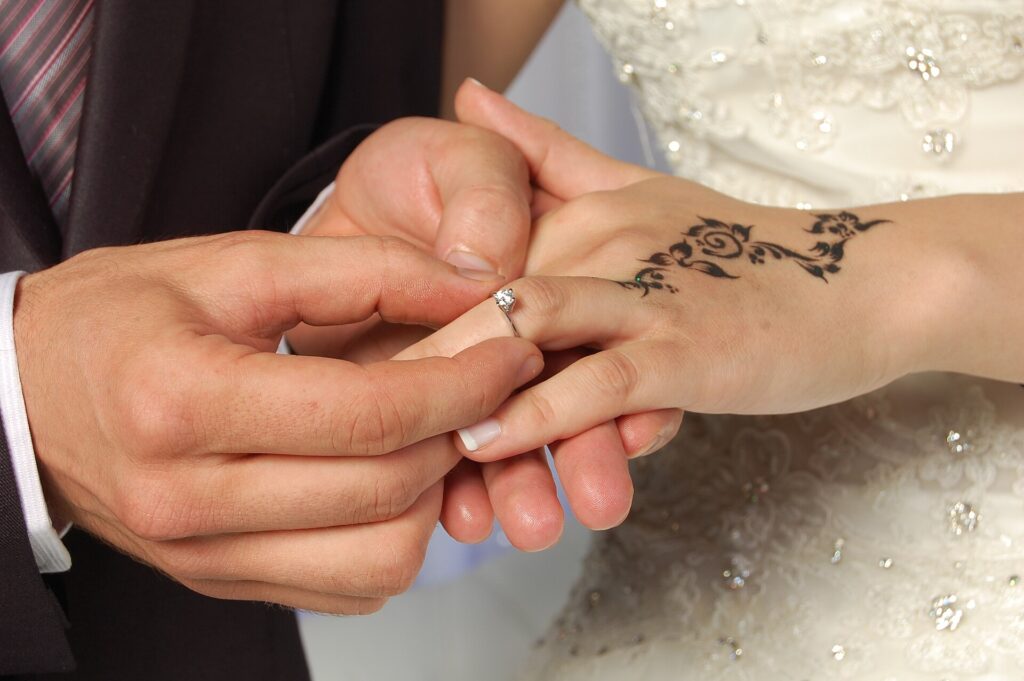
The Henna party is more modernly a mix-gendered event. With all members of both families and all friends being at the celebration. There is music played, with citronnade and Tunisian sweets typically served. There is a small “stage” where the bride and groom are seated and it is decorated extravagantly. The man gets just his pinky finger dipped in henna. While the bride gets designs on her palms and feet while wearing gold jewelry from her necklace to her ankles. Dress choices for this event depend on what region the bride is from.
Day 5: Harkous
Harkous is very unique to Tunisian brides. It is a water-proof black ink made from bark. Floral designs and intricate patterns are drawn on the bride’s hand and occasionally up her arm.
Day 6: The Bride’s and Groom’s Parties
The bride has a party separate from the groom and from men. Couscous and tagine are typically served and prepared by the families at each party. It is called “Outia.” This is where the bride is celebrated and uplifted in one “final” party as an un-married woman. There can typically be 2 dress changes and the dresses depend on the region of the bride’s home. There is dancing and of course a lot of mezwed played, which is traditional folk music.
The groom enjoys a similar celebration separated from the women, where he is celebrated on his last night of being an un-married man. They dance for hours on end and enjoy many laughs before the final ceremony the following day.
Day 7: The Dokhla
The final day of the wedding week is where the huge celebration occurs. Families, friends and the couple’s communities all join together for one last celebration of the pair. The couple makes a grand entrance with music, darbouka and honking cars following behind to the venue.
The bride often wears a Keswa, while the groom wears a Jebba. The couple is then seated on a couch and congratulated by their loved ones. The dancing then begins and the bride gets showered with money. Necklaces and different “jewelry” pieces get crafted from money and draped onto the bride. Gifts are also presented at this time.
Lastly comes the banquet of food. Couscous, brik, tagine and other delicacies are served. After that, tea with pine nuts or almonds and sweets are served to the guests. The night continues with laughter and endless dancing between the families. The night closes with the couple getting into a car together and driving off to their new home, followed by the bride and groom’s close family.
Want more articles like this? Sign up for our e-newsletter!
Check our blog here!