
Subscribe
to receive news by email
Poll
Will the Trump Administration Shift U.S. Policy in Favor of Palestine?
- No (86%)
- Yes (14%)
 Loading ...
Copyright © 2026 Arab America
Go topTunisia's Unwavering Support for Palestine
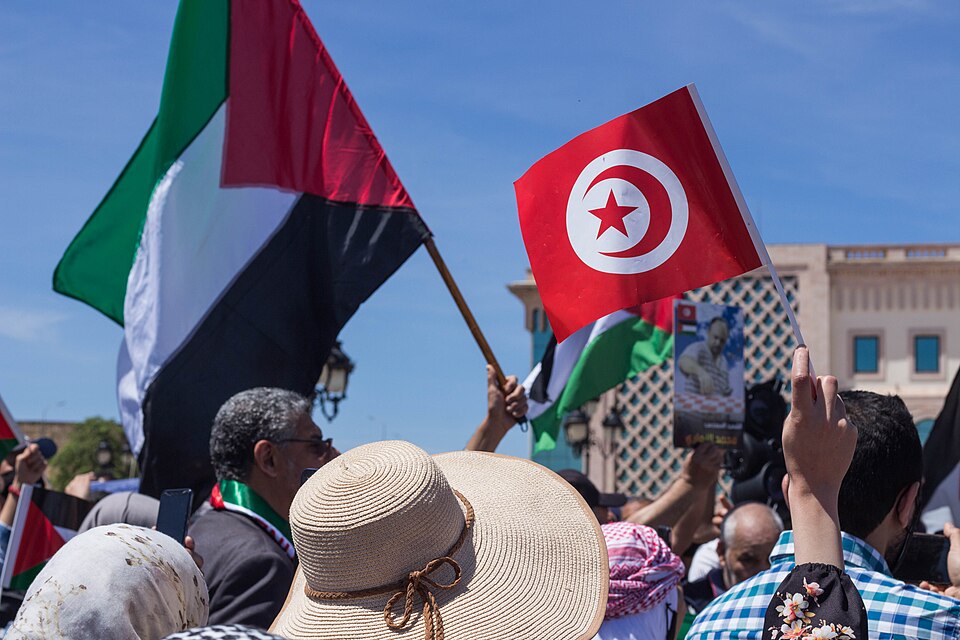
Photo Credits: Wikicommons
By: Nadia Boughanmi / Arab America Contributing Writer
Tunisia and Palestine, two groups of people with one heart. Since the start of the occupation in 1948, Tunisia has stood strong in their support for the Palestinian people. Tunisians have provided refuge to Palestinians, recognized them as an official country and even hosted the Palestinian Liberation Organization (PLO) in the 1980s. Both the Tunisian citizens and the government have remained firm in their support and reject the Israeli settlements in the region.
From the streets of Tunisia to the homes of Tunisians, Palestinian flags are raised high in solidarity. Tunisians have not strayed shy of gathering for protests to spread awareness and participating in global boycotts of brands. Both historical and modern day support shows the unwavering love Tunisia has for Palestine. To Tunisian’s, standing for Palestine is not just “foreign policy,” but it is an element of their loving culture. It is in the nature of Tunisians to stand for what they believe in politically and be active members of change.
Unwavering Support Through History
In the 1920s, Tunisians and Palestinians resonated with each other due to colonial powers in the nations. The French had restricted Tunisians through their colonial rule of the country until 1956. The British had mandated Palestine during the same time frame. In 1929, Palestinians had protested against the mandates that restricted them from access to the Western Wall, which was sacred for Muslims and Jews in the nation. Tunisians had resonated with this greatly because they too were protesting against colonial mandates. The solidarity between the two nations had lasted from colonial rule until modern day.
From the very first intifada, Tunisia has taken on strong support and allyship with Palestine. In 1983, the Tunisian government hosted the PLO, due to them being exiled from Lebanon, where they were originally hosted. Tunisia’s hosting of the PLO lasted up until 1992. The PLO had set up their headquarters in Hammam Chott, and surrounding neighborhoods became Palestinian dominated due to those seeking refuge from Israeli oppressions.
Tunisia’s support had landed them in the crossfires of Israel with Operation Wooden Leg being put into force. The Israeli defense forces had executed an airstrike in Hammam Chott, where the PLO headquarters were located. Not only were the headquarters destroyed, there were also a significant amount of casualties amongst the Tunisian people. The strike killed up to 71 people and injured anywhere from 65 to over 100 civilians. This operation really cemented the bond between Tunisia and Palestine because they had a common attacker.
Tunisia has historically stood on the idea of not normalizing diplomatic relations with Israel due to their oppression of the Palestinians. Throughout Tunisian history, the country has never once had ties or embassies of any sort with Israel.
Modern Day Support
Palestinian support has not declined in modern times, rather it has increased greatly. In 2016, an engineer for the military wing of Hamas was executed in Sfax. This, again, directly shows Tunisia’s willingness to be caught in the crossfires to remain strong in their resistance on the side of Palestinians. The Tunisian military even aided the Palestinian and Lebanese resistance armies in Lebanon when fighting against Israeli forces.
After October 7, 2023, Tunisian president, Kais Saied, had spoken to the Tunisian citizens, reconfirming his strong support for Palestinians during this time. Protests had broken out all over the country, in hopes that other countries would mobilize the same way in solidarity. Many protests urged the United Nations to hold Israel accountable for the mass amounts of deaths and injuries caused. Tunisians globally also held the same sentiment in support of Palestine, including themselves in protests within the countries they currently live.
Boycotting has been a center stage in modern day solidarity. Tunisians have boycotted any brands with alleged ties to Israel. Carrefour, Coca-Cola, Zara and any other brand that has links to Israel, have all been popular boycotts within the country. Around the souks of the Medina in Tunis, signs that encourage boycotting and discourage ethnic cleansing can be found on various walls. Palestinian flags are flown all throughout the country to keep a reminder of the Palestinian struggle. Tunisians have never wavered in their unconditional support in solidarity with Palestinian resistance.
Want more articles like this? Sign up for our e-newsletter!
Check out our blog here!