Subscribe
to receive news by email

Poll
Will the Trump Administration Shift U.S. Policy in Favor of Palestine?
- No (86%)
- Yes (14%)
 Loading ...
Copyright © 2026 Arab America
Go topMorocco Makes History Again—Can Egypt and Algeria Follow?
By Aziz Hellal / Arab America Contributing Writer
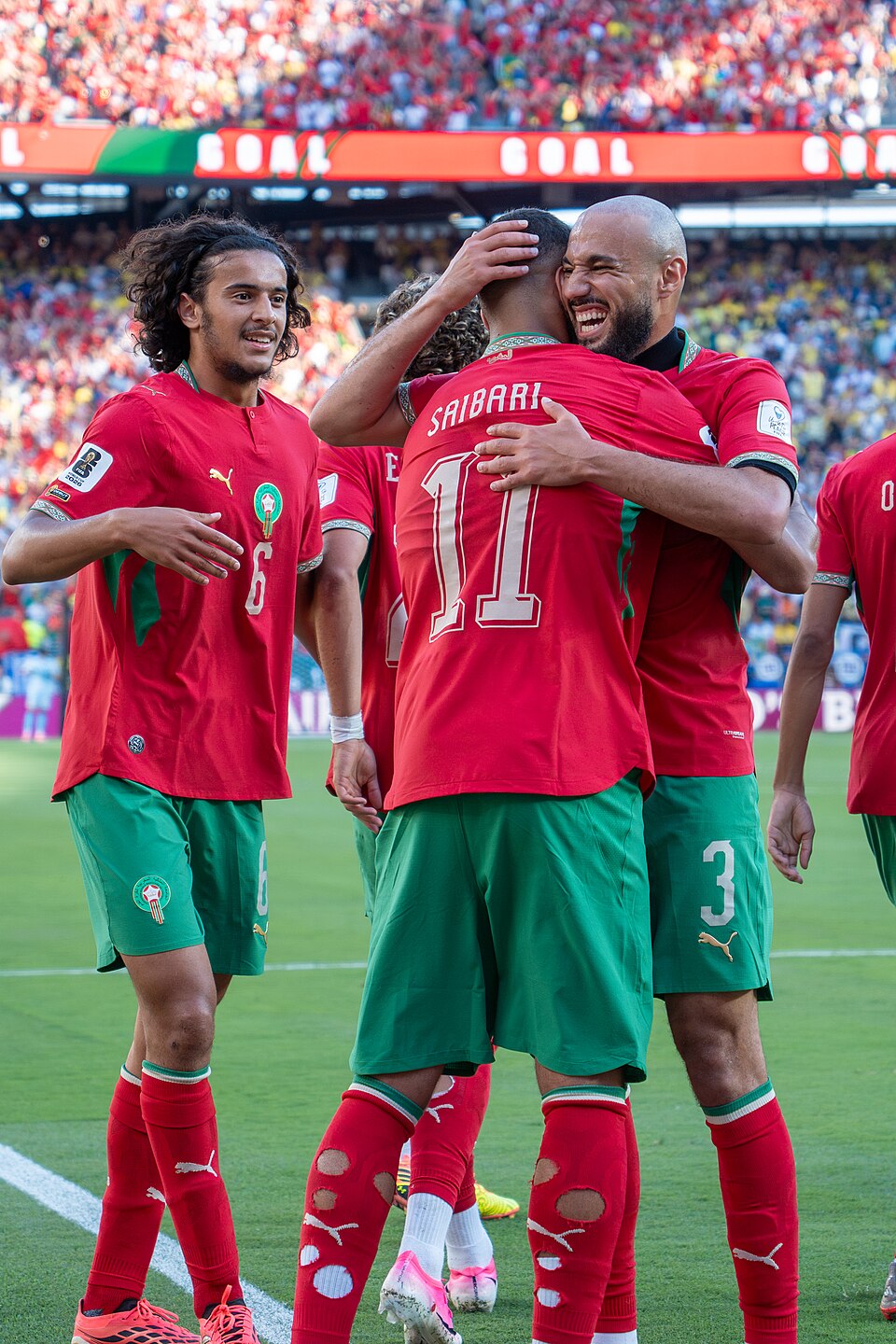
Morocco once again captured the attention of football fans around the world with a dramatic penalty shootout victory over the Netherlands, locking in its place in the Round of 16 at the 2026 FIFA World Cup. The result was more than another upset. It reinforced the Atlas Lions’ reputation as a true global power and kept Arab hopes alive in North America.
For the rest of the region, however, the story is still unfolding. While Morocco has already booked its ticket to the next round, Egypt and Algeria are bracing for their own Round of 32 matches with hopes of joining them in the last sixteen.
Meanwhile, the early exits of Saudi Arabia, Tunisia, Qatar, Iraq, and Jordan served as a harsh reminder of how difficult it remains to compete consistently on this stage.
As the knockout rounds continue, Morocco has set the standard. The big question now is whether Egypt and Algeria can build on that momentum and turn North Africa into the true driving force of the Arab campaign at the 2026 World Cup.
Morocco Leads the Arab Story Again
Morocco’s victory over the Netherlands wasn’t simply the result of a dramatic penalty shootout—it was the reward for a performance that reflected confidence, discipline, and resilience. For much of the match, the Atlas Lions controlled possession, created the clearer scoring opportunities, and repeatedly tested Dutch goalkeeper Bart Verbruggen, who produced several outstanding saves to keep his team in the game.
Despite dominating large stretches of the contest, Morocco found itself trailing after Cody Gakpo gave the Netherlands the lead midway through the second half. Rather than losing momentum, the Atlas Lions continued to attack and were rewarded in second-half stoppage time when Issa Diop headed home a dramatic equalizer in the 91st minute, forcing extra time.
Even in extra time, Morocco looked like the more dangerous side and came within inches of winning before the match reached penalties. Goalkeeper Yassine Bounou then delivered another memorable World Cup moment, producing a massive save in the shootout before Ismael Saibari converted the winning penalty to send Morocco into the Round of 16. The victory once again highlighted the team’s composure under pressure and reinforced its status as one of the tournament’s most resilient sides.
Egypt’s Chance to Make History
Egypt now stands before one of the biggest matches in its World Cup history. After advancing beyond the group stage for the first time, the Pharaohs will face Australia with a chance to join Morocco in the later knockout rounds and extend the Arab’s strong presence in the tournament.
The achievement already carries historic weight. Egypt has long been one of Africa’s most successful football nations at the continental level, but the global stage has often been a much more difficult hurdle. This time, the team has a genuine opportunity to turn qualification from the group stage into something even bigger.
Defeating Australia will demand strict defensive discipline, patience, and clinical finishing. The match is the ultimate test of whether the Pharaohs can handle the pressure of a knockout game where a single mistake can end a campaign.
A victory would not only mark an unprecedented step forward for Egyptian football but also cement the reality that North Africa is driving the Arab World Cup story in 2026.
Algeria Looks to Continue Its Revival
Algeria enters its Round of 32 match against Switzerland with a different kind of motivation. For the Desert Warriors, reaching the knockout stage isn’t just about advancing in the tournament; it’s about proving that Algerian football is finally moving forward after years of mixed results and missed opportunities on the international stage.
The challenge will not be easy. Switzerland is known for being organized, disciplined, and difficult to break down, especially in knockout matches. Algeria will need to stay compact defensively while also finding moments of creativity in attack. In a game where small details decide everything, patience and concentration will matter just as much as talent.
If Algeria can overcome Switzerland, it would give North Africa another powerful moment in this World Cup and strengthen the wider Arab presence in the knockout rounds. Alongside Morocco’s dramatic victory and Egypt’s historic campaign, an Algerian win would make the 2026 tournament feel even more like a North African football story.
The Heartbreak Behind the Arab Campaign
While Morocco, Egypt, and Algeria gave us plenty to celebrate, the rest of the Arab campaign was a tough pill to swallow. Seeing Saudi Arabia, Qatar, Iraq, Jordan, and Tunisia all pack their bags before the knockout rounds showed just how brutal the World Cup can be when you lack consistency.
Tunisia’s exit was the biggest disappointment of the group stage. The Eagles of Carthage entered the World Cup with a rock-solid defensive reputation, having coasted through qualification without conceding a single goal. But the second they stepped onto the pitch in North America, that defensive identity completely evaporated.
Tunisia lost all three of their group matches by wide margins—culminating in a brutal 12 goals conceded across defeats to Sweden, Japan, and the Netherlands.
Saudi Arabia and Qatar will look back on their campaigns with the deepest regret. Both squads entered their final group matches with a genuine path to the knockouts, only to fall short completely. The Saudis’ exit stung the most—failing to secure a win against Cape Verde, a team playing in its first-ever World Cup. For Qatar, all of their recent tournament experience and massive financial investment still weren’t enough to survive the group stage.
Jordan and Iraq are entirely different stories. Jordan was celebrating its first-ever World Cup appearance, while Iraq fought through a grueling, dramatic playoff route just to book their tickets to North America. Their early exits aren’t a programmatic collapse; they are a harsh, necessary lesson in the brutal depth required to compete consistently on the global stage.
Looking Ahead: A New Era for the Region
Ultimately, the 2026 World Cup has shown that the balance of power in Arab football is shifting. While Saudi Arabia and Qatar leave the tournament with tough questions to answer, North Africa has firmly become the center of the story.
Morocco has already pushed through to the Round of 16, while Egypt and Algeria have the chance to join them and cement the region’s presence deep in the bracket.
The tournament has made clear the massive gap between simply qualifying and competing consistently against the world’s strongest teams. For those heading home, the lessons are harsh but vital for the future.
For Morocco, Egypt, and Algeria, however, the dream is very much alive. Their next matches will show whether North Africa’s rise is just a golden moment—or the beginning of something permanent.
Want more articles like this? Sign up for our e-newsletter!
Check out our blog here!