Subscribe
to receive news by email

Poll
Will the Trump Administration Shift U.S. Policy in Favor of Palestine?
- No (86%)
- Yes (14%)
 Loading ...
Copyright © 2026 Arab America
Go topWar Keeps Two Crumbling Regimes Alive — In Israel and Iran
By: Ghassan Rubeiz / Arab America Contributing Writer
In the weeks before October 7, 2023, Prime Minister Benjamin Netanyahu faced the largest street protests in Israeli history — hundreds of thousands demanding he abandon his judicial coup. In the weeks before the U.S.-Israeli strikes on Iran, Tehran was still absorbing the aftershock of the Woman-Life-Freedom uprising, the most serious challenge to clerical rule in a generation. Then war came — and both governments exhaled.
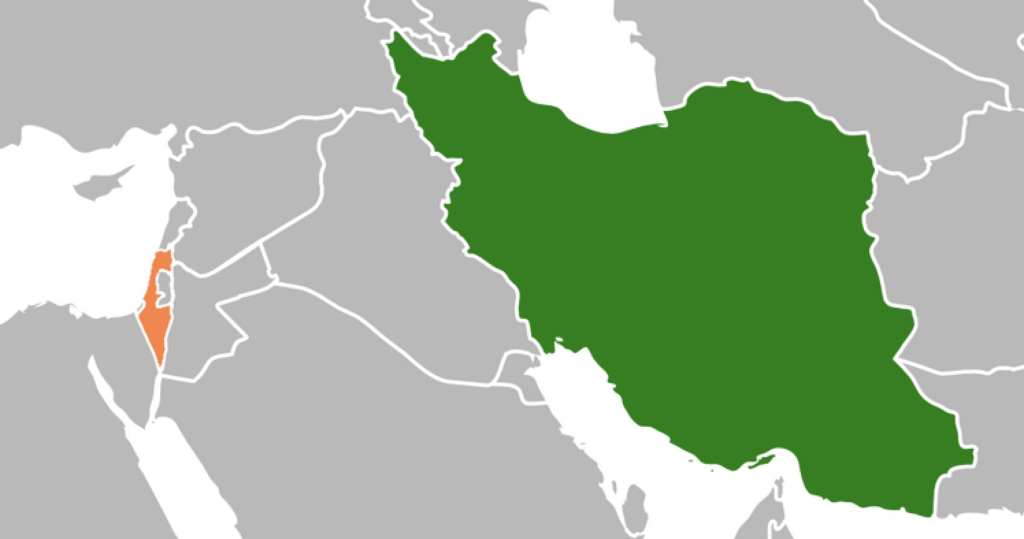
This is the central paradox of the Middle East today: two regimes that cannot survive peace. Each has made the other indispensable. Enmity is not a problem to be solved — it is a service being rendered.
The roots of this pathology lie in their respective defining historical ruptures — 1967 for Israel, 1979 for Iran — moments that locked both states into cycles of insecurity from which they have yet to escape.
Israel’s trajectory changed fundamentally after 1967. What began in 1948 as a national initiative seeking a homeland gradually transformed into a project of open-ended territorial expansion — a state without specified borders. The occupation of the West Bank, Gaza, East Jerusalem, and the (Syrian) Golan Heights created a political culture in which security and expansion became indistinguishable. By the 1982 invasion of Lebanon, Zionism had hardened into an ideology of regional dominance. The result is a state that has tied its identity to seemingly perpetual conflict, unable to conceive of security without military supremacy.
Iran’s turning point came in 1979, and deepened during the eight-year war with Iraq that followed. The revolution toppled a corrupt monarchy, but the Iran-Iraq War, in which Washington backed Baghdad, militarized the new republic and entrenched the Revolutionary Guard as its true center of power. What began as a popular uprising hardened into a clerical-military regime that viewed confrontation with the outside world as essential to its survival. The Islamic Republic’s political identity was forged not in the streets of Tehran but in the trenches of war.
In both Tehran and Tel Aviv, religious fanaticism and hyper-nationalism dominate governance. In both societies, reform movements have repeatedly emerged — only to be crushed or sidelined when war intervenes. Conflict resets the political clock, reviving regimes that were on the verge of collapse. And in both cases, it is ordinary citizens — including the Iranian women who risked their lives in the streets, the Israeli reservists who protested in uniform — who pay the price for wars their governments need but their people do not.
In the case of Israel, American military backing has been the crucial catalyst. Without Washington’s support — in weapons, diplomatic cover, intelligence, and strategic coordination — Israel could not have sustained simultaneous military campaigns against Gaza, Lebanon, Yemen, and Iran. The United States has effectively removed the natural brake on Israeli escalation, making a regional war possible that might otherwise have remained a series of contained confrontations. Washington is not a neutral mediator. It is party to the conflict. Moreover, Washington is now painfully discovering that its unconditional pro-Israel policy makes it impossible to gain the trust of a wide and ethnically diverse region.
The central irony is that both Iran and Israel have pursued regime change in the other through war, without recognizing that war has prolonged the life of both. Netanyahu’s government, deeply weakened before October 7, was politically revived by conflict. Iran’s clerical establishment, shaken by mass protests and economic collapse, was rescued by the rally-around-the-flag effect of open confrontation. If Tehran and Tel Aviv were to reach a durable truce, both governments would face domestic crises they are incapable of managing in peacetime.
For Israel, Gaza and the West Bank remain political nightmares for any right-wing coalition — a reckoning only temporarily buried after October 7. For Iran, a post-war environment would revive public anger over economic hardship, corruption, and repression. American and Israeli strikes on Iran froze that domestic unrest; Iranians, like Israelis, suspended their internal battles to prevent the collapse of the regime.
This dynamic renders the current round of negotiations structurally very limited. What emerges from U.S.-Iran talks, or from Israel-Lebanon negotiations, will likely be a ceasefire dressed as peace — a frozen conflict with no political horizon, as Gaza has already demonstrated.
The international community speaks endlessly of a two-state solution, a nuclear deal, a Lebanon framework. But none of these negotiations addresses the deeper problem: two governments whose political survival depends on the absence of peace. Until that is named honestly, diplomacy will continue to produce ceasefires that both sides can live with — and that change nothing.
Real stabilization requires something harder: internal political transformation in both societies — not through foreign intervention, but through domestic reckoning with hyper-nationalism and religious absolutism. The Middle East will only begin to heal when its peoples recognize that lasting peace must be regional, and that Arabs, Persians, Israelis, Kurds and Turks share enough common ground to build on — or enough common peril to compel survival. The question is whether that recognition comes through enlightenment or through consequences no government can manage.
Ghassan Rubeiz is the former Middle East Secretary of the World Council of Churches. Earlier, he taught psychology and social work in his country of birth, Lebanon, and later in the United States, where he currently lives. He has contributed to political commentary for the past twenty years and has delivered occasional public talks on peace, justice, and interfaith topics. You can reach him at rubeizg@gmail.com
The views and opinions expressed in this article are those of the author and do not necessarily reflect the position of Arab America. The reproduction of this article is permissible with proper credit to Arab America and the author.
Want more articles like this? Sign up for our e-newsletter!
Check our blog here!