
Subscribe
to receive news by email

Poll
Will the Trump Administration Shift U.S. Policy in Favor of Palestine?
- No (86%)
- Yes (14%)
 Loading ...
Copyright © 2026 Arab America
Go topArab Comic Books and Graphic Novels
By: Susie Hayes/Arab America Contributing Writer
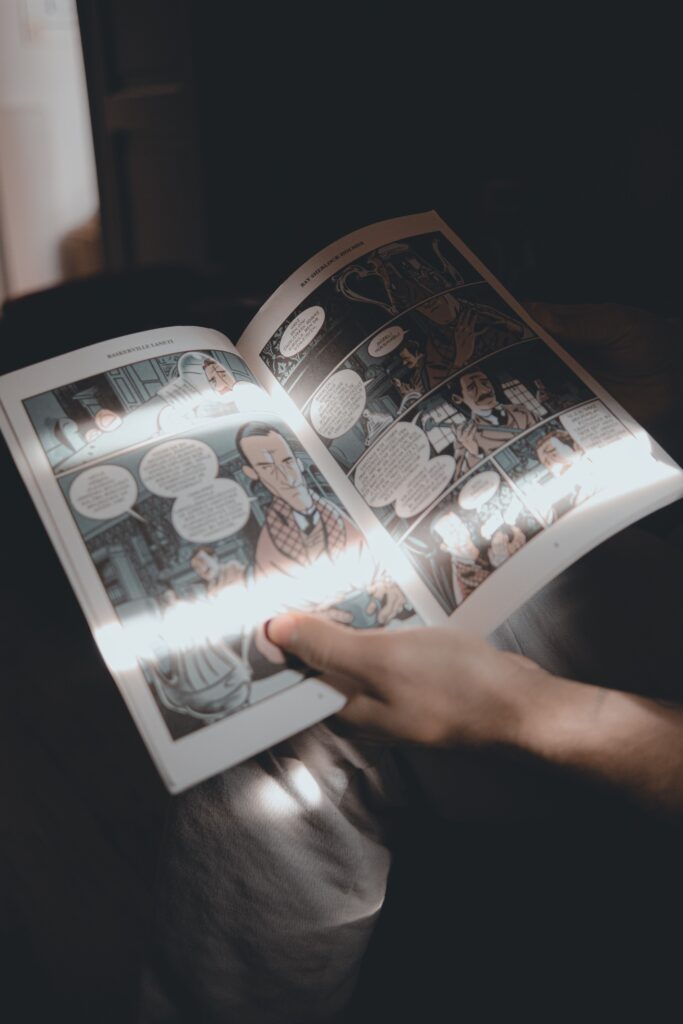
For many, comic books and graphic novels are used as a form of entertainment and pleasure. Most people will immediately associate the genre with superheroes, adventures, and fantasy. But for the Arab world, comic books have become more symbolic. They have the power to give artists another creative outlet and way to express ideas and opinions about politics, war, and identity. Through the drawings and dialogues that take place in comic books, Arab artists have created a new way to tell stories that other outlets cannot.
Arab Graphic Novels as a Political Tool
Graphic novels use a mix of storytelling, like traditional novels and articles, with artwork. They give readers the ability to read a story, while also experiencing the creators’ visual interpretations at the same time. One single panel of a graphic story can convey fear, hope, frustration, and other emotions without needing many, if any, words. Because of this, graphic novels can be a creative way to depict difficult political and social issues to a diverse audience.
One of the best examples is the graphic novel Metro: A Story of Cairo by the Egyptian artist Magdy El Shafee. The book was published in 2008; throughout the work, readers follow the protagonist Shehab, a computer programmer who struggles financially, as well as socially at a time of harsh corruption in Egypt. The story is fictional, but it accurately reflects real experiences and sentiments Egyptians faced before the uprisings of 2011.
The book was swiftly banned after being discovered by Egyptian authorities. El Shafee even faced legal troubles after being accused of creating a piece of literature containing offensive content. El Shafee’s supporters maintained that the book was banned due to its criticism of the government, not that it was potentially offensive to readers. After many legal battles, Metro appeared back on shelves in 2012.
Another example of influential Arab comic books is The Arab of the Future, or L’Arabe du Futur in its original language, by a French-Syrian author and cartoonist named Riad Sattouf. It differs from El Shafee’s work in that the work is a memoir and contains six volumes detailing Sattouf’s childhood and early life. The graphic novel contains humorous aspects and retellings of events in Sattouf’s life, while still accurately portraying a life under an authoritarian government.
Personal Stories Reflect Reality
L’Arabe du Futur is narrated by a child who explains the everyday events of his life. His innocent description of daily life under an authoritarian regime contrasts with the violent realities of recent Syrian history. Sattouf subtly criticizes the government through the somewhat immature frame of a comic book, rather than sending an outright political message. Readers are able to clearly see how propaganda and nationalism can shape familial relationships and education. Because the narrator is an innocent child, the audience notices that he has difficulty understanding and explaining life under authority.
The illustrative works of comic books serve to educate readers and explain more clearly the events that affect entire societies. While most media outlets focus on large, overarching government and military actions, a comic book can address events on a more granular and individual level, bringing attention to the actual circumstances that victims face. Graphic literary works have the power to subtly display and critique not just administrative issues, but the problems faced by everyday citizens in their households, relationships, and daily lives. The genre makes connecting with people easier and more enticing.
Why Graphic Novels Reach So Many
Graphic literary works can reach a variety of audiences. A graphic novel can engage readers of all ages and educational levels. For example, a person who lacks more advanced reading skills can still learn from and enjoy a graphic story. Reluctant readers may find comic-style works more accessible and may be more likely to engage with them than with the more intimidating texts of novels, newspapers, and blogs.
Graphic Novels and the Arab Spring
After the beginning of the Arab Spring, the documentation and exposure of events became more popular. Because of the proliferation of cell phones and the instantaneous nature of social media, the world experienced political milestones via screens. In addition, artists used comic books to depict protests, government changes, and the overall political events that led to the major transitions and widespread societal shifts, These graphic literary artists experimented with fiction, humor, and serious personal stories; by adding visual elements to the stories, they more clearly depicted their experiences, and the experiences of their people, to the outside world.
Want more articles like this? Sign up for our e-newsletter!
Check out our blog here!