Subscribe
to receive news by email

Poll
Will the Trump Administration Shift U.S. Policy in Favor of Palestine?
- No (86%)
- Yes (14%)
 Loading ...
Copyright © 2026 Arab America
Go topWhat Is This Shift in Arab Youth?
By Jahnvi Chopra / Arab America Contributing Writer
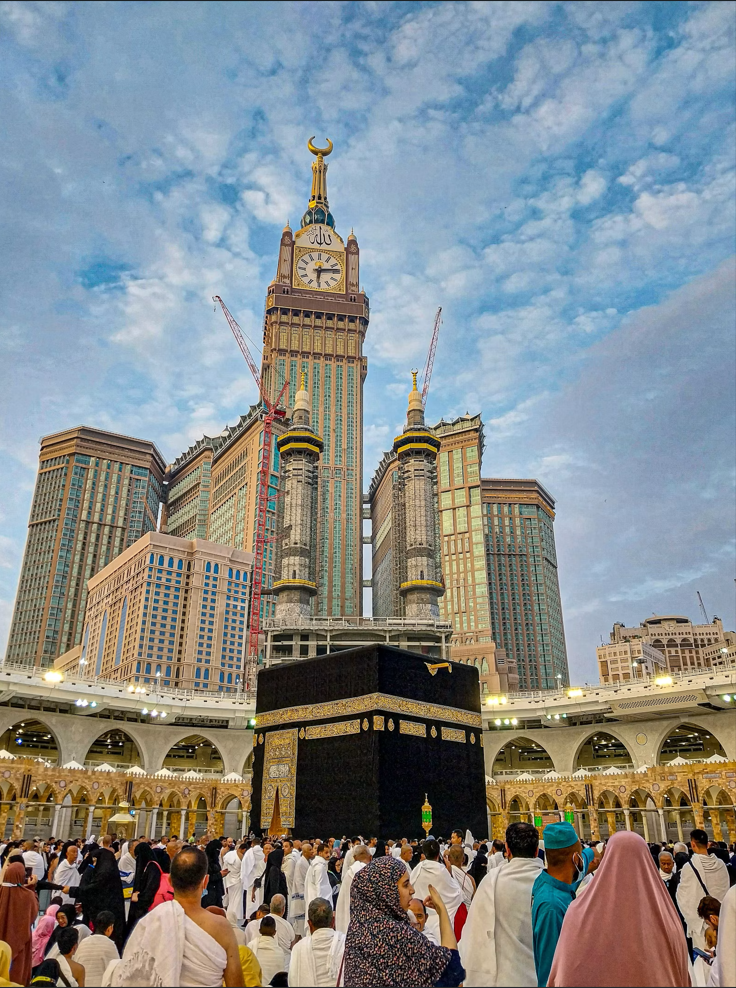
For most of the 2010s, the narrative around young people in the Middle East and North Africa was pretty consistent: they were drifting away from religion. Post-Arab Spring burnout, distrust in religious parties, and a generation raised on the internet were all pointing toward a quieter, more secular future. This was far from the truth.
The Arab Barometer, which has been polling the region for years, found something surprising in its most recent data1, religiosity among MENA youth, which had been declining for a while, actually reversed between 2018 and 2022. People are less likely to call themselves “not religious” now than they were a few years ago, and surprisingly, youth are leading that shift.
This change didn’t happen slowly, as researchers have concluded that COVID-19 was the turning point in this reverse trend.2 Religiosity had been fading through the mid-2010s, primarily among young men, and then once the pandemic hit, it returned at a staggering rate. This trend is not entirely incomprehensible, especially when one looks beneath the surface at underlying disparities and ingrained norms.
Conservatism is defined as a political philosophy that advocates traditional values. This ideology, coupled with religiosity, has been on the uptick recently and has been exacerbated by conflict, displacement, and uncertainty in general. Often when we think of tradition, we are reminded of a comforting past with things that are familiar to us. That is why progressivism, and similar ideals of venturing into unknown territory, can seem daunting to grasp onto.
Gender Complicates Things
The return of religious presence hasn’t been demonstrated in all groups equally. The decline in religiosity back in the 2010s was mainly a men-and-youth phenomenon, however, women’s religiosity barely moved the whole time. So this ‘return to religion’ narrative, common in discussions around Arab youth and conservatism, only really applies to young men catching up to where they started. Women’s relationship with faith never really changed.
That gender gap matters when one gets into more profound debates too, like what Islamic law should actually mean if and when fully adopted. Most personal status laws across the Arab world lean on patriarchal readings of the Qur’an, inviting a larger conversation to be held about how legislation and governance don’t reflect the values of women constituents.3 Lebanon’s sect-based system and Tunisia’s former president Bourguiba-era reforms are for the most part the only major exceptions here. So even with religiosity rising overall, arguments over divorce, guardianship, inheritance, and more remain highly contested and unresolved.
Pillars of Gradual Revolution
Tunisia has been the outlier and is still riding on Bourguiba’s reforms.4 Despite the recent right-wing shifts, it’s still producing a distinct wave of secular feminism that traces back to 2011 and continues to evolve, with a more decolonial and intersectional approach than the older, top-down ‘state feminism’ model. Another example is Lebanon. Even with its internal unpredictability, it still has one of the most active feminist and civil society scenes in the Arab World. Based in the country, KAFA5 is a group that has been doing steady work on gender-based violence for decades now, both in and out of sect politics.
And even in countries trending more conservatively, feminist organizing hasn’t vanished. They have adapted to reformist work and chosen to work within religious frameworks instead of against them. This idea of activism may not be compatible with conventional standards of revolutionary change, but it is still a culturally specific, radical form of resilience.
In conclusion, Arab youth aren’t becoming some monolith of religious conservatism. What’s actually happening is deeper and more interesting. We are beginning to challenge the old assumption that ‘modern’ automatically means ‘secular.’ It’s getting tested in real time, throughout different parts of the Arab World, and the answer looks less like a straight line and more like a bunch of different applications happening at the global scale.
Want more articles like this? Sign up for our e-newsletter!
Check out our blog here!
- Arab Barometer ↩︎
- Baker Institute for Public Policy ↩︎
- Arab Barometer ↩︎
- Taylor and Francis Online ↩︎
- KAFA ↩︎