Subscribe
to receive news by email

Poll
Will the Trump Administration Shift U.S. Policy in Favor of Palestine?
- No (86%)
- Yes (14%)
 Loading ...
Copyright © 2026 Arab America
Go topDifferences Between Previously French-Occupied Territories in North Africa, and How They Manifested Into War
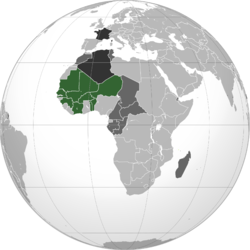
By: Taim Al-Faraje / Arab America Contributing Writer
At a time of chaos in the Arab World, with Palestinian-Israeli clashes heightening, Iraq on the brink of another revolution, the United Arab Republic having collapsed just a couple years prior, and the North Yemen Civil War in full swing, Morocco, backed by France and ruled by a King, and Algeria, backed by the Arabs and Cubans and governed by a President, began fighting in what would become the Sand War. In part, this war represented the main divide of the Arab World: Monarchies vs. Republics, Western influence vs. Eastern influence, unity vs. individualism, etc. Although regionally not a very important war, it would set the ideological climate of the Arab World until today.
Algerian Independence from French Occupation
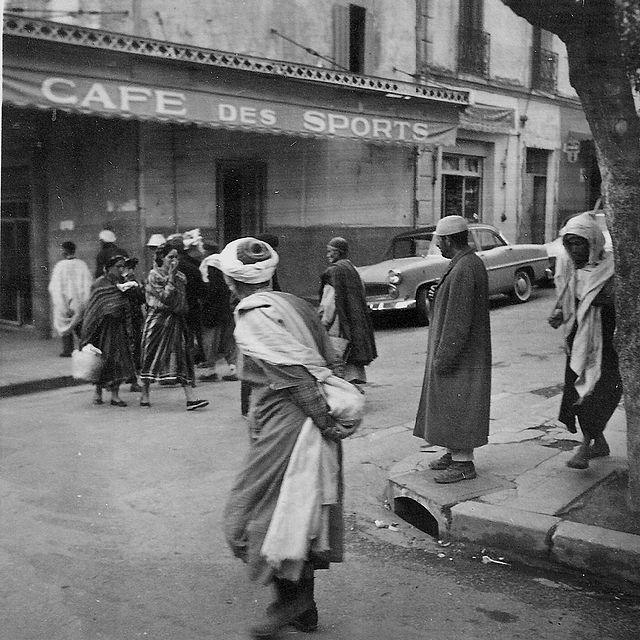
For over 130 years, Algeria was under brutal occupation by France. During the Pacification of Algeria (1830-1875), France’s “Scorched Earth Policy” led to the death of at least 500,000 Algerians. This policy maintained that the French would attempt to prevent Algerians from having anything that would allow them to win the war, including food, water, houses, animals, etc. Entire tribes were wiped out mercilessly, women and children killed in cold blood. It was this violence that led to the Algerian revolution (1954-1962). Exhausted from French rule, they attempted to rid the country of any French influence, and adopted anti-France policies such as nationalizing French-owned companies and promoting Arabization, much in line with the Arab Socialist and Arab Nationalist ideology the freedom fighters followed.
After this period, Algerians gained their independence, losing a million people in the process, and gained their liberty. They made the country into a republic, asserting their own national identity, and allied heavily with countries like Egypt and Syria with the goal of Arab unity.
How Morocco’s Independence Story Differs

The Alawi Dynasty, whose kings rule Morocco currently, took power in 1631. From the beginning, they expanded diplomatically and in commercial relations, even becoming the first country to recognize the United States after their revolution. They would rule until 1912, when France and Spain split the kingdom into two, each ruling over designated parts, and maintaining Tangier as an international zone. France’s occupation of Morocco heavily differed from that of Algeria. France considered Algeria a legitimate part of France, even having granted French citizenship to all Algerians born in Algeria before 1962. They saw it as a strategic location to hold such influence and wanted to ensure North Africa would remain largely French, and saw Algeria as the medium.
Meanwhile, France’s occupation of Morocco was more traditional in a colonial sense- they ran the country politically, controlled its resources, but Moroccans weren’t considered French, and Morocco wasn’t considered part of France itself. It was likely for this reason that France’s control over Morocco wasn’t nearly as brutal, and why the countries have maintained good relations. Throughout the occupation, different Moroccan political parties, such as the Istiqlal Party, consistently pushed for freedom. Although French authorities repressed them and clashes occurred, the violence never reached the levels of brutality seen in Algeria.
After years of protest and international pressure from organizations and governments such as the United Nations and United States, France granted Morocco independence in 1956 peacefully. The Alawi Dynasty resumed its role as the country’s ruling monarchy. As a result, many view Morocco’s independence as neocolonial, since France has remained deeply involved in Morocco’s economy and provided significant support during the Sand War.
The Sand War
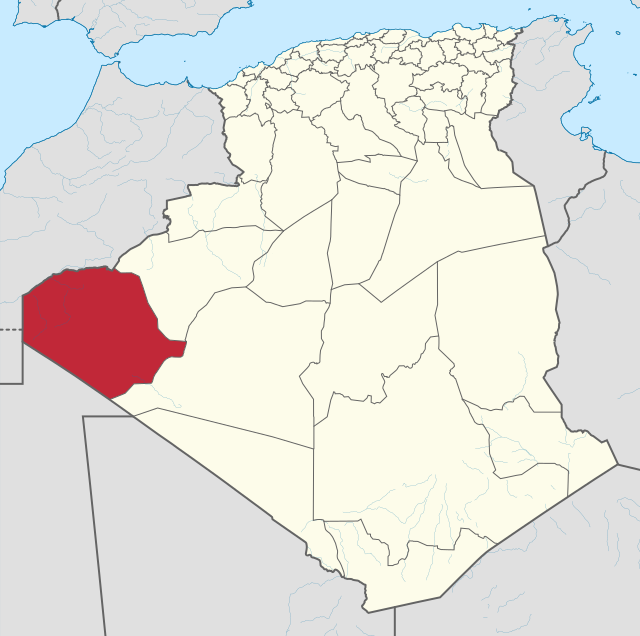
All the previous information directly relates to the beginnings of the Sand War. Because Algeria and Morocco’s borders are colonial (and culturally almost non-existent), a border dispute between the two countries’ governments, who developed so differently, was inevitable. On one hand, the Western backed/allied Kingdom of Morocco, and on the other, the Revolutionary Socialist Republic of Algeria; polar opposites. Fighting officially began on 25 September 1963, after weeks of border skirmishes along Tindouf and Figuig. Moroccans eventually crossed the border successfully, securing two military posts. Moroccan and Algerian delegates convened, attempting to stop the war; but Morocco wanted part of the Tindouf region in Algeria, and Algeria wasn’t going to agree.
After these initial battles and failed negotiation attempts, the war dragged on for several weeks until October 30, when the Arab League, along with leaders like Libya’s King Idris and Tunisia’s Bourguiba, brokered a ceasefire. The ceasefire nearly collapsed after Algerian forces attacked a Moroccan town on November 1. Morocco dramatized the incident and appealed to the UN and the United States for intervention, but both refused, insisting that regional bodies should handle the mediation. The ceasefire held despite the November 1 skirmish, which lasted a few days, and the fighting soon subsided. A formal peace treaty was signed on February 20, 1964, and the two countries have remained at peace since.

Want more articles like this? Sign up for our e-newsletter!
Check out our blog here!