

Subscribe
to receive news by email

Poll
Will the Trump Administration Shift U.S. Policy in Favor of Palestine?
- No (86%)
- Yes (14%)
 Loading ...
Copyright © 2026 Arab America
Go topFrom Unequal Coexistence to Partnership: Israel-Palestine
By: Ghassan Rubeiz / Arab America Contributing Writer
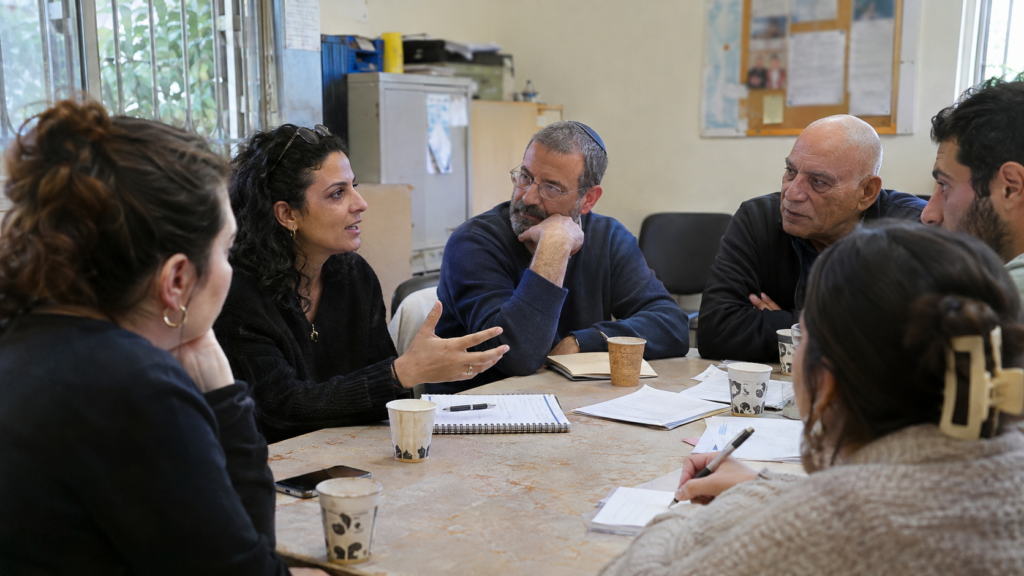
The talks between Gadi Eisenkot and Israel’s two Arab-led coalitions are about more than forming another cabinet. They test whether Jews and Arabs can move from unequal coexistence to political partnership under the same roof.
Netanyahu is not the only root problem. A political system that sidelines Arab citizens rewards short-sighted leaders and leaves Israelis insecure. Eisenkot must do more than replace him. He must begin repairing that system.
After a war that devastated Gaza and spread across the region, Arab leaders inside Israel are offering to help a new Israeli leadership govern. Ra’am says it will vote for an Eisenkot government even before a coalition deal is signed. The Joint List will not vote for it but will not topple it. Neither has made ending the occupation in the West Bank and Gaza a precondition. Their demands are domestic: a plan to fight crime in Arab towns, a five-year economic development plan for these towns, and repeal of the Kaminitz Law, used to demolish unlicensed Arab homes.
This is an olive branch, and a bet that cooperation serves both peoples better than alienation. Rabah Halabi, a Palestinian instructor at Hebrew University, warned in Haaretz on November 13 that rejecting “our outstretched hands” will “lead us – all of us, Jewish and Arabs alike – to horrifying places.”
The clock is running. Eisenkot has until December 6 to form a government. His alternatives are the ultra-Orthodox parties, who reject the universal military service he campaigned on, or a deal with Netanyahu.
What separates Eisenkot from the Arab parties is largely practical, not existential. Both sides want stability after years of paralysis. Both want to move beyond Netanyahu. Both understand that Israeli democracy cannot function, or deliver justice, while a fifth of its citizens remain spectators.
Eisenkot has set four conditions for any cabinet partner: recognition of Israel as a Jewish, democratic, liberal, and egalitarian state; commitment to the values of Israel’s Declaration of Independence; mandatory military or civilian service for all; and recognition of Hamas as a terrorist organization that must be dismantled.
On Hamas, the gap is narrower than the rhetoric suggests. Ra’am leader Mansour Abbas condemned the October 7 attack as beyond justification and told President Herzog that Hamas must be fully disarmed. He has stopped short of the word “terrorist,” but reports say he is ready to use it in exchange for genuine partnership. The Joint List is more nuanced: less direct in condemnation of Hamas, though both sides reject attacks on civilians.
Regarding the Jewish state, the divide is real but not total. Abbas said in 2021 that Israel “was born as a Jewish state” and will remain one, and paid a price among Palestinians for it. The Joint List, especially Hadash, rejects that definition. Both parties demand that Jewish identity not come at the expense of equal citizenship. Eisenkot’s own wording, “liberal and egalitarian,” leaves room for a formula both sides can accept.
The Declaration of Independence offers firmer ground for compromise. Its 1948 promise of “complete equality of social and political rights” for all inhabitants, regardless of religion or race, is exactly what Arab citizens ask Israel to abide by.
Here is a way forward. The coalition agreement should open with a statement of shared principles, signed by every partner, pairing Israel’s Jewish character with a binding commitment to equal citizenship in the Declaration’s own words, backed by allocated budgets and deadlines. Jews would gain a recognized identity. Arabs would gain enforceable equality. Neither side would sign a surrender.
Service is the most sensitive issue. Most Arab citizens will not serve in an army that may fight fellow Palestinians. But Eisenkot accepts a civilian alternative, and Ra’am has signaled openness to service in health care, education, and emergency response. Many Arab citizens already work in these fields. As Israeli scholar Paul Scham noted in Haaretz on November 9, they have partially assimilated over several generations and they are especially numerous in the health professions, “since most are barred from the security sector.” Run through Arab municipalities, civilian service would build the communities it draws from. The Joint List remains opposed. The gap is negotiable.
These differences concern implementation more than principle. What, then, blocks cooperation? Identity politics. Across the region, leaders win legitimacy by stressing differences. Jewish politicians who work with Arab parties are accused of endangering security; several of Eisenkot’s own partners refuse to rely on Arab votes. Arab politicians who work with Jewish-led governments are accused of abandoning Palestinian solidarity. Symbolism crowds out the opportunity for compromise.
An agreement would build more than a government. It would show that Jewish and Arab movements can cooperate to build a new nation without giving up their identities. If today’s negotiators can distinguish partnership from surrender, they may set a precedent that outlasts any single government: a modest blueprint for broader Arab-Jewish reconciliation. Coexistence on unequal terms cannot last. Real partnership would.
Ghassan Rubeiz is the former Middle East Secretary of the World Council of Churches. Earlier, he taught psychology and social work in his country of birth, Lebanon, and later in the United States, where he currently lives. He has contributed to political commentary for the past twenty years and delivered occasional public talks on peace, justice, and interfaith subjects. You can reach him at rubeizg@gmail.com
The views and opinions expressed in this article are those of the author and do not necessarily reflect the position of Arab America. The reproduction of this article is permissible with proper credit to Arab America and the author.
Want more articles like this? Sign up for our e-newsletter!
Check our blog here!