
Subscribe
to receive news by email
Poll
Will the Trump Administration Shift U.S. Policy in Favor of Palestine?
- No (86%)
- Yes (14%)
 Loading ...
Copyright © 2026 Arab America
Go topRooted In Resistance: The Struggle to Preserve Palestine's Olive Trees
By: Luma Alaraje / Arab America Contributing Writer
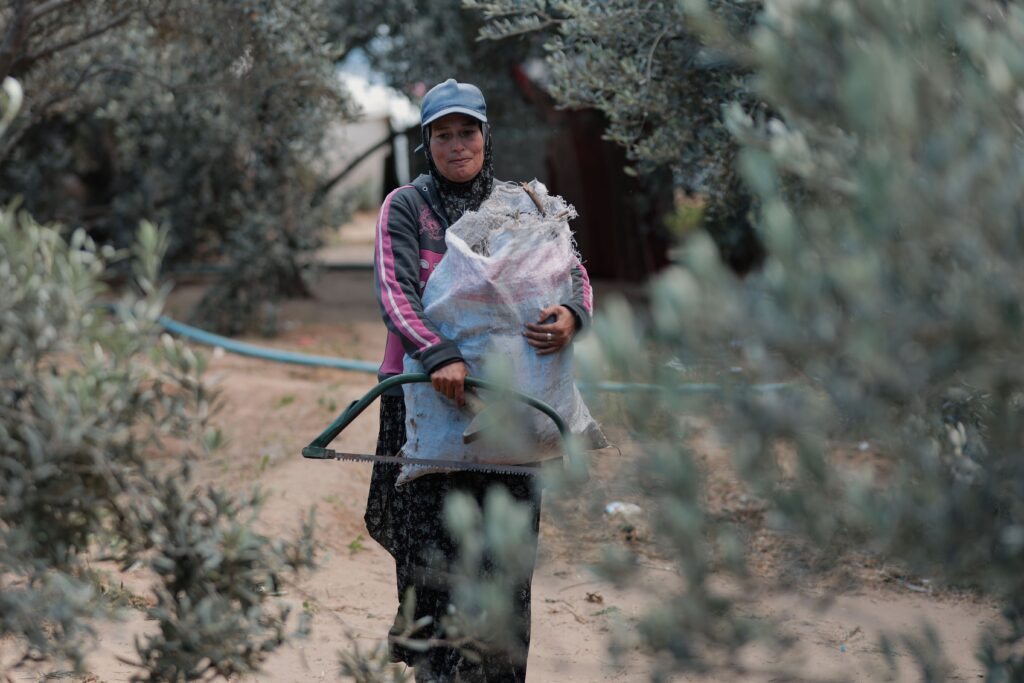
Every fall, for generations, Palestinians have awaited their annual olive harvest. An activity that brings Palestinian families together to tend to their trees and maintain the connection to their land and identities. This year, however, many farmers have faced another harvest season marked by restricted access, settler attacks, and the destruction of olive trees. These ongoing restrictions on the olive harvest are threat to both Palestinian livelihoods and deep-rooted cultural traditions.
Olive trees hold significance in Palestinian culture that extends far beyond their agricultural value. They are often passed down through generations, with some trees standing for over hundreds of years. The harvest itself is also a communal activity that brings together families and neighbors, allowing everyone to contribute in some way.
A Harvest Under Restrictions
Despite its cultural and economic importance, the ability to participate in the olive harvest has become increasingly difficult for Palestinian farmers. Across the occupied West Bank, restrictions on movement and access to agricultural land has prevented many farmers from reaching their olive groves, especially those located near Israeli settlements or behind the separation barrier.
In some areas, farmers are required to obtain permits or coordinate with Israeli authorities before gaining access to their agricultural land. In addition, access can be limited to specific days and hours, leaving farmers with very little time to complete the harvest and support their families. According to the United Nations Office for the Coordination of Humanitarian Affairs (OCHA), only 1,750 of 4,000 permit applications had been approved in Qalqiliya as of early November. In Salfit, approximately 80 permits were issued out of 350 names submitted. These restrictions are especially concerning because the timing of the harvest matters. Delays can result in overripe olives, reduced yields, and financial losses for families who depend on the season for income.
The Palestinian Farmers Union (PFU) also estimated that approximately 55 percent of the olive crop remained inaccessible or unharvested by late October. The union projected that olive oil production could fall to between 10,000 and 11,000 tons, roughly half of its initial estimate for the season.
Settler Violence
Beyond the restrictions placed on accessing the land, Palestinian farmers have also faced increasing attacks by Israeli settlers. Settler violence has occurred through physical assaults, intimidation, theft of harvested olives and other agricultural equipment, and the destruction of olive trees.
According to OCHA, 410 olive-harvest-related settler attacks resulting in casualties or property damage were documented between September 1 and November 9, 2026. This figure already reflects a significant escalation in violence, with attacks being reported across numerous Palestinian cities and communities.
In one incident near Beit Fajjar in the Hebron governorate, Israeli settlers attacked Palestinian farmers on a harvesting day in early November. Farmers were forced to leave their groves, and approximately 150 kilograms of harvested olives and agricultural tools were reportedly stolen. Other incidents have involved settlers preventing farmers from reaching their land altogether. In some cases, settlers have entered Palestinian-owned groves and harvested olives themselves while the Palestinian landowners were unable to access their property.
The consequences go beyond the loss of a single harvest. Israeli settler attacks have also stretched to include burning and bulldozing olive groves, threatening the agricultural resources that Palestinian families have relied on for generations. Olive trees can take many years to mature and produce substantial crops; their destruction has long lasting economic consequences.
The Groves of Gaza
The destruction of Palestinian agricultural land is not limited to the occupied West Bank. In Gaza, three years of genocide and widespread destruction have severely affected the agricultural sector, including olive harvesting.
According to the Palestinian Ministry of Agriculture, nearly 90 percent of Gaza’s two million olive trees have been destroyed since October 2023. The destruction of their agricultural land, along with restricted access to farmland and limited agricultural resources has made it increasingly difficult for farmers to maintain their livelihoods.
These conditions have also affected the infrastructure necessary to sustain olive production. OCHA reported that shortages of fuel, engine oil, and replacement parts have limited the use of the few remaining olive presses in Gaza. While the circumstances differ between Gaza and the West Bank, both demonstrate the impact of such restrictions and destruction on Palestinian agricultural communities and cultural identity.
Cultivating Palestinian Roots
Despite these challenges, Palestinians continue to find ways to preserve their agricultural traditions and support their communities. Humanitarian organizations, such as the OCHA, and volunteers have helped organize harvesting campaigns, provided equipment and accompanied Palestinian farmers to their lands in areas where settler violence is prevalent.
Palestinian businesses and entrepreneurs have also worked to support local farmers and maintain the production of Palestinian olive oil. In her interview with AD Middle East, Palestinian entrepreneur Isra AbuZayed discusses her work with a farming family in Kafr al-Labad near Tulkaram to produce olive oil through her brand, Zeit Bladi. She emphasizes that olive trees are connected to both the past and the future, explaining that trees planted by one generation may not produce fruit for nearly 20 years. Farmers often plant these trees knowing that their children and grandchildren will be the ones to benefit from them.
For Palestinians, the olive harvest represents far more than just an agricultural season. It is a tradition rooted in family history, cultural identity and the ability to remain connected to their land. As restrictions and settler violence continue to threaten Palestinian agricultural communities, preserving these trees and the traditions surrounding them becomes increasingly important. The struggle to harvest olives remains a part of a much larger struggle to protect Palestinian livelihoods, traditions and connection to their land.
Want more articles like this? Sign up for our e-newsletter!
Check out our blog here!