
Subscribe
to receive news by email

Poll
Will the Trump Administration Shift U.S. Policy in Favor of Palestine?
- No (86%)
- Yes (14%)
 Loading ...
Copyright © 2026 Arab America
Go topPathbreakers of Arab America— John Makhoul
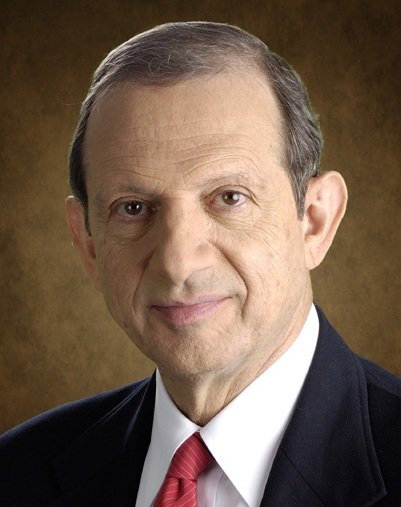
Photo-Center for Arabic Culture
By: John Mason / Arab America Contributing Writer
This is the 130th article in Arab America’s series on American pathbreakers of Arab descent. The series features figures from entertainment, business, sports, science, the arts, academia, journalism, and politics. Our 130th pathbreaker is Lebanese American John Makhoul, a computer scientist renowned for his foundational and enduring contributions to speech and language processing. Not only a distinguished scientist, Makhoul also has a strong commitment to Arab and Palestinian causes, reflected in his cultural identity, personal values, and public recognition. This commitment is seen in both his personal and public engagement with these causes.
Lebanese American computer scientist John Makhoul created a legacy fundamentally woven into the fabric of modern digital communication and human-computer interaction
John Makhoul, born September 19, 1942, in Deirmimas, a village in southern Lebanon, grew up in a small rural community where his father was the sole teacher in the local parochial elementary school. He completed his primary schooling in Deirmimas and his secondary education in Sidon, a historic coastal city. His family belonged to an Evangelical Christian church. His father’s emphasis on education instilled in him a strong work ethic and intellectual curiosity from an early age.
While a high school student, this week’s AA Pathbreaker spent one year as an exchange student in a high school in Foley, Minnesota. He then attended college at the American University of Beirut (AUB), where he graduated in 1964 with a Bachelor of Engineering degree in Electrical Engineering. Makhoul then studied for a Master of Science degree in Electrical Engineering at Ohio State University, obtaining that degree in 1965. He then moved on to Cambridge where he completed a PhD. in electrical engineering at the Massachusetts Institute of Technology (MIT) in1970.
Makhoul was active as a volunteer while a student, including at MIT, where he served as President of the Arab Club. He has also served as Secretary and then as President of the Arab American University Graduates organization. He has been active with AUB alumni, as well, serving as Secretary, then President of the AUB New England Chapter, and then as Secretary and Vice President of the Board of Directors of the AUB Alumni Association of North America. More recently, he has been serving on the Board of the Trans-Arab Research Institute.
Little is known publicly about his personal life.
Makhoul is renowned for his foundational and enduring computer science contributions to the field of speech and language processing. These include significant contributions to the mathematical modeling of speech signals. His pioneering research was in areas defined as linear predictive coding and vector quantization. In short, his work is known for its profound impact on modern digital communication, namely in how our voices interact with our laptops and cell phones. These include technologies such as voice-over-internet protocol and advanced speech recognition systems.
As longtime Chief Scientist at the firm Bolt Beranek and Newman (BBN Technologies), founded by MIT professors, Makhoul is recognized not only for his technical brilliance but also for “his steady leadership in guiding large-scale, ambitious research programs that bridge theoretical innovation with practical application.”
Our AA Pathbreaker’s career following academia included a key role at Bell Labs, which in1997 garnered him the Bell Labs President’s Gold Award for advancements in speech processing solutions. His innovations extend to optical character recognition using speech recognition techniques for multilingual text processing and advanced machine translation systems. Among his numerous accolades, Makhoul received the 2009 IEEE (Institute of Electrical and Electronics Engineers, a professional association) James L. Flanagan Speech and Audio Processing Award for “pioneering contributions to speech modeling.”
Makhoul also has served as an adjunct professor in the Department of Electrical and Computer Engineering at Northeastern University. “The techniques he developed or refined in speech coding, recognition, and understanding are taught in universities and implemented in countless commercial and defense applications, from call-routing systems to advanced translation tools.” Within the specialized field of speech and language processing, his impact is “immense and multifaceted.”
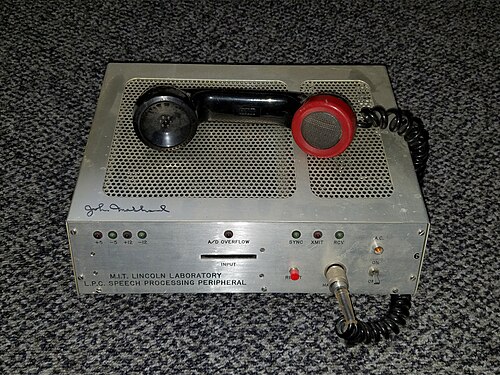
An example, technically complicated as it is, of Makhoul’s sheer talent is his work with the Defense Advanced Research Projects Agency (DARPA). This Agency is not “known for thinking small, [turning] its attention (and budget) to a massive task: developing a set of software engines that can transcribe, translate, and summarize both text and speech without training or human intervention.” The program, called the Global Autonomous Language Exploitation (GALE), attempts to address the lack of qualified linguists and analysts who know important languages like Mandarin and Arabic. Makhoul’s contribution was channeled through a bidding process that included his employer, BBN.
This complicated project included many of the practices in use today in transcribing spoken languages into text. Also included was a translation module that converts foreign text into English. While this technology would be used by military personnel in the field, it was designed for use in U.S., “where analysts are easily overwhelmed by the electronic information gathered by the intelligence community.” Team leader Makhoul has played a major role in implementing this important national project, with its practical implications for academic, industrial and military use.
John Makhoul’s recognition as a supporter of Arab and Palestinian causes
In addition to all the unique way John Makhoul’s inventions affect our daily use of our laptops and cellphones, he is also recognized for “his deep engagement with Arab and Palestinian communities.” His name is strongly associated with initiatives that promote Arabic culture and heritage, an example of which is his ties to the Center for Arabic Culture in Boston, a hub for cultural exchange that fosters Arabic heritage through education, arts, and community programs. His involvement reflects a commitment to preserving and celebrating Arab identity in the diaspora.
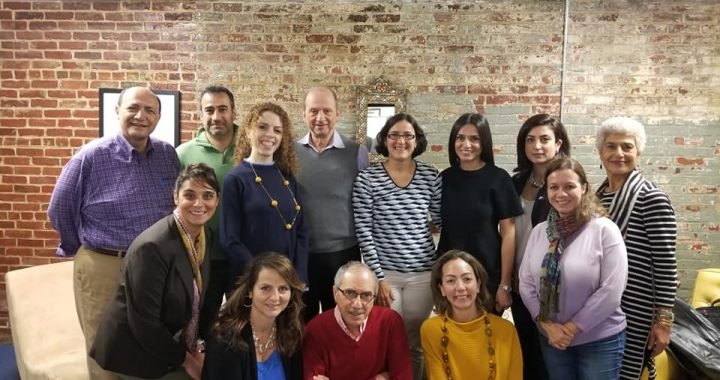
On the advocacy front, Makhoul is linked to the Institute for Palestine Studies (IPS), an organization that “underscores the broader network of Arab American scientists and activists who combine professional excellence with civic advocacy.” His work in speech technology, combined with his community involvement, “positions him as a role model for Arab Americans who contribute to both innovation and social causes.” The IPS has featured him in its remembrances, “noting his role as a respected figure who embodied loyalty, kindness, and cultural pride.” His personal values—”rooted in family loyalty, humility, and collaboration”—have been described as reflecting his long-standing presence in the U.S. academic and research community. These have allowed Makhoul to serve as a bridge between Arab heritage and international science, while maintaining a visible and respectful engagement with Palestinian and Arab causes.
In summary, John Makhoul is deeply respected for his commitment to the well-being of his Arab community and his recognition as a supporter of Arab and Palestinian causes. This commitment “stems from his active participation in cultural preservation efforts, his association with organizations promoting Arabic heritage, and his alignment with the broader Arab American community’s advocacy for Palestinian rights and cultural identity.”
This Pathbreaker has effectively demonstrated that an individual’s capacity for cogent professional, intellectual and technological accomplishments can be equally matched by their devotion to their ethnic, cultural and linguistic heritage.
Sources:
“John Makhoul,” Wikipedia Series on Arab Americans, 2026
“Defense Department funds massive speech recognition and translation program,” Ars Technica, 11/9/2006
“John Makhoul,” The Notable People Project, 2026
“Ex-Officio and Friends of the Board,” Center for Arabic Culture, 2026
John Mason, Ph.D., focuses on Arab culture, society, and history and is the author of LEFT-HANDED IN AN ISLAMIC WORLD: An Anthropologist’s Journey into the Middle East, New Academia Publishing, 2017 and of his new novel, WHISPERS FROM THE DESERT: Zaki, a Little Genie’s Tales of Good and Evil (2025), under his pen name, Yahia Al-Banna. He has taught at the University of Libya in Benghazi, Rensselaer Polytechnic Institute in New York, and the American University in Cairo. John served with the United Nations in Tripoli, Libya, and consulted extensively on socioeconomic and political development for USAID and the World Bank in 65 countries.
The views and opinions expressed in this article are those of the author and do not necessarily reflect the position of Arab America. The reproduction of this article is permissible with proper credit to Arab America and the author.
Want more articles like this? Sign up for our e-newsletter!
Check out our blog here!