Subscribe
to receive news by email
Poll
Will the Trump Administration Shift U.S. Policy in Favor of Palestine?
- No (86%)
- Yes (14%)
 Loading ...
Copyright © 2026 Arab America
Go topReclaiming Arab History in Hispaniola
By: Megan Guzman/ Arab America Contributing Writer
When people think of the Dominican Republic and Haiti, Arab history rarely comes to mind. Yet for more than a century, Arab immigrants and their descendants have helped shape the island of Hispaniola through politics, medicine, and culture.
The Early Tides of Migration
For nearly 800 years, Arab and Berber rulers from North Africa controlled parts of Spain. Their culture became embedded in Spanish daily life, leaving a massive mark on Spain’s architecture, food, and language. In 1492, the Spanish finally defeated the rulers and took back full control of the country. However, that 800-year Arab influence did not wash away. Instead, when Spanish colonizers began to sail across the Atlantic Ocean to the Americas, they brought along that same culture with them. They landed on an island called Hispaniola.
During the late nineteenth century, a larger wave of Arab migration was driven by political instability, economic collapse, and severe humanitarian crises in the Levant. The Ottoman Empire maintained control over the region and massively exploited Lebanese citizens. Simultaneously, the collapse of the silk industry in Mount Lebanon ruined local economies. Also, global trade routes shifted dramatically in 1869 after the opening of the Suez Canal, and forced many people to look abroad for a better living. Later in 1914, the devastation of World War 1 brought severe famine and poverty to the region. Desperate to escape these conditions, waves of Syrians, Palestinians, Jordanians, Iraqis, and Egyptians migrated to Latin America.
Nevertheless, while earlier migrations were driven by the collapse of the Ottoman economy and geopolitical tensions sparked by WWI, a later wave of migration in Palestine. In 1948, the United Nations declared the state of Israel. This displaced thousands of Palestinians, with some immigrating to the Dominican Republic.
Life On The Island
The way these immigrants were classified in the Americas was a by-product of the empire they were fleeing rather than their actual cultural identities. Since the Levant was under Ottoman control, immigrants who arrived in the late nineteenth and early twentieth centuries traveled using Ottoman passports. Consequently, the local population was labeled as Turcos (Turks). This term was then used in a discriminatory manner, causing immigrants to often face racist immigration policies across the island. Fortunately, as they established themselves, they were later recognized more accurately as Sirio (Syrian), Libaneses (Lebanese), Palestinos (Palestinian), or Árabe (Arab).
In the Dominican Republic, most of the Arab migrants settled in San Pedro de Macorís, which served as the country’s economic capital at the start of the twentieth century due to its large sugar mills. Others settled in the south: San Juan de la Maguana, Las Matas de Farfán, Elías Piña, Barahona, and Santiago de los Caballeros. Many of these first-generation Arab immigrants began their lives in the Caribbean as buhoneros (peddlers). By the 1890s, Arab peddlers dominated local commerce in San Pedro. However, the Dominican press frequently portrayed them as “bad immigrants” since they did not engage in agricultural work. Nevertheless, over time, this work became generational wealth for many Arab families on the island, such as the Jacobos and the Aties, turning investments into businesses.
Assimilation
Latin America’s mestizaje (mixed ancestry) model of racial classification allowed Arab immigrants to adopt and blend into their societies. This was encouraged during the dictatorship of Rafael Trujillo from 1930 to 1961, who actively encouraged the immigration of Arabs to whiten the Dominican population. In 1941, 91% of Arab residency permit applicants were classified as white by the Dominican state.
Cultural and Culinary Fusion
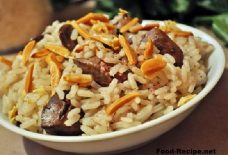
The Arab presence is not just a historic footnote but is woven into daily Dominican life, particularly the food. Kipes is the Dominican version of Lebanese kibbeh. It is made with bulgur and seasoned beef, removing the lamb and herbs used in traditional Middle Eastern cooking. There’s the famous Nino Envuelto, with stuffed cabbage rolls that have long been fully embraced as part of Dominican cooking. And lastly,arroz con fideos is a popular side dish of rice with toasted noodles, originating from Arab culture.
Beyond food, institutions like Club Libanés Sirio y Palestino serve as cultural hubs where the diaspora in the Dominican Republic gathers to honor their heritage.
Shaping Modern Society
Today, the descendants of these immigrants hold prominent positions across Dominican society. Luis Abinader, the 54th and current president of the Dominican Republic, is of Lebanese descent. Born in Santo Domingo, Abinader’s grandfather emigrated from Lebanon. He won the 2020 presidential election with 52.5% of the vote, becoming the second Dominican president of Lebanese heritage.
Since the discovery of Hispaniola, Arab immigrants and their descendants have undeniably forged a lasting and deeply integrated legacy on the island of Hispaniola.
Want more articles like this? Sign up for our e-newsletter!
Check out our blog here!