Subscribe
to receive news by email

Poll
Will the Trump Administration Shift U.S. Policy in Favor of Palestine?
- No (86%)
- Yes (14%)
 Loading ...
Copyright © 2026 Arab America
Go topRiyadh Launches Digital Innovation District
By: Connor J. Buss / Arab America Contributing Writer
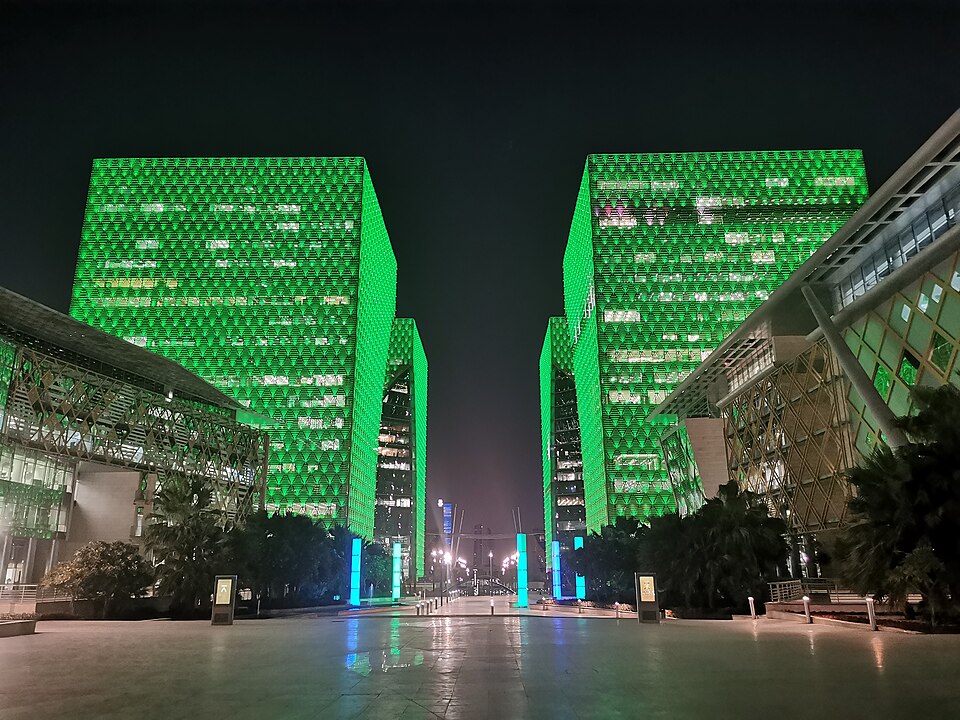
Last week, The Royal Commission for Riyadh City announced the Riyadh Digital District, a project launched to push the country into the world’s top 10 tech hubs. The effort is meant to attract tech firms to Riyadh and connect international ambitions to Saudi initiatives.
The district was launched to be a “dedicated base for developing digital businesses and technologies in the capital.”
The Digital District
The district’s ambitious goal of connecting tech firms internationally to Riyadh is undoubtedly part of the nation’s efforts to pioneer global technology. Over the past few years, Saudi Arabia has made similar pushes to become a tech and, most recently, AI hub. Riyadh has been increasingly regarded as the tech development center of the Middle East, a title that this district hopes to cement.
The Royal Commission for Riyadh City said the district aims to help place Riyadh among the world’s top 10 technology regions, while attracting international tech firms and highly skilled talent to the Saudi capital.
The district has clarified that it will be focusing on six key technology sectors: artificial intelligence and big data, cybersecurity, cloud computing and services, the Internet of Things (IoT), blockchain, and robotics and drones.
Saudi Vision 2030
The diversification of the projects greatly reflects the broader efforts to diversify Saudi economy. The Saudi government has stated that it wishes to reduce its reliance on oil exports and move towards other sources of GDP growth. This is the primary goal of Saudi Vision 2030, a nationwide government initiative launched in 2016 that has been the source of societal reforms as well as ambitious megaprojects such as The Line.
While some of the projects have experienced failure, the Saudi digital sector has grown rapidly as a result of Vision 2030. The digital economy made up 16% of Saudi GDP in 2025, and is only growing. Technology markets have exploded, with the IT market growing 133% in 2025 and the ITC market growing 90%. Internationally, the country has become a favourite for capital investment. Since 2018, venture capital investments have increased by 145%.
Riyadh specifically has become the face of Saudi Arabia’s digital sector. Vision 2030 outlined the goal for Riyadh to become a “smart city” through IT infrastructure growth and social-transformation policies. The city houses the $2.7 billion Hexagon Data Center, part of Saudi Arabia’s efforts to achieve economic independence and attract foreign investment. Companies from across the world have put in investments into Riyadh, Dammam, and Jeddah for data centers and a slice of the Saudi digital pie.
Economic Opportunity
The Riyadh Digital District, while a hub for foreign investors, is also a cradle that fosters domestic innovation. It will offer incentives to large and medium-sized digital companies, but also create incentives for startups and small tech businesses. This idea for innovation fosters the creation of new ideas so that Saudi Arabia will be the permanent digital hub and the global pioneer of technology.
Additionally, the construction of such advanced digital infrastructure means that people interested in technology development has a place to go. Riyadh becomes the home of innovation because its infrastructure enables it.
The district is also part of Saudi Arabia’s social reform programs. One of the greatest steps forward that the country has made in societal modernization is the growth of womens’ roles in the economy. Recent digital investments have enabled job opportunities for women, with the new digital sector likely to become a site of widespread female economic involvement. This has come as a response to criticism about the Saudi economy failing to enable opportunity for women. Women’s participation in the technology center increased from 7% in 2017 to 35% in 2025, the largest increase in the G20.
Want more articles like this? Sign up for our e-newsletter!
Check out our blog here!