
Subscribe
to receive news by email

Poll
Will the Trump Administration Shift U.S. Policy in Favor of Palestine?
- No (86%)
- Yes (14%)
 Loading ...
Copyright © 2026 Arab America
Go topPathbreakers of Arab America—Ali Jihad Racy
By: John Mason / Arab America Contributing Writer
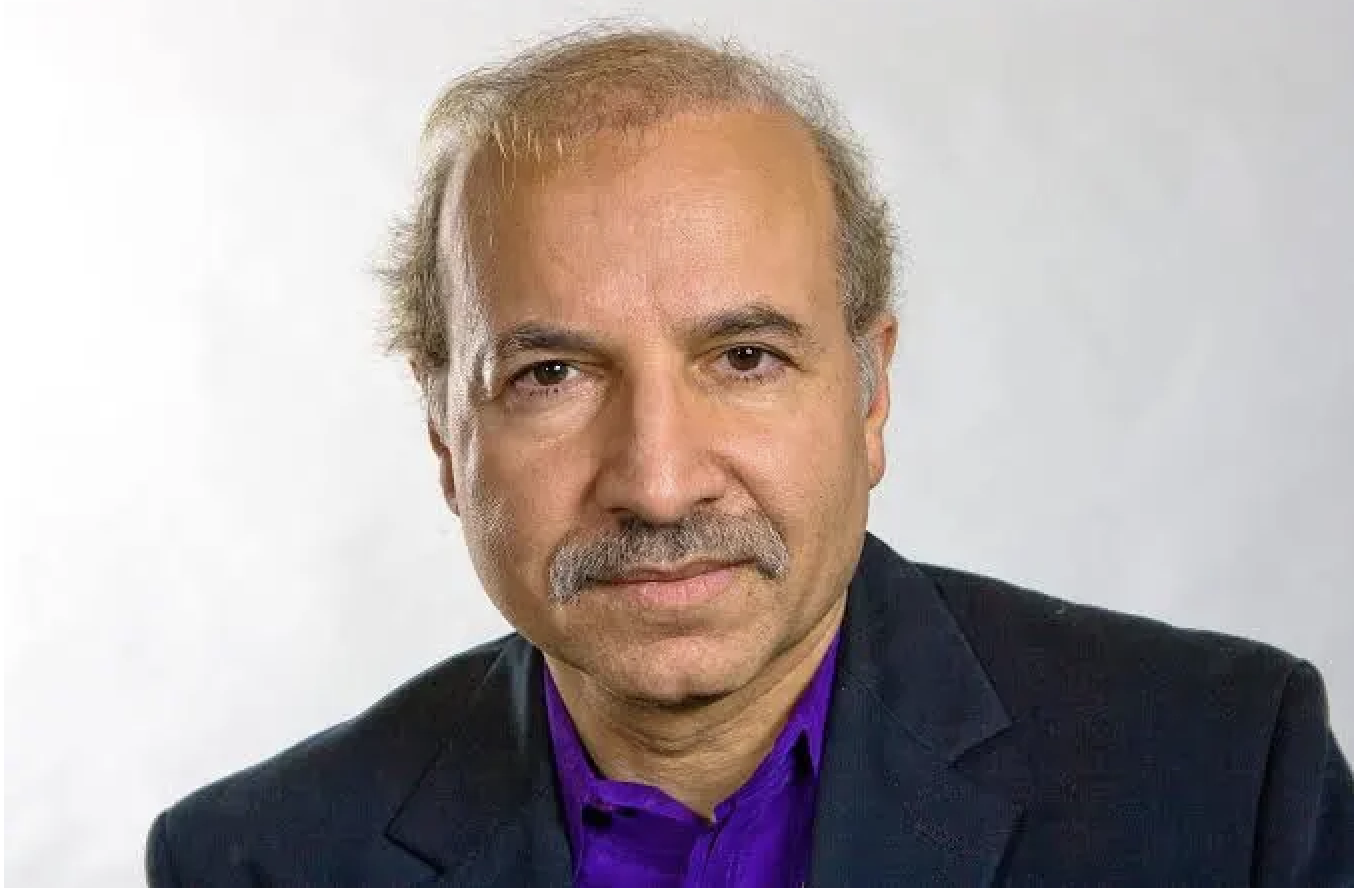
This is the 132d article in Arab America’s series on American pathbreakers of Arab descent. The series features figures from entertainment, business, sports, science, the arts, academia, journalism, and politics. Our 132d pathbreaker is Lebanese Arab Ali Jihad Racy, one of the world’s foremost experts on Arab music, credited with studying and documenting numerous musical traditions throughout the Arab world. An accomplished performer, composer, and ethnomusicologist, Ali Jihad has inspired a generation of students and artists in this country and abroad. He is also a master of many traditional instruments, particularly the ‘nay,’ and the ‘buzuq.’
Before becoming a world-famous expert in Arab music, Ali Jihad Racy established his extraordinary musicianship through mastering many of Arab music’s traditional instruments
Ali Jihad Racy was born in 1943 in Southern Lebanon. He comes from a well-known family of artists, scholars, and academicians and began performing in Lebanon on television and in concerts and presented a weekly radio program on world music. Racy’s early work focused on studying and documenting Arabic music traditions, which over his career has led to over 75 publications on topics such as Lebanese laments, Bedouin music, early 20th-century Cairo sound recording, improvisation, and the folk instruments of the Near East.
The family name “Racy” is a derivative of the Arabic “Ras” or human head, or also a top or summit, usually associated with a geographic term meaning headland. It was Americanized, from what would be “Rasi” to “Racy.” It is not an uncommon name in parts of Lebanon. As to the rest of Ali Jihad’s name, “Ali” is of course a common given name, while “Jihad” refers to an individual’s internal struggle towards piety and an upright life (in contrast to the Western translation, “holy war”).
Racy came to the U.S. in 1968, where he earned his Masters and Doctorate degrees in Musicology from the University of Illinois before accepting a position as Professor of Ethnomusicology at the University of California-Los Angeles (UCLA). An accomplished multi-instrumentalist, Racy has done much to promote an appreciation for Middle Eastern music in the West. His recordings for various labels provide a showcase for his mastery of the flute-like ‘nay’ and the clarinet-like ‘mijwiz,’ as well as the stringed instruments ‘’ud’ and ‘buzuq,’ both important to Middle Eastern styles. Racy is currently working on a book tentatively titled ‘The Art of Ecstasy in Arab Music.’
An accomplished performer, composer, and ethnomusicologist, Racy has inspired a generation of students and artists in this country and abroad
At UCLA, Ali Jihad has taught seminars on the musical cultures of the Middle East and is the director of the Near East Music Ensemble. He has performed in major theaters, including Carnegie Hall, the Kennedy Center, and the Dorothy Chandler Pavilion, and has composed and performed music for television, feature and documentary films. Included in his work is the ten-part series, ‘The Arabs,’ shown on British television and on PBS in the U.S. Racy also joined the Kronos Quartet in the world premiere of his ‘Zaman Suite,’ (roughly, Suite for a Memorable Time or Era). Racy has also performed on a number of Middle Eastern instruments with the Sacramento Symphony and Livermore-Amador Symphony in his composition titled, ‘’The Arab World: A Sea of Memories,’’ orchestrated by Arthur Barnes of Stanford University.
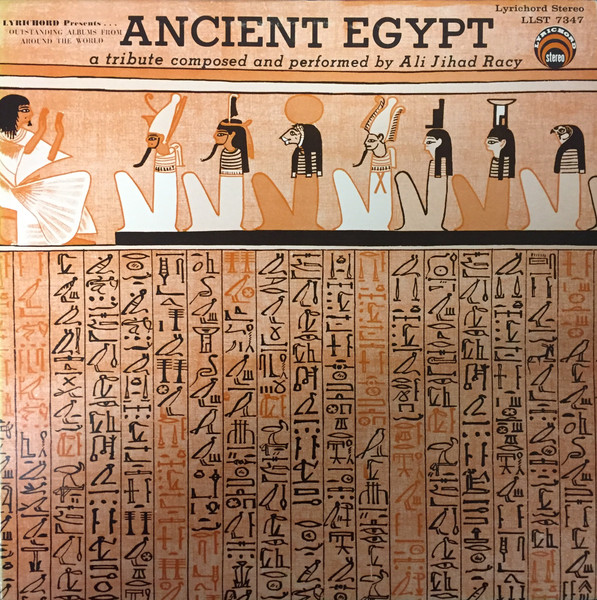
Perhaps Ali Jihad’s most famous album, ” Egypt,” is music commissioned for the exhibition of Tutankhamun’s tomb, at which he both performed and played using authentic ancient instruments that include the ‘nay’ and ‘salamiyah buzuq’ (flutes), ‘ud,‘’tar,’ ‘sajat,’ ‘mijwiz,’ and ‘mizmar.’ Some of his notable works, in this case, his discography includes: ‘Ancient Egypt,’ (1980); ‘Jazayer Plus,’ (1979); ‘Taqāsīm: Improvisation in (with Simon Shaheen); ‘Mystical Legacies,’; and ‘When the Rivers Met,’ (2010).
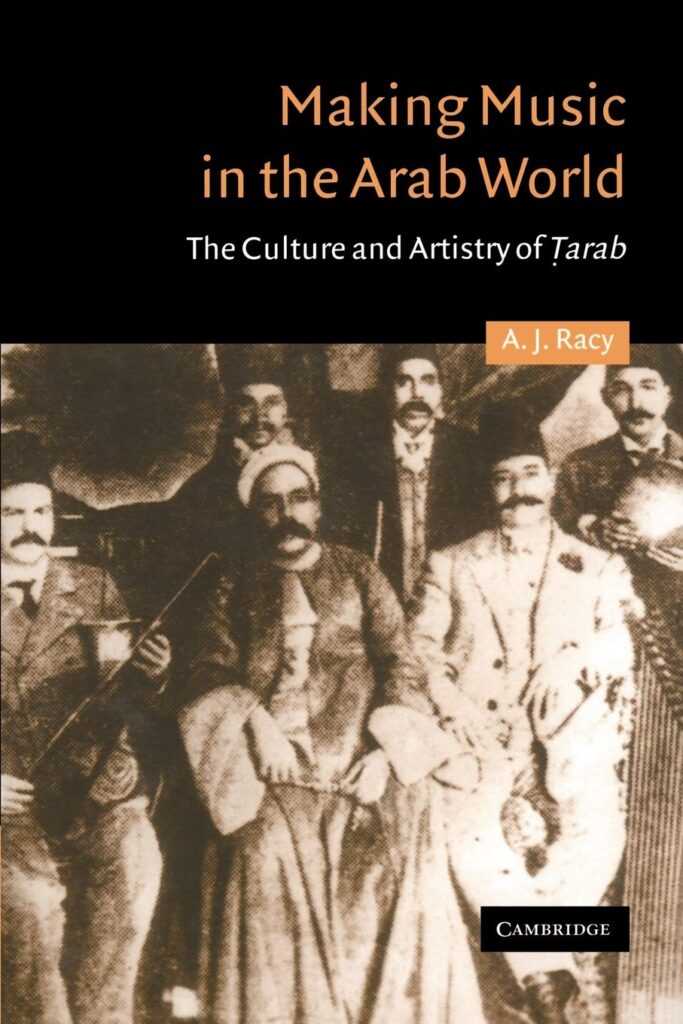
An important part of his scholarship is Racy’s authorship of the earlier-mentioned award-winning book, ‘Making Music in the Arab World: The Culture and Artistry of Tarab’ (Cambridge University Press, 2003). According to an Amazon book review, “In this pioneering book, he provides an intimate portrayal of the Arab musical experience and offers insights into how music generally affects us all. The focus is ‘tarab,’ a multifaceted concept that has no exact equivalent in English and refers to both the indigenous music and the ecstatic feeling associated with it.” Racy discusses the basic learning processes by which musicians learn and how they become inspired, the relationship between performers and listeners, and the influence of technology in spreading Arab music worldwide. He emphasizes how the love of Arabic lyrics creates a feeling of ecstasy in the creator and the listener.
On Ali Jihad’s retirement from UCLA after over 43 years, one of his former students, Danny Shamoun, paid his mentor the very highest compliments, referring to him as: “my mentor my teacher my idol my favorite musician…The most respectful human being I have ever met…who has devoted his entire life to music, education, educating generations of music students, teaching and composing original masterpieces from his Heart and Soul…I’ll never forget what you have done for me [and others] you have affected through this great journey of an incredible music man.” What teacher would ever not wish to be the object of such veneration!
One need only listen to one of Ali Jihad’s representations of Arab music to begin to fathom how one might become a devotee to that music, perhaps to become “addicted” to it, and even to begin to fathom the ecstasy one might feel from it.
Sources:
“Ali Jihad Racy,” Everybodywiki, 2026
“Ali Jihad Racy,” Seven Seas Music, 2026
“Biography of Ali Jihad Racy,” Discogs, 2026
“Ali Jihad Racy,” Lira Productions, 9(no date)
“Making Music in the Arab World: The Culture and Artistry of Tarab, by Ali Jihad Racy, Cambridge University Press, Book review on Amazon, 2004
“A UCLA retirement message from Professor A.J. Racy,” Facebook, 6/1/2021
John Mason, Ph.D., focuses on Arab culture, society, and history and is the author of LEFT-HANDED IN AN ISLAMIC WORLD: An Anthropologist’s Journey into the Middle East, New Academia Publishing, 2017 and of his new novel, WHISPERS FROM THE DESERT: Zaki, a Little Genie’s Tales of Good and Evil (2025), under his pen name, Yahia Al-Banna. He has taught at the University of Libya in Benghazi, Rensselaer Polytechnic Institute in New York, and the American University in Cairo. John served with the United Nations in Tripoli, Libya, and consulted extensively on socioeconomic and political development for USAID and the World Bank in 65 countries.
The views and opinions expressed in this article are those of the author and do not necessarily reflect the position of Arab America. The reproduction of this article is permissible with proper credit to Arab America and the author.
Want more articles like this? Sign up for our e-newsletter!
Check out our blog here!