Subscribe
to receive news by email

Poll
Will the Trump Administration Shift U.S. Policy in Favor of Palestine?
- No (86%)
- Yes (14%)
 Loading ...
Copyright © 2026 Arab America
Go topThe Diplomacy of Delay in Israel-Lebanon Peace Talks
By: Ghassan Rubeiz / Arab America Contributing Writer
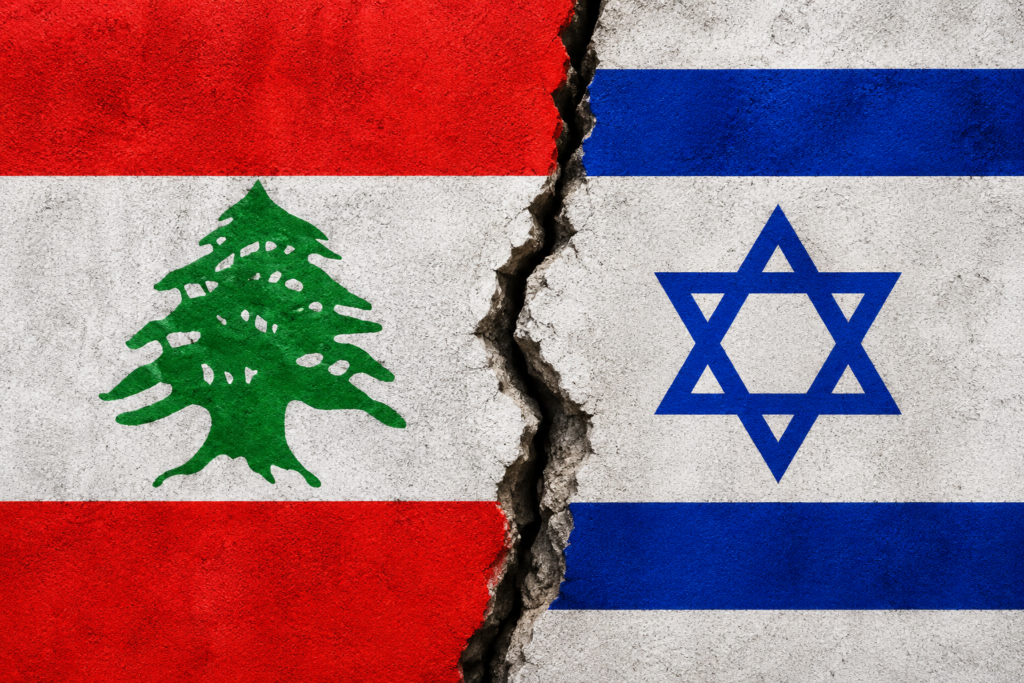
Lebanon and Israel have just concluded another round of US-sponsored peace talks in Washington — talks that produced no breakthrough. Yet the meetings were described as “positive,” even “encouraging.” A fourth round is already scheduled, the ceasefire extended by 45 days. That extension, more than any real progress, was judged as a substantive achievement.
What these talks cannot acknowledge openly is that Lebanon’s diplomatic fate is not its own. It is shaped by three outside powers — Iran, Israel, and the United States — each pursuing interests that have little to do with Lebanese sovereignty. President Trump made this explicit when he imposed the April ceasefire with Iran: Lebanon, he said, “was not included in the deal — because of Hezbollah. That’ll get taken care of too” (White House remarks, April 8, 2026). The optimism surrounding these encounters is misplaced. These are not peace talks in any meaningful sense. They are diplomatic rituals, carefully staged to suggest movement .
The character of these meetings has become strangely predictable: they fail to move the needle, yet they are considered as exceeding expectations. They impose ceasefires, yet the fighting goes on. The April 8 ceasefire between Washington and Tehran had barely been announced before Israel launched its heaviest bombardment of Lebanon since the war began — killing hundreds and wounding more than a thousand within hours. Israel continues to strike Hezbollah positions and civilian communities in the south, insisting these operations fall outside the ceasefire’s scope. Battered and exhausted, Lebanon attends the talks while its villages are being destroyed.
Even the language of the negotiations reveals the artificiality of the process. Israel’s withdrawal from occupied Lebanese territory — a core issue for Lebanon — is tucked under border “security” for future discussion, while Hezbollah’s disarmament remains Israel’s central demand. The decision to split the next round into political and security tracks was treated as progress, though it merely rearranged the agenda without addressing the substance.
Everyone involved understands that the Lebanon–Israel track is tethered to the US–Iran confrontation. As of this writing, that confrontation has reached a dangerous new threshold. Trump rejected Iran’s latest peace proposal on May 10 as “totally unacceptable,” declared the ceasefire “on life support,” and on May 17 posted what amounts to an ultimatum: “For Iran, the Clock is Ticking, and they better get moving, FAST, or there won’t be anything left of them” (Truth Social, May 17, 2026). Trita Parsi, among the most careful observers of this confrontation, has warned that renewed large-scale hostilities are not only possible but likely — and that any Iranian response would strike hard at US facilities across the region. The 45-day extension of the Lebanon–Israel talks is not a coincidence; it is the time (before midterm elections) Washington thinks it needs to reach an understanding with Tehran. Israel also wants time to claim victories before its October elections. Tehran, under sanctions and domestic pressure, seeks relief. Until the US–Iran file stabilizes, no Lebanese–Israeli agreement can stand on its own. Lebanon and Israel are not negotiating a bilateral peace — they are waiting for their patrons to decide the outcome of their confrontation.
As a Lebanese American, I would welcome the day when Lebanon makes peace with Israel. But peace cannot be manufactured between two states that have not resolved their own internal contradictions. Lebanon still lacks consensus on what kind of state it wants to be, with Hezbollah retaining a veto over national security and the sectarian power-sharing formula producing neither legitimacy nor stability. Israel’s political system is fractured, its society polarized, its leadership consumed by Iran and Gaza. Two countries that cannot resolve their internal contradictions cannot credibly make peace with each other.
Moreover, no Lebanese–Israeli peace is possible while the Palestinian question is shelved. Millions of Palestinians remain displaced, besieged, or stateless. Any regional settlement that treats them as an afterthought is not peace — it is a temporary arrangement waiting to unravel. Since 2002, the Arab Peace Initiative has offered Israel full recognition by Arab states in exchange for Palestinian statehood. Israel has refused to engage with it seriously. That refusal, more than any procedural obstacle, is the measure of how far genuine peace remains.
The Washington meetings may satisfy diplomatic optics, but they cannot produce peace because the essential conditions for peace do not yet exist. Real peacemaking requires not more rounds, but the political courage to confront the harder questions — about borders, governance, identity, sovereignty, and justice — that these talks have been carefully designed to avoid. The next few days may prove the point with brutal clarity: if Washington resumes its assault on Iran while simultaneously brokering Lebanon–Israel rounds, the contradiction at the heart of American diplomacy will be impossible to ignore. A significant shift in the foreign policy of any of the three powers that shape Lebanon’s fate — Iran, Israel, or the United States — could open a path toward genuine peace and state-building. Until then, the diplomacy of delay will continue, and Lebanon will pay the price.
Ghassan Rubeiz is the former Middle East Secretary of the World Council of Churches. Earlier, he taught psychology and social work in his country of birth, Lebanon, and later in the United States, where he currently lives. He has contributed to political commentary for the past twenty years and has delivered occasional public talks on peace, justice, and interfaith topics. You can reach him at rubeizg@gmail.com
The views and opinions expressed in this article are those of the author and do not necessarily reflect the position of Arab America. The reproduction of this article is permissible with proper credit to Arab America and the author.
Want more articles like this? Sign up for our e-newsletter!
Check our blog here!