
Subscribe
to receive news by email

Poll
Will the Trump Administration Shift U.S. Policy in Favor of Palestine?
- No (86%)
- Yes (14%)
 Loading ...
Copyright © 2026 Arab America
Go topThe Sound of 2026: What Arab Fans Could Bring to the World Cup
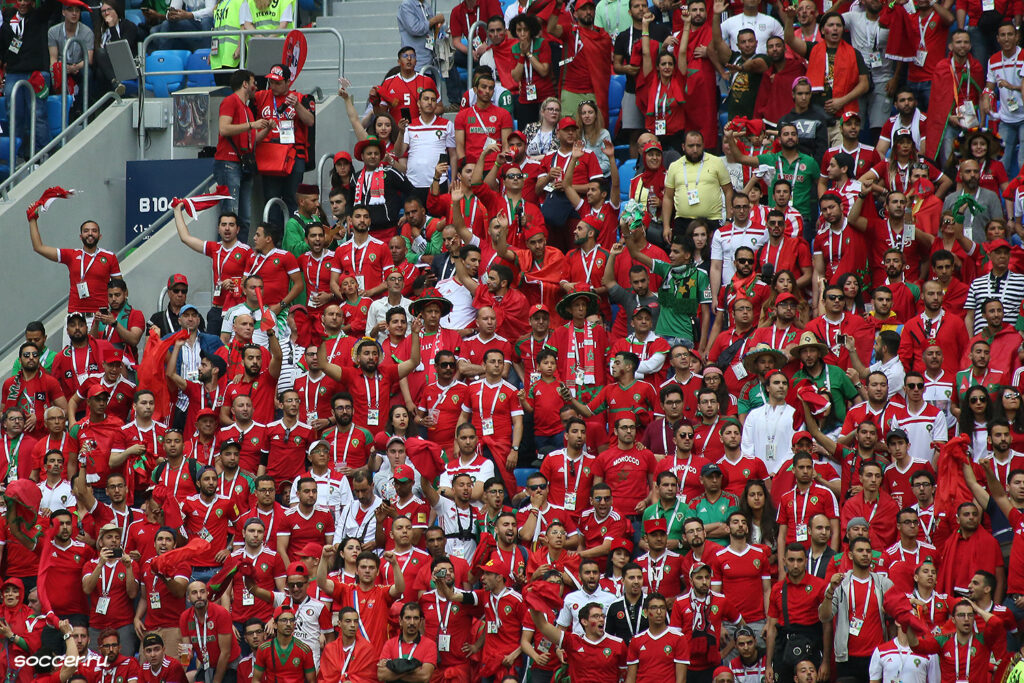
Photo by Кирилл Венедиктов, CC BY-SA 3.0 GFDL, via Wikimedia Commons
By Aziz Hellal / Arab America Contributing Writer
The World Cup is usually measured by goals and trophies, but the real heart of the tournament lives in the stands. In 2026, American soccer culture may experience something new.
With eight Arab nations qualifying—a historic first—the tournament could bring a highly visible Arab presence to stadiums, streets, restaurants, and fan zones across North America.
Arab fans bring much more than flags and jerseys. They bring songs, chants, drums, family gatherings, shared meals, and a loud sense of joy that can turn a match into a cultural celebration.
It’s a rare opportunity for Americans to see a side of the Arab world that isn’t filtered through politics or conflict, but shaped by community, hospitality, pride, and the emotional power of soccer.
A Historic Moment for Arab Fans
The 2026 FIFA World Cup will mark a historic moment for Arab soccer supporters. For the first time, eight Arab national teams will compete, creating one of the largest Arab presences in World Cup history.
The World Cup is coming to North America at a time when Arab communities are more visible than ever across the United States and Canada. In many host cities, large Arab American and Arab Canadian populations are already preparing to turn stadiums and streets into a ‘home away from home’.
For Arab fans, supporting a national team is about more than just a game; it’s an expression of identity and pride. Whether they are cheering for Morocco, Egypt, Algeria, Saudi Arabia, Iraq, Jordan, Tunisia, or Qatar, many supporters will arrive carrying traditions that have shaped soccer culture for generations.
This combination of eight teams and the massive local diaspora could make Arab supporters one of the most visible fan groups at the 2026 World Cup.
The Sound of Arab Football
The game in the Arab world is rarely a quiet experience. Long before kickoff, the air is filled with singing, the steady beat of drums, and the energy of supporters gathering in cafes and public squares. Once inside the stadium, that energy becomes impossible to ignore.
Arab fans don’t just watch the game; they try to influence it. From coordinated chants to melodic songs that last the full 90 minutes, the goal is to be the ’12th man’ on the pitch.
We saw this clearly in 2022 when Moroccan fans captivated the world, and that same passion exists across the region, from the historic clubs of Cairo to the passionate terraces of Algiers and Tunis.
The 2026 World Cup could introduce many American fans to this style of support. While soccer culture in the United States has grown significantly in recent years, many Arab supporters bring traditions passed down through generations.
The 2026 World Cup could introduce many American fans to this style of support. While soccer culture in the United States has grown significantly in recent years, many Arab supporters bring traditions passed down through generations.
Soccer, Family, and Community
In the Arab world, soccer is rarely watched alone. Matches are a reason to get together with family, friends, neighbors, and sometimes the entire block. Hours before a National team game, local cafes fill up, and living rooms turn into crowded gathering places. Celebrations can spill into the streets long after the final whistle.
For Arab fans, supporting a team isn’t just about winning or losing. It is about spending time with loved ones and sharing an emotional ride with the people around you. A big match easily brings multiple generations together—it’s completely normal to see grandparents, parents, and children all crowded around the same screen watching the game.
During the 2026 World Cup, this community energy will show up far beyond the stadium gates. Arab Americans and traveling fans will pack into local restaurants, cafes, and community centers, turning everyday spaces into lively viewing areas.
For American sports fans, watching from the outside will be eye-opening. It offers a clear look at a culture where soccer is a natural part of family life and daily friendships.
A Different Image of the Arab World
For many Americans, the Arab world is a region seen only through the lens of politics, conflict, and international crises. The World Cup offers a completely different perspective, allowing everyday people to encounter Arab culture through celebration rather than headlines.
As supporters travel to matches, pack into fan zones, and celebrate their teams, they bring traditions rooted in community and national pride.
A simple conversation that starts with a soccer match can easily turn into an opportunity for cultural exchange. It gives people from totally different backgrounds a chance to connect on a human level.
A soccer tournament can’t erase stereotypes or solve political disagreements. However, it can create moments of human connection.
A shared chant, a conversation between fans, or a celebration after a match can sometimes leave a stronger impression than years of news coverage.
What Americans May Remember
Long after the final whistle blows and the teams head home, the true legacy of the 2026 World Cup won’t just be the stats or the trophies. For the host nations, the real impact will be measured in the memories made outside the lines.
For many Americans, the tournament will simply be a moment where different cultures connect through a shared love of soccer. They will remember the beat of the drums, the warmth of Arab hospitality, and the sheer joy of a community celebrating its heritage on the world stage.
As millions of fans gather across North America, many Americans may encounter Arab culture not through headlines but through conversations, celebrations, and a shared love of the game. Long after the final match is played, those encounters may become one of the most meaningful legacies of the 2026 World Cup.
Want more articles like this? Sign up for our e-newsletter!
Check out our blog here!