
Subscribe
to receive news by email

Poll
Will the Trump Administration Shift U.S. Policy in Favor of Palestine?
- No (86%)
- Yes (14%)
 Loading ...
Copyright © 2026 Arab America
Go topEgypt Makes History as Morocco Builds on Its 2022 World Cup Legacy
By Aziz Hellal / Arab America Contributing Writer
Just a few years after Morocco captured the world’s attention with its historic 2022 World Cup campaign, another chapter is being written for Arab football.
Egypt produced one of its most memorable World Cup moments by defeating Australia to reach the Round of 16 before falling to Argentina in heartbreaking fashion, while Morocco kept its dream alive with another impressive run into the quarterfinals.
For Arab fans around the world—and especially for Arab American communities filling stadiums across the United States—this tournament has become about more than results. It has become a celebration of identity, pride, and a growing belief that Arab teams can compete with the world’s best.
Egypt’s Historic Moment in Dallas
For decades, Egypt carried a strange paradox in world football. The Pharaohs are the most decorated team in African history, with seven continental titles, yet they had never won a knockout match at the World Cup.
That history was finally rewritten in Dallas. After a physical and exhausting 1-1 draw against a disciplined Australian side, Egypt held its nerve in a high-pressure penalty shootout. When Hossam Abdelmaguid converted the decisive spot-kick to seal a 4-2 shootout victory, the stadium erupted.
For Mohamed Salah, who scored a confident Panenka penalty under immense pressure, the night also carried a sense of redemption. Egypt did not simply advance; it broke through a psychological barrier that had followed the national team for generations.
That historic victory sent Egypt into a Round of 16 meeting with defending champions Argentina, a match that ended in one of the tournament’s most dramatic finishes.
Heartbreak Against Argentina
Egypt’s remarkable run ended in dramatic fashion against defending champions Argentina. After building a stunning 2–0 lead and appearing on the verge of one of the greatest upsets in World Cup history, the Pharaohs conceded twice late in the match before Argentina completed a 3–2 comeback with a winner in the 94th minute.
The ending was even more painful because the decisive goal came shortly after a controversial moment in Argentina’s box, when Egyptian players and supporters believed Egypt should have been awarded a penalty. Instead, play continued, and only moments later Argentina completed its dramatic comeback. The defeat was heartbreaking, but it did little to erase what Egypt had already achieved throughout the tournament.
More Than a Game: The Egyptian Community in America
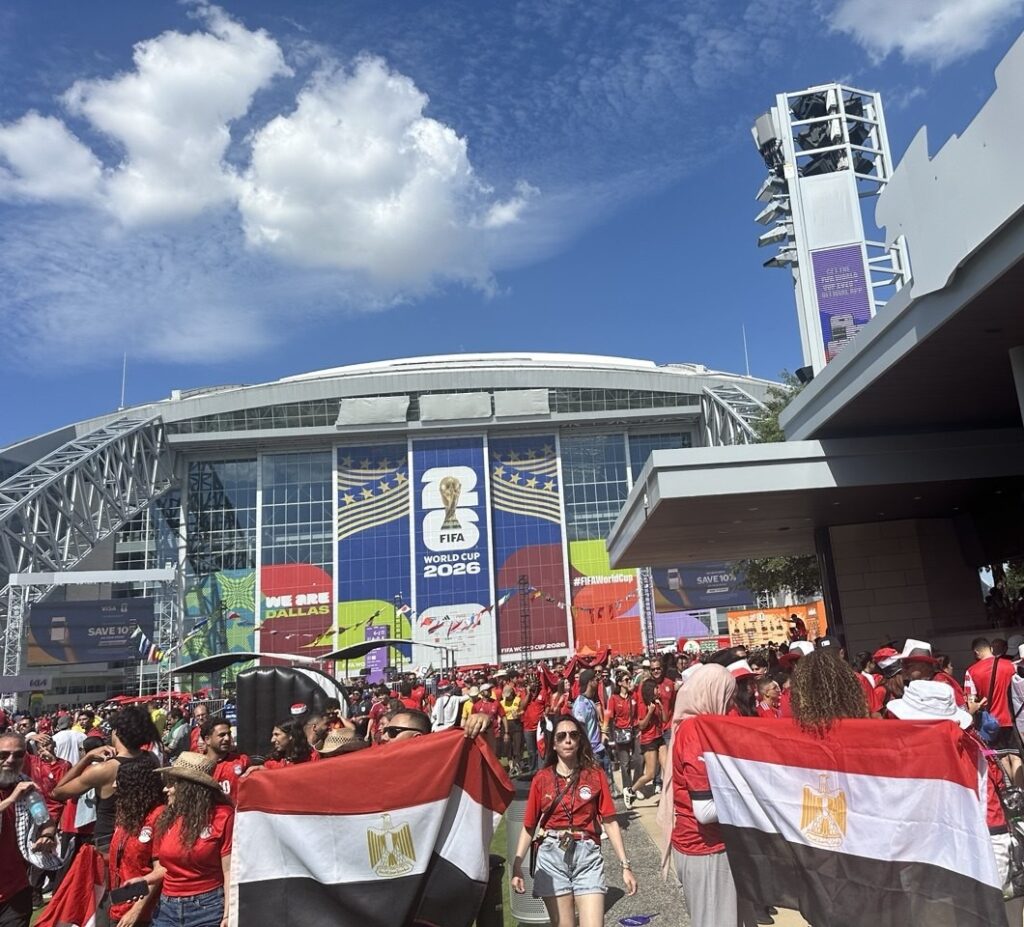
The game itself was stressful, but the real story was what happened to the city of Dallas for a day. Hours before the gates even opened, the parking lots outside the stadium looked like a street festival in Cairo. It was just a sea of red jerseys, families carrying coolers, and kids waving giant Egyptian flags out of car windows. Egyptian patriotic songs echoed outside and inside the stadium, while fans who had never met before hugged, waved flags, and chanted together in the walkways.
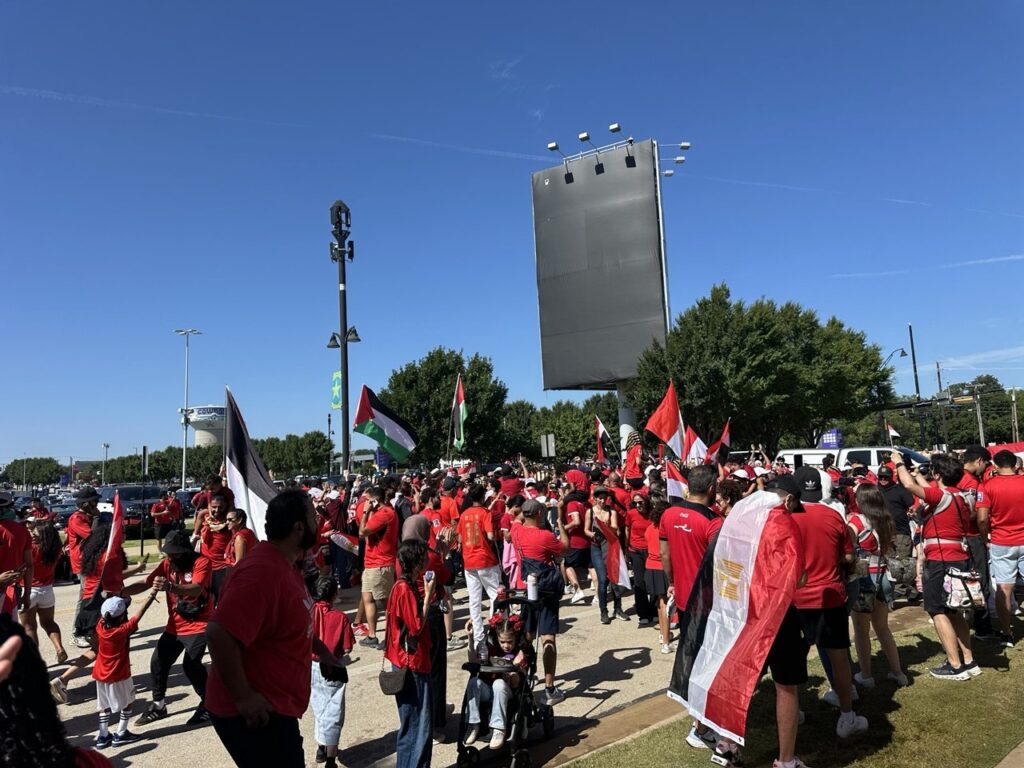
Once everyone got inside, it definitely didn’t feel like a neutral site. Every time Australia got near the ball, a wave of whistling and booing echoed through the stadium, and any time Egypt pushed forward on a counter-attack, the noise was deafening.
For the Egyptian-American diaspora, this wasn’t just a casual sports outing. Many older immigrants who hadn’t been back home in years were tearing up during the national anthem, while their college-aged kids—who grew up in Texas—were leading the chants in Arabic. By the time the game went to penalties, the tension in the stands was heavy, but the crowd literally carried the team through those final nerve-wracking minutes. For one unforgettable afternoon, the distance between Cairo and Dallas simply disappeared.
Morocco Is Building on Its Legacy
While Egypt’s remarkable journey has come to an end, Morocco is proving that its remarkable run in Qatar in 2022 was no one-time achievement. They look comfortable on this stage now. Winning 3-0 against Canada on their own turf proved that this team has a different level of confidence compared to a few years ago.
They play France next in the quarterfinals. Obviously, that matchup brings up a lot of history and tension outside of football. But the big difference this time around is that Morocco isn’t going into the game as the massive underdog just trying to survive. They actually look like serious contenders who expect to win.
Perhaps the most impressive aspect of this Moroccan side is how much it has evolved. In the last World Cup, they were mostly known for their crazy defensive discipline and holding onto leads. Today, Morocco combines that defensive discipline with a far more confident and proactive attacking style.
Having players like Azzedine Ounahi and Brahim Díaz in the mix means they can create real chances instead of just waiting around to counter-attack. They aren’t just living off the memory of 2022 anymore; they are creating something entirely new.
Egypt, Morocco, and a New Arab Football Moment
Out of a record eight Arab nations that started this expanded 48-team World Cup, only Egypt and Morocco remain. That alone says something important. Their paths have been different: Morocco arrived carrying the expectations created by its historic 2022 run, while Egypt arrived carrying decades of World Cup frustration and heartbreak.
Yet both teams have shown that Arab football is capable of more than symbolic participation. Morocco has built on its reputation with confidence and balance, while Egypt has found success through discipline, resilience, and the emotional force of its supporters.
Although Egypt’s journey has come to an end, its performances—and especially its historic victory over Australia—have given supporters plenty to celebrate. Morocco now carries the hopes of Arab football into the quarterfinals, but Egypt has already reminded the world that the region’s biggest teams belong on football’s biggest stage. Together, the two nations have made this one of the most memorable World Cups for Arab fans in recent history.
Want more articles like this? Sign up for our e-newsletter!
Check out our blog here!