
Subscribe
to receive news by email
Poll
Will the Trump Administration Shift U.S. Policy in Favor of Palestine?
- No (86%)
- Yes (14%)
 Loading ...
Copyright © 2026 Arab America
Go topThe Usage of Arab Culture in the West: Yet Discrimination against Arabs Still Remains
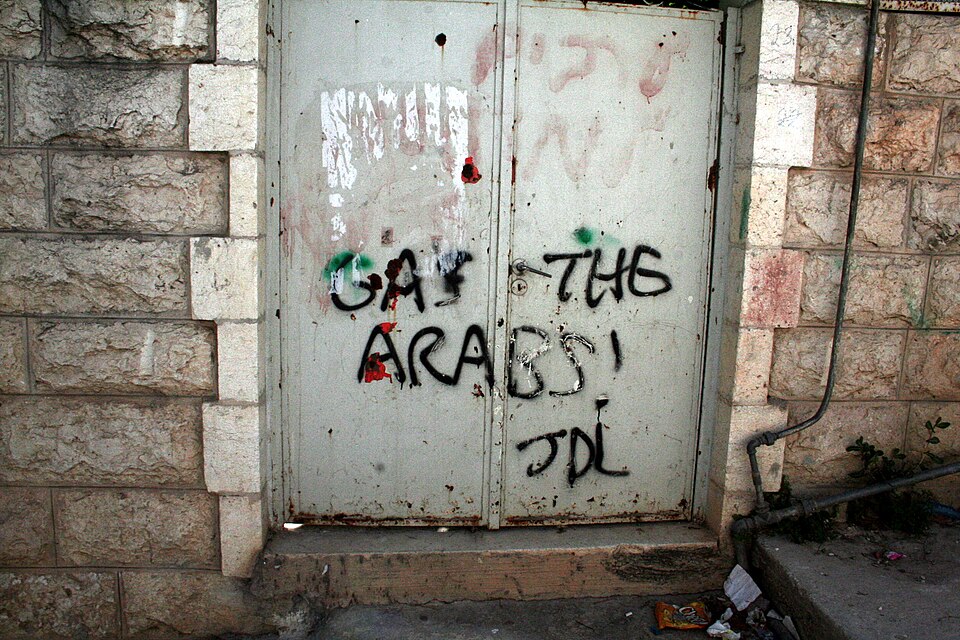
Photo Credit: Wikicommons
By: Nadia Boughanmi / Arab America Contributing Writer
Arabs in the United States are no stranger to discrimination. Grouping together Arabs and Muslims, while using Islamophobia as a form of anti-Arab hate is increasingly common. There are constant claims that all people from the MENA region are here to spread “sharia law.” Hate crimes and anti-Arab discrimination has been at an all time high since the spike seen after the 9/11 attacks in 2001.
Discrimination against Arabs has not gone away, yet Arab culture has taken a center stage for many westerners. The Dubai Chocolate trend is extremely popular, with hundreds of businesses tagging along on the trend and children loving the sweet snack. Shawarma and falafel are well loved foods throughout the US, yet people can’t seem to love the region they originated from. Saint Levant and Dystinct have become increasingly popular artists that sing in various Arab dialects. Yet, if Arabic is spoken between families in public areas around the western world, they are subjected to harassment and stereotypes.
Arab Culture as a Viral Trend
In the past 2 years, opening up TikTok or Instagram reels meant seeing Arab culture displayed as a trend in some way. From the “viral” Dubai Chocolate to the “viral” crispy shawarma, Arab foods have been the center of many viral trends. Mediterranean places, whose cuisines at the base have heavy influences from the Levant, market themselves as “healthy alternatives.” Yet, they lack the credit of their cuisine belonging to the Arab world. Pickled vegetables and labne being “discovered” by westerners as gut healthy foods and are being posted on TikTok as tips for healthy living.
The beauty space on social media platforms is not shy of having Arab culture being a trend. Yara, a perfume made by the Arab brand “Lattafa,” has become increasingly popular, even being sold on TikTok shop to be more accessible. Many beauty influencers have also created perfume testing segments on their page, that feature various Arab perfumes. Two highly popular beauty brands, “Huda Beauty” and “Kayali,” are both Arab owned and influenced as well. Body care has also adapted many elements of MENA culture. Moroccan hammams, rose water, bakhoor and oud have all been highly popularized to take care of one’s hygiene.
Music, the biggest trend of all, hasn’t strayed from a focus on Arab artists. Saint Levant, who has Algerian and Palestinian descent, has become extremely popular in the last 2 years. He sings in a variety of dialects, most commonly in Shammi, with his songs being heard anytime you open up a social media platform. Dystinct had produced one the most popular Arab “trend songs,” “YAMA.” From night clubs to a 15 second lipsync video, “YAMA” was heard across cultures in the western world. He commonly sings in the Moroccan dialect, but has recently shifted to other Middle Eastern ones.
Trends Don’t Stop Discrimination
Even with elements of Arab culture being at the front of various trends, discrimination against the community still stands. Since October of 2023, anti-Arab hate crimes have spiked greatly. Many conservative groups have associated being Arab with being Muslim, wrapping Islamophobic rhetoric into anti-Arab discrimination. Accusations of Muslims being dangerous and wanting to bring sharia law as oppression have been more prominent as ever. Protests with the premise of wanting Arabs and Muslims gone have been spotted in various countries.
Growing up in the west, many Arab children have faced discrimination for being “dirty” and “smelling weird.” Yet the body care and perfume used by Arabs, is now a trend for everyone else to smell the same way. Speaking Arabic was an insecurity and a ticket to getting stopped at airport security or scrutinized by racist individuals. However, now, that same language is enjoyed and listened to across platforms.
North African hate is still extremely prevalent across European countries. From Italy to France, racism against Moroccans has been an ongoing issue in recent years. Even through this hatred against North Africans, Moroccan artists like Dystinct and Morad are popularized and “trendy” in those same countries.
Even though the Arab diaspora and the MENA region have played a role in shaping current trends, they still feel unwelcomed in the western world and face mass amounts of hate. It is now clear that even with Arab culture being popularized and “normalized,” the discrimination won’t be subsidized.
Want more articles like this? Sign up for our e-newsletter!
Check out our blog here!