

Subscribe
to receive news by email

Poll
Will the Trump Administration Shift U.S. Policy in Favor of Palestine?
- No (86%)
- Yes (14%)
 Loading ...
Copyright © 2026 Arab America
Go topTPS Changes Affecting Arab Communities
By: Megan Guzman Abbott / Arab America Contributing Writer
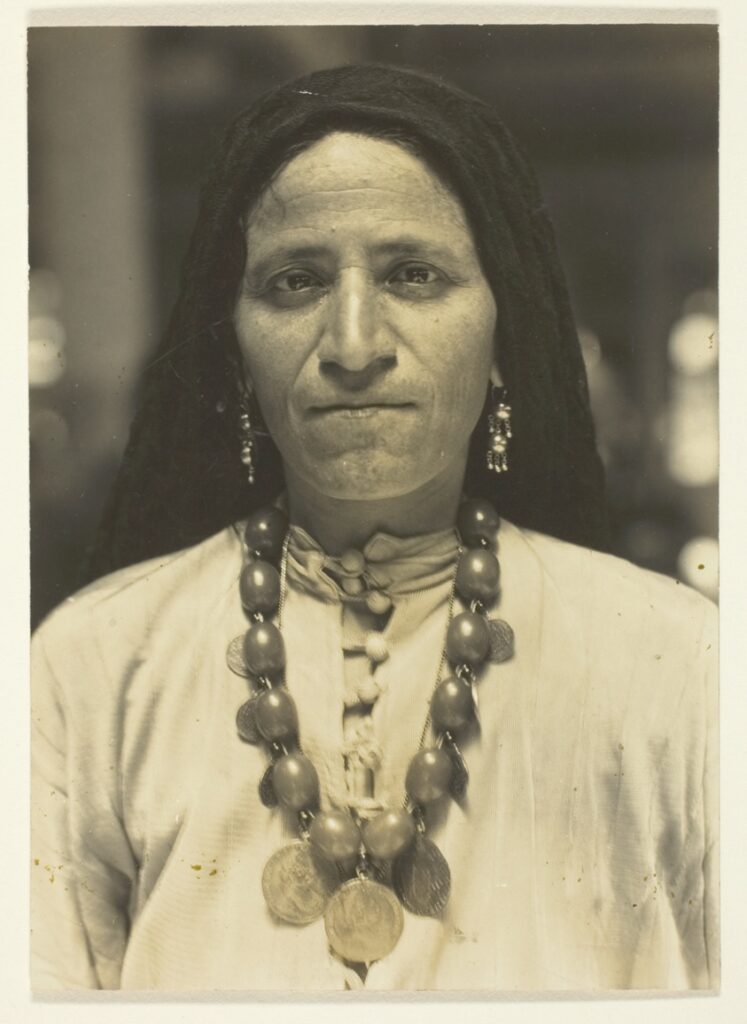
A Syrian immigrant woman at the turn of the 20th century—a reminder that Syrian roots in America run deep. Today, with Temporary Protected Status ended for Syrians, some who have spent nearly 15 years building lives here face an uncertain future.
On July 27, Temporary Protected Status for Syrian nationals came to an end, affecting thousands of Syrians who had relied on the program to remain and work legally in the United States. According to the Pew Research Center, around 6,100 Syrian nationals held TPS when it was terminated. Yet, this is more than about a number. For Syrian Americans and the broader Arab American community, the decision has raised major concerns about employment, family stability, immigration uncertainty, and what happens when a framework that has allowed people to build new lives in the US suddenly disappears.
What Was Syrian TPS?
Temporary Protected Status is a humanitarian immigration protection created by Congress for people from certain countries that are experiencing conflict, natural disasters, or temporary conditions making it unsafe for them to return. Syria was first designated for TPS in 2012 due to the ongoing Syrian Civil War, making it dangerous for citizens to return. Alongside the destruction of infrastructure and resources, it became a humanitarian crisis that could not be ignored.
This protection, however, was never intended to be permanent. In September 2025, the Department of Homeland Security announced that it would terminate Syria’s TPS due to them no longer met the conditions for TPS. This was challenged in court in June 2026, where the Supreme Court ruled that lower courts can not block the termination.
Yet losing TPS does not automatically mean that every Syrian TPS holder was to be deported. Immigration status is individual, and some people may have another basis to remain in the US. But for those whose only protection was TPS, many can lose employment authorization and face uncertainty about finding other ways to remain legally in the country.
While the policy directly affects Syrian TPS holders, its impact extends into the broader Arab American community. Around 3.7 million Arab Americans live across the US. While Arab Americans have roots in all 22 Arab countries, Syria is among the countries with the largest number of ties. The Arab American Institute itself has described the Supreme Court’s 2026 decision on Syrian and Haitian TPS as having implications beyond the individuals directly affected, arguing that the ruling could affect existing and future TPS designations.
For the broader Arab American community, the Syrian TPS case raises a larger question: What happens when humanitarian protections for Arab immigrants can change after years of reliance on them?
A Changing Syria
Since the fall of Bashar al-Assad in December 2024, Syria has been moving through a political transition and has been attempting to rebuild its international relationships. The United States, for instance, has taken steps towards greater engagement with Syria. This August, the US removed Syria from its list of states sponsoring terrorism, a positive shift in US-Syrian relations.
But improving diplomatic relationships does not mean that every Syrian can safely return. Syria continues to recover from years of war and displacement, and the state’s political transition is still ongoing. In July, the United Nations Secretary-General António Guterres visited Damascus and emphasized international support for Syria’s reconstitution while also displaying concerns over the state’s violence and lack of accountability.
Beyond Syria
The Syrian case is also part of a larger change in the United States TPS system. The Trump administration has moved to terminate TPS designations affecting more than one million people from multiple countries by August 2026. Syrian TPS holders are only a small portion of that population.
Other Arab countries have been part of the TPS system. For example, as of August 2026, Lebanon had 140 TPS recipients. But unlike Syria, Lebanon’s designation remains in effect. For Arab Americans, that makes the Syrian case worth watching beyond its immediate impact, but instead shows how quickly immigration protections can change when US assessments of conditions in another country change.
The Human Cost of Losing TPS
At other times, the consequences of ending TPS can also extend beyond employment and immigration status. For some, the uncertainty of deportation can have emotional and psychological effects. This became visible in the case of Pierre Damas Bel, a 20-year-old Haitian college student in Ohio. Bel came to the United States from Haiti, graduated high school with honors, and had recently begun college with aspirations of becoming a doctor. After Haiti’s TPS protections were terminated, he was placed on an ICE ankle monitor while his immigration case remained unresolved. On August 31, Bel died by suicide.
His story is not a Syrian story, but illustrates why the effects of TPS can extend beyond paperwork. The termination of protections can affect a person’s ability to work, attend school, support their family, and feel secure about their future.
For Arab American communities watching the end of Syrian TPS, Bell’s death is a reminder that immigration policies have consequences that are difficult to measure in stats alone.
What Comes Next?
For Syrian TPS holders, the end of the program does not necessarily mean that every legal option has disappeared. Some may qualify for other forms of immigration relief or have already pursued another immigration status. Others may need to consult an immigration attorney. For the Arab American community, however, the effects will continue to be felt through families, community organizations, workplaces, etc.
For the approximately 6,100 Syrians who were directly affected, the question is now what comes next. For the broader Arab American community, the question may be even bigger: How should the community respond when immigration policies affecting one group of Arabs have consequences that reach far beyond one nationality?
Want more articles like this? Sign up for our e-newsletter!
Check out our blog here!