Subscribe
to receive news by email

Poll
Will the Trump Administration Shift U.S. Policy in Favor of Palestine?
- No (86%)
- Yes (14%)
 Loading ...
Copyright © 2026 Arab America
Go topUAE’s Exit from OPEC: Economic Strategy or Political Tensions with Saudi Arabia?
By Aziz Hellal / Arab America Contributing Writer
The United Arab Emirates’ decision to leave OPEC marks a fundamental realignment in global energy markets and raises serious questions about the future of oil cooperation in the Gulf.
For decades, OPEC has depended on cooperation among major oil-producing states, with Saudi Arabia often playing the leading role in shaping production decisions and defending price stability. The UAE’s exit challenges that image of unity and prompts a debate about whether the old model of Gulf coordination is beginning to weaken.
On the surface, the decision appears to be about economics. Abu Dhabi has invested heavily in expanding its oil production capacity and wants more freedom to benefit from those investments. However, the move may also reflect a deeper political tension with Saudi Arabia. Both countries are close partners but also compete for influence, investment, and leadership in the region.
This makes the UAE’s exit from OPEC more than a technical energy decision. It may be a sign of a changing regional order.
OPEC, Oil Policy, and the UAE’s Position
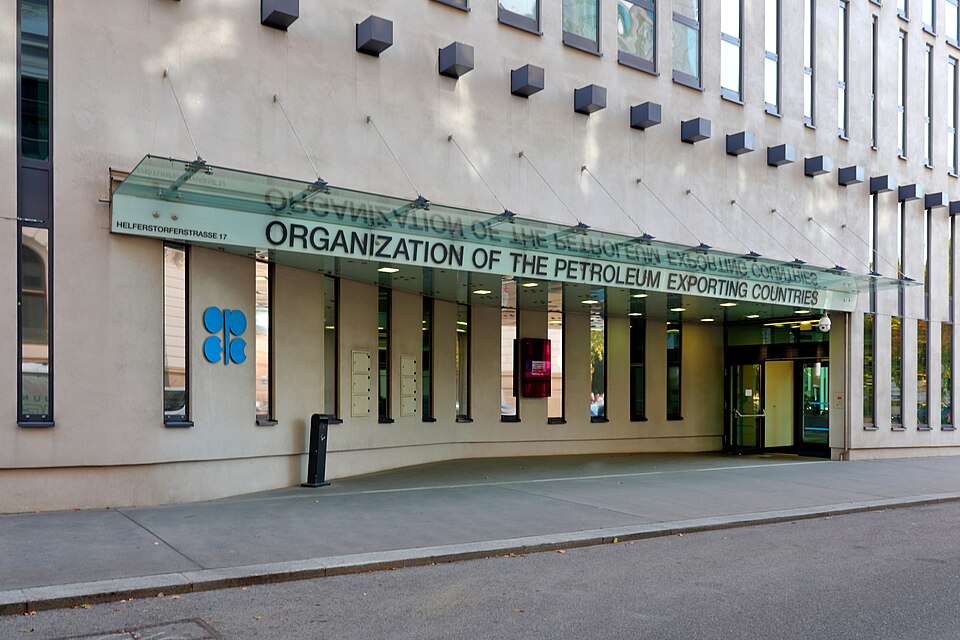
OPEC (the Organization of the Petroleum Exporting Countries) is a group of major oil-producing nations that work together to manage how much oil they produce. By adjusting production levels, the organization tries to keep oil prices stable and avoid sharp changes in the global market.
For decades, Saudi Arabia has acted as the organization’s de facto leader and “swing producer” inside OPEC, using its large production capacity to influence decisions and guide the group’s overall strategy. This leadership has helped maintain a level of coordination among member states, even during times of global uncertainty.
The UAE, however, has gradually carved out a distinct path. As the third-largest producer, its decisions carry immense weight. For years, Abu Dhabi poured billions into expanding its production capacity—aiming for 5 million barrels per day by 2027—only to find itself stifled by rigid OPEC quotas. This created a fundamental friction: the UAE was paying for infrastructure it was not allowed to fully utilize, ultimately making the decision to step away a matter of economic necessity.
Ultimately, the UAE could no longer justify leaving its low-cost production idle while its regional neighbors, particularly Saudi Arabia, used the organization to prioritize price floors over the UAE’s growth-oriented model. This widening gap between national ambition and collective restriction set the stage for Abu Dhabi’s historic exit.
Economic Interests vs. Saudi Strategy
Saudi Arabia and the UAE view the global energy market through fundamentally different lenses. For Riyadh, OPEC production limits are essential tools to defend oil prices and maintain market control—a necessity for funding the massive domestic transitions of Vision 2030. As the group’s largest producer, Saudi Arabia prioritizes collective discipline, fearing that overproduction could dilute the group’s geopolitical leverage.
For the UAE, however, this approach became harder to accept. Abu Dhabi wanted more room to use its growing production capacity, while Saudi Arabia wanted members to follow a more unified strategy. This created a basic disagreement: Saudi Arabia prioritized price stability and collective control, while the UAE prioritized flexibility and national economic growth.
For the UAE, however, this “discipline” became an expensive burden. While Saudi Arabia prioritized price stability, Abu Dhabi prioritized monetizing its assets. The UAE wants the flexibility to reinvest oil wealth into its own diversification projects before the global energy transition reduces the long-term value of oil.
This difference shows that the issue is not only about oil barrels or production quotas. It is about two Gulf powers with different economic priorities. Saudi Arabia seeks to manage the market through discipline and coordination, while the UAE seeks greater flexibility to pursue its own national goals.
The tension between the UAE and Saudi Arabia extends far beyond oil policy. In recent years, Saudi Arabia’s Vision 2030 has pushed Riyadh to compete more directly with Dubai and Abu Dhabi as a regional business hub. Riyadh’s “Regional Headquarters” policy—which requires international firms to base themselves in the Kingdom to access government contracts—was a direct strike at the UAE’s economic model.
In this light, the UAE’s exit from OPEC is a calculated move to reclaim economic sovereignty and protect its competitive edge in the region.
From Partnership to Rivalry?
The UAE and Saudi Arabia remain important partners, but their relationship has become more competitive in recent years. The rivalry is not only economic. It also appears in regional politics, where the two countries conduct proxy wars based on these different goals and actors.
Yemen is one of the clearest examples. Saudis’ and the UAE entered the war as partners, but their priorities later became different. Riyadh focused more on protecting its border and supporting a unified Yemeni state, while Abu Dhabi built close ties with southern forces that pushed for greater autonomy. This difference created serious tension between the two allies while fueling a Yemeni Civil War.
Sudan has also become another point of disagreement. Saudi Arabia has tried to position itself as a mediator, while the UAE has been accused of backing the Rapid Support Forces, accusations Abu Dhabi denies. These differences show that both countries are trying to shape regional outcomes in ways that serve their own interests.
The UAE’s close relationship with Israel adds another layer. Since the Abraham Accords in 2020, Abu Dhabi has moved faster than Riyadh in building formal ties with Israel. Saudi Arabia has been more cautious, especially because of the Palestinian issue and the political risks of normalization. This does not mean that the UAE and Saudi Arabia are enemies, but it shows that they are no longer moving in the same direction on every major regional issue.
Because of this wider competition, the UAE’s exit from OPEC can be seen as part of a broader shift. It is not only about oil production. It is also about two powerful Gulf states trying to define their own roles in a changing Middle East.
What Comes Next?
The UAE’s exit from OPEC raises important questions about the future of cooperation among major oil producers. If one of the group’s key members decides that its national interests are better served outside the organization, it may encourage other countries to rethink their positions as well. This could weaken OPEC’s ability to manage the global oil market and maintain price stability.
At the same time, the decision reflects a broader shift in the Gulf. The relationship between the UAE and Saudi Arabia is no longer defined only by partnership, but also by competition—both economic and political. As both countries continue to pursue their own visions for growth and influence, their policies may increasingly diverge.
In the end, the UAE’s move is not just about oil. It is a sign that the balance of power in the Gulf is evolving, and that traditional alliances may become more flexible in the years ahead.