

Subscribe
to receive news by email

Poll
Will the Trump Administration Shift U.S. Policy in Favor of Palestine?
- No (86%)
- Yes (14%)
 Loading ...
Copyright © 2026 Arab America
Go topWhy Lebanon Cannot Afford a Premature Peace with Israel
By: Ghassan Rubeiz / Arab America Contributing Writer
Ignoring Israel’s highly aggressive war conduct in Lebanon and the chaotic regional context, President Trump is pressing the Lebanese state toward making peace with Tel Aviv.
A Lebanese reader of my weekly column draws my attention to the idea that: “A peace treaty with Israel would involve the withdrawal of Israeli troops from Lebanese territory, the complete halt of all bombings and destruction, and the rebuilding of the country. And this is what Lebanese people are craving for.”
Another reader has a different opinion: “Israel keeps saying that they want security, and people believe and keep repeating that mantra. Of course, security is one of their desires, but it is not the most important one. Their most important desire is to keep expanding, and they use security as the pretext for their expansion.”
Regardless of which of these two different -and familiar- opinions is correct, the Lebanese must unite before taking the historic step of signing a peace treaty with a state whose record of honoring land-for-peace commitments is poor
Lebanon and Israel have never had peace since the creation of the new, well-armed state. The 1949 Armistice that ended the first Arab-Israeli war left their border formally quiet but politically unresolved. That fragile arrangement collapsed repeatedly — Israeli raids into southern Lebanon in the 1960s and 1970s, the full-scale invasion of 1982, the eighteen-year occupation that followed, and the devastating war of 2006. Each cycle left deeper wounds and wider distrust. The current conflict is not an aberration. It is the latest chapter in a relationship defined by asymmetric power and neglected grievances.
Lebanon has a promising new president. Joseph Aoun took office in January 2025 after more than two years of political paralysis, inheriting a country in ruins. The prospect of Aoun shaking hands with Prime Minister Netanyahu in Washington would not be a gesture of reconciliation. It would be an act of surrender. For one thing, there is no nationwide Lebanese trust in the ability of President Trump to pressure Israel to withdraw totally from Lebanon. And the timing is not suitable.
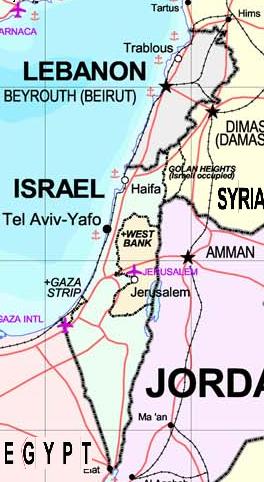
Living in an environment of impunity, Israel is carving out a security buffer zone along Lebanon’s southern border, nearly ten kilometers deep. More than one million Lebanese have been displaced. In designated demographic areas (largely Shiite), entire towns — homes, schools, clinics, infrastructure — lie in ruins. Even under a US- brokered ceasefire, clashes between Israel and Hezbollah continue. There is no clear path to ending this conflict as long as the wider confrontation with Iran remains unresolved. And yet Washington is pressing Lebanon toward a peace agreement — at the very moment when Lebanon is least able to absorb one.
Lebanon would be negotiating from profound weakness. It is one of the smallest and most fragile states in the Arab world, governed by a confessional system long plagued by corruption and paralysis. Even with a current competent cabinet, the state lacks the institutional strength to enforce or sustain a historic peace treaty with Israel. Nations do not sign durable peace agreements when their institutions are this brittle and their communities are so divided.
Israel, for its part, is governed by one of the most fanatical leaderships in its history. The nation is historically traumatized and ideologically very divided. It rationalizes hegemony with disproportionate revenge. Over the past few years, Israeli society has drifted towards authoritarianism and religious politics. Its officials speak of a “historic opportunity” to reshape the Middle East — while conducting military operations simultaneously in Gaza, the West Bank, and against Lebanon and Iran. What Israel seeks is normalization without accountability: recognition without a credible commitment to Lebanese sovereignty or Palestinian rights. For Lebanon, negotiating under these conditions is not diplomacy. It is capitulation dressed as statecraft. Lebanon remembers the Israeli occupation of its territories that lasted from 1978 to 2000. With Israeli forces again operating on Lebanese soil, entering a peace process now is not courage — it is tantamount to submission.
The United States is not positioned to guarantee Lebanon’s interests. US relations with Israel have always been symbiotic, despite the current rise of criticism of Israel’s military conduct in America and globally. Furthermore, the overwhelming support for Israel in Congress does not reflect as yet the trend of diminishing favorability for Israel within the American society.
The regional context makes this clearer still. Even Saudi Arabia — wealthy, stable, and far more capable of absorbing risk — has refused to join the Abraham Accords because Israel has not addressed the future of Palestine while giving indications that it intends to annex the West Bank and part of Gaza, and ethnically cleanse their Palestinian populations. If Riyadh is cautious, how can Beirut, economically devastated and socially fractured, take a step that even the region’s strongest Arab state considers premature?
Inside Lebanon, the timing is especially perilous. Any peace discussion immediately raises the question of Hezbollah’s arms. But demanding disarmament now is not a path to sovereignty — it is a path to internal conflict, especially at this time, when Hezbollah’s arms are being deployed in resisting the current Israeli onslaught. Hezbollah’s weapons cannot be wished away by a treaty; they can only be addressed through a sustained process of national reconciliation that may begin with the acknowledgment of the political and humanitarian grievances of Lebanon’s Shiite population. Reconciliation must precede geopolitical realignment, not follow it.
A rushed peace risks igniting the very crisis the Lebanese fear most: sectarian strife. A treaty that splits the country between a pro-Israel and a pro-Iran camp could fracture Lebanon along lines it may not survive. External patrons would harden those divisions. The result could be a new phase of sectarian conflict, reminiscent of the 15 years of civil war — this time with the added pressure of a signed agreement that probably half the country rejects.
Lebanon is already staggering. A quarter of its population is displaced. The economy is in free fall. The state is partially occupied. Peace with Israel is not impossible — but it must come when Lebanon is strong enough to negotiate and hold Washington responsible for its promises, stable enough to absorb the consequences, and unified enough to protect its internal balance. Today, none of those conditions exists. A premature peace would not be a diplomatic achievement. It would be a gamble with the survival of the state.
Ghassan Rubeiz is the former Middle East Secretary of the World Council of Churches. Earlier, he taught psychology and social work in his country of birth, Lebanon, and later in the United States, where he currently lives. He has contributed to political commentary for the past twenty years and has delivered occasional public talks on peace, justice, and interfaith topics. You can reach him at rubeizg@gmail.com
The views and opinions expressed in this article are those of the author and do not necessarily reflect the position of Arab America. The reproduction of this article is permissible with proper credit to Arab America and the author.
Want more articles like this? Sign up for our e-newsletter!
Check our blog here!