

Subscribe
to receive news by email

Poll
Will the Trump Administration Shift U.S. Policy in Favor of Palestine?
- No (86%)
- Yes (14%)
 Loading ...
Copyright © 2026 Arab America
Go topZaghrouta Is Not “Weird”: Sabrina Carpenter’s Coachella Controversy
By: Nourelhoda Alashlem/ Contributing writer
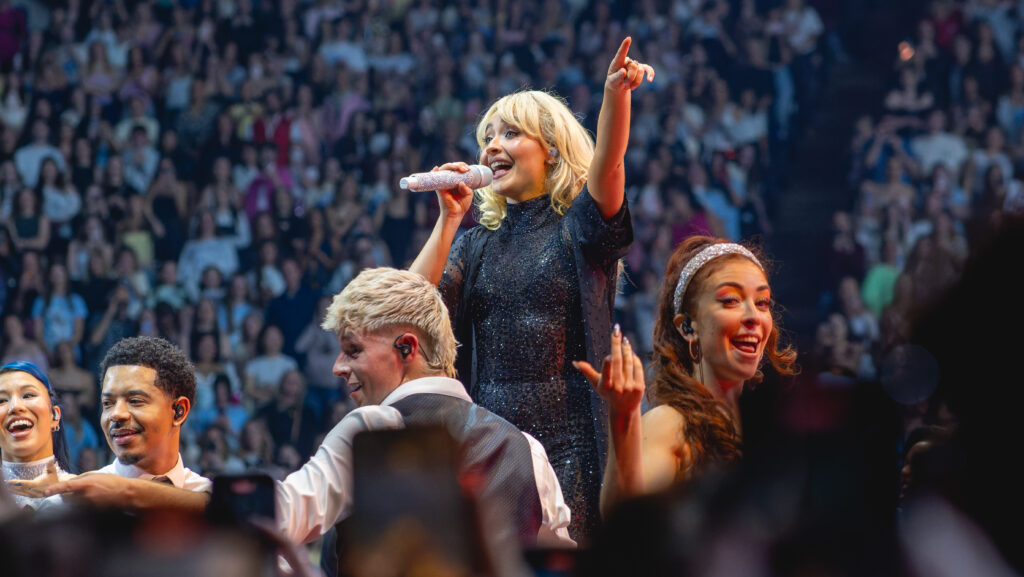
At Coachella this year, a brief exchange between pop singer Sabrina Carpenter and a fan quickly turned into a viral, controversial moment.
Sabrina Carpenter, the 26-year-old artist behind hits like “Espresso” and one of the headliners of the 2026 California music festival, was performing her Old Hollywood–themed set on Friday night when a high-pitched sound cut through the crowd.
“I think I heard someone yodeling,” she said into the microphone. “Is that what you’re doing?”
From the audience, someone shouted back, “It’s Arab! It’s an Arab call.”
“I don’t like it,” Carpenter responded.
The fan tried again to explain: “It’s my culture.”
Still confused, Carpenter replied, “That’s your culture, is yodeling? … Is this Burning Man? What is going on?”
What Sabrina didn’t realize at the time was that the sound wasn’t yodeling at all. It was a “zaghrouta,” a high-pitched ululation used across Arab communities and parts of Africa to express joy, celebration, and pride, mostly during weddings and special occasions.
The exchange lasted only a few seconds, but it quickly spread across TikTok and other social media platforms. What might have seemed like a “small misunderstanding” turned into a much wider conversation, with many pointing out how often cultural expressions, especially from Arab communities, are dismissed or misread before they are understood.
What is a Zaghrouta?
A zaghrouta (زغروتة), often translated as “ululation,” is a high-pitched sound made by rapidly moving the tongue while projecting the voice. It’s most commonly performed by women and is widely recognized across Arab communities and in Africa as a sign of joy and celebration.
You will hear it at weddings when the bride enters, during engagements, graduations, the birth of a child, and even moments of national pride. In some cases, it’s also used in funerals to honor someone and express deep emotion.
For many, the louder the zaghrouta, the more love behind it.
At Coachella, the fan was probably making this sound because they were enjoying Carpenter’s performance and showing support and love towards her.
Watch down below how different countries have their own style of zaghrouta:
Shakira, the Super Bowl, and the Same Reaction
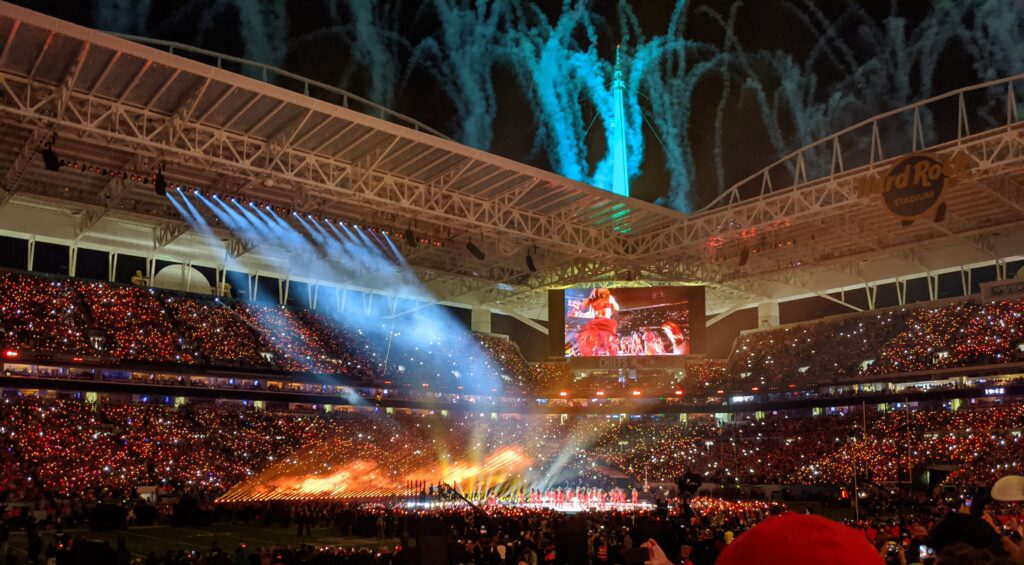
The reaction to Sabrina Carpenter’s moment isn’t new—a similar situation in 2020 during the Super Bowl with Shakira.
During the Super Bowl halftime show, as homage to her Lebanese background, Shakira was performing a zaghrouta during her halftime show, paired with a quick tongue movement right before singing “Hips Don’t Lie.” The moment went viral immediately, but much of the online reaction focused on confusion.
Many viewers turned it into memes humorously without understanding what the zaghrouta was.
TikTok and the Backlash
After the Coachella clip spread online, TikTok and other social media platforms quickly filled with reactions.
Some users criticized Carpenter’s response, pointing out how quickly the zaghrouta was dismissed, even after someone in the crowd said it was part of their culture.
At the same time, others responded through humor. Memes started circulating, including edits with Arab and North African women reacting to the moment.
People also began posting their own Zaghroutas, sharing clips from weddings and celebrations, and captioning the videos with “How to scare Sabrina Carpenter.”
Sabrina Carpenter later apologized, saying she didn’t recognize the sound at the time. If Coachella 2026’s Zaghrouta teaches us anything, it’s that cultural fluency isn’t about knowing everything. It is about what you do when you come across something unfamiliar.
Curiosity outperforms dismissal. “Tell me more” beats “This is weird.” It invites a conversation for learning about culture.
The conversation that the Coachella Zaghrouta sparked is a much larger topic of how we receive and respond to cultural expressions outside our own experience and how we need to recognize them.
And once people understand that, the sound that was once called “weird” becomes what it has always been: a powerful expression of love.
Want more articles like this? Sign up for our e-newsletter!
Check out our blog here!







_(cropped).jpg)