
Subscribe
to receive news by email

Poll
Will the Trump Administration Shift U.S. Policy in Favor of Palestine?
- No (86%)
- Yes (14%)
 Loading ...
Copyright © 2026 Arab America
Go topFrom the Coal Mines to Havana Street: How Arab Americans Made Their Name in Colorado
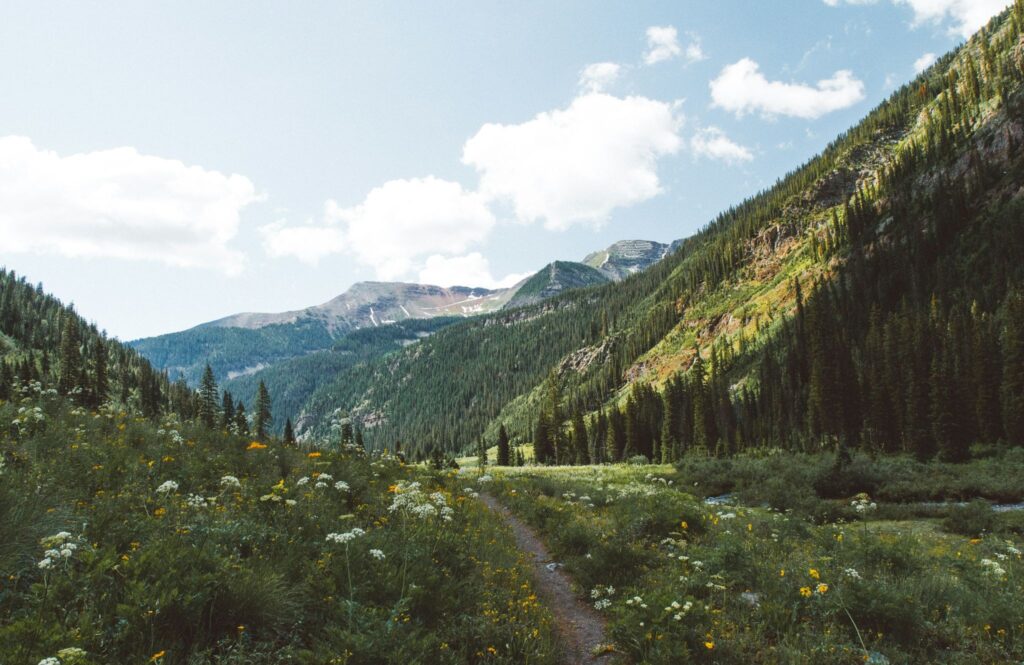
Photo by Holly Mandarich on Unsplash
By Shayla Frank / Arab America Contributing Writer
If you turn down Havana Street in Aurora, Colorado on a weekday you’ll find that the Arab world unfolds along the block. From a Yemeni grill next to a Lebanese bakery, an Iraqi market and a hookah lounge a few doors all on the same block, the smell of charcoal and cardamom drifts into the parking lot. Denver has a second stretch like it on South Colorado Boulevard, and the state holds pockets of it from Colorado Springs to the old coal towns of the south. Together they are the visible edge of a community that has spent more than a century in Colorado and, for most of that time, gone unnoticed by the people around it.
Roughly 42,000 Coloradans now trace their roots to the Arabic-speaking world, by the Arab American Institute’s count, and even this is considered an undercount since the census has never printed a box that includes these families.
Their stories stretch from a variety of backgrounds, many of them untold. From coal miners and merchants to refugees and restauranters, the generations that have always been here are all doing the same thing – making a name for Arabs in Colorado, one storefront and one family at a time.
It Started In The Coal Mines
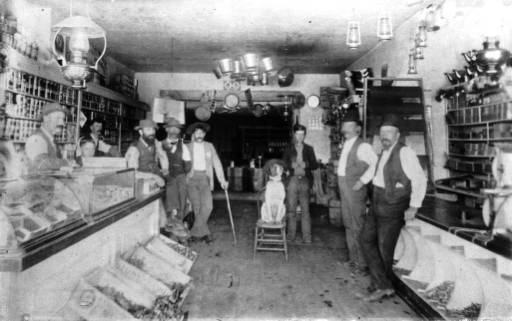
Photo Credit: Denver Public Library Digital Collections, Interior View of Grocery Store in Lyons, Colorado 1870-1880
The story is older than most Coloradans know, and it begins underground and we have to go back to Colorado mining heyday between the 1890s and 1920s. At the time, Colorado ranked among the country’s largest coal producers, its southern seams feeding the railroads and the great Colorado Fuel and Iron steel mill in Pueblo.
The work drew laborers from more than twenty nationalities into the coal towns of Trinidad, Aguilar, and Walsenburg, and among them came families from Mount Lebanon, the Beqaa Valley, and the districts around Beirut, pushed out by a collapsing silk trade and pulled by the promise of a wage. And many forget the stories of Syrian and Arab Families who helped build the Colorado coal mining communities.
This is just where the story begins. Few of them stayed miners for long and they used the work as a foothold, allowing them to open markets, bakeries, and taverns the camps needed, and some moved on to ranching or a trade. Joyce Habib Ballotti, was a daughter of immigrants with her family’s origins tracing back to Lebanon and Italy. In a later interview she gave she remembers how her family listened to “Arabic music and ate typical Syrian meals” and how her upbringing eventually led them to own a family grocery store adding to Colorado’s rich mining cosmopolitans. Her story is one of many that recounts the story of Arabs coming to Colorado.
Joseph Sawaya got his start carrying bags of groceries out to the miners around Trinidad. Later in 1912 he opened a wholesale grocery that can still be found serving customers today in southern Colorado. Sawaya’s legacy would continue on with his son George who grew up to be a well-known saxophonist in the region.
If you travel northwest of Walsenburg, you’ll find a town called Farisita which carries the legacy of the Faris family who ran a local store and their daughter who went on to teach school, run a ranch, and help set up local healthcare. And if you travel a bit further you’ll find another store called Hadad’s Home Furnishings in Trinidad which started as peddlers in nearby Segundo and, like many, anglicized their name to get by. Their descendants still work in Trinidad today, as merchants and car dealers and landowners, a family name that outlasted the mines that drew it west.
A Community that Outgrew One City
As people’s roots began to settle from the southern coalfields, Syrian and Lebanese families moved into Pueblo and Denver, and Lebanese immigration reached El Paso County, around Colorado Springs, well into the 1930s. Colorado Springs today holds a community of Arab professionals, doctors and engineers and business owners, gathered in part around the Islamic Society of Colorado Springs, founded in 1982, and Masjid Al-Farooq. Likewise, university towns drew their own share, and the Islamic Center of Boulder was founded in the late 1970s by students at the University of Colorado. All told, Arab Coloradans now live in forty-five of the state’s sixty-four counties.
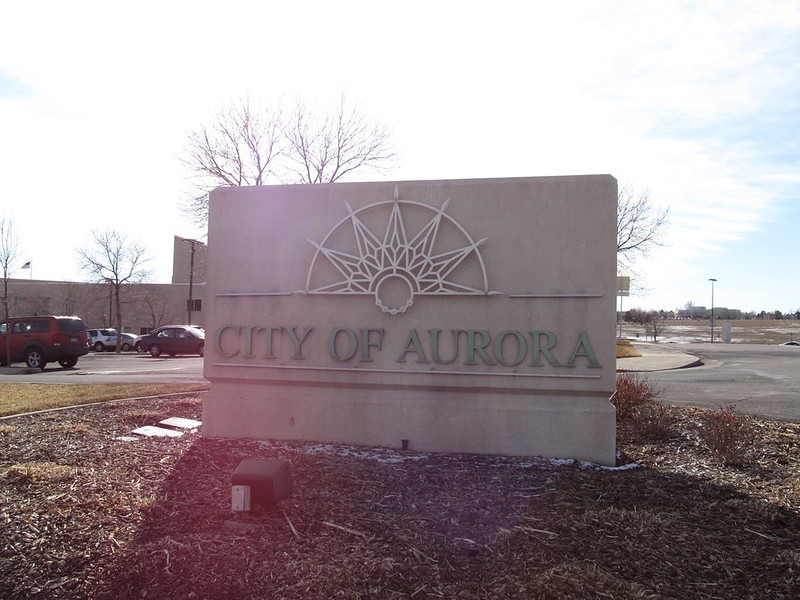
Photo Credit: Ken Lund (CC 2.0) https://www.flickr.com/photos/kenlund/6780650651
But the heart of it is Aurora, and to a lesser degree Denver. It is along Havana Street that the markets and restaurants stack up thickest, and it is in Aurora, where the public schools rank among the most diverse in the state, that the children of the newest arrivals grow up alongside the whole world.
There is no clean count of Arab-owned businesses here, for the same reason the population is under counted, but you can walk two corridors and pass more than two dozen, most of them family-run and many just a few years old. It is the visible edge of a national pattern, in which immigrants open businesses at a higher rate than the native-born, and refugees at a higher rate still.
Starting From Nothing
Few of the newest arrivals started with much, and what has changed for them is that a handful of institutions now exist to turn a hard landing into a livelihood. In Denver, a kitchen called Comal, ran by the nonprofit Focus Points, trained immigrant and refugee women to turn a family recipe into a business and pays them while they learn. Its lead chef, Vian Al Nidawi, is an Iraqi-Syrian refugee who came up through the line and although it has since closed in 2025 it allowed for many women to leave with catering licenses and restaurant jobs of their own.
A few miles east, in Aurora, Mango House gathers the same idea under one roof, a refugee-run food hall with a clinic and immigrant services attached, where a family can run a first storefront without the crushing cost of one. A Syrian family sells knafeh from one stall and a Sudanese family grills kabobs from another, and a newcomer can eat, see a doctor, and look for work in a single building.
Others built from nothing but a dream. Bridget Leahy grew up on Long Island, studied Arabic and Middle Eastern politics at the University of Denver, and fell for the culture during a semester in Amman. After her studies, she came home and built a Jordanian-style lounge of her own, and though she is not Arab herself, the community took her in, which is its own kind of arrival.
The Taste of Home
What fills these storefronts is memory, and no one is chasing it more deliberately than Bouchra Benlaghlid. She left Morocco at 19, arrived with a degree that spanned science and art, and spent years teaching before she admitted that what she loved most was taking care of people, the small grace of a good welcome.
Around 2021 that instinct became Reem’s Bakery on South Colorado Boulevard, built around one sweet most of Denver had never really met. To make it right she partnered with Emad Allouf, a Syrian chef with thirty years at the craft before he crossed the ocean, and together the Moroccan baker and the Syrian master set out to put baklava in front of a city under their own name, a dessert that many Denverites had never tasted before.
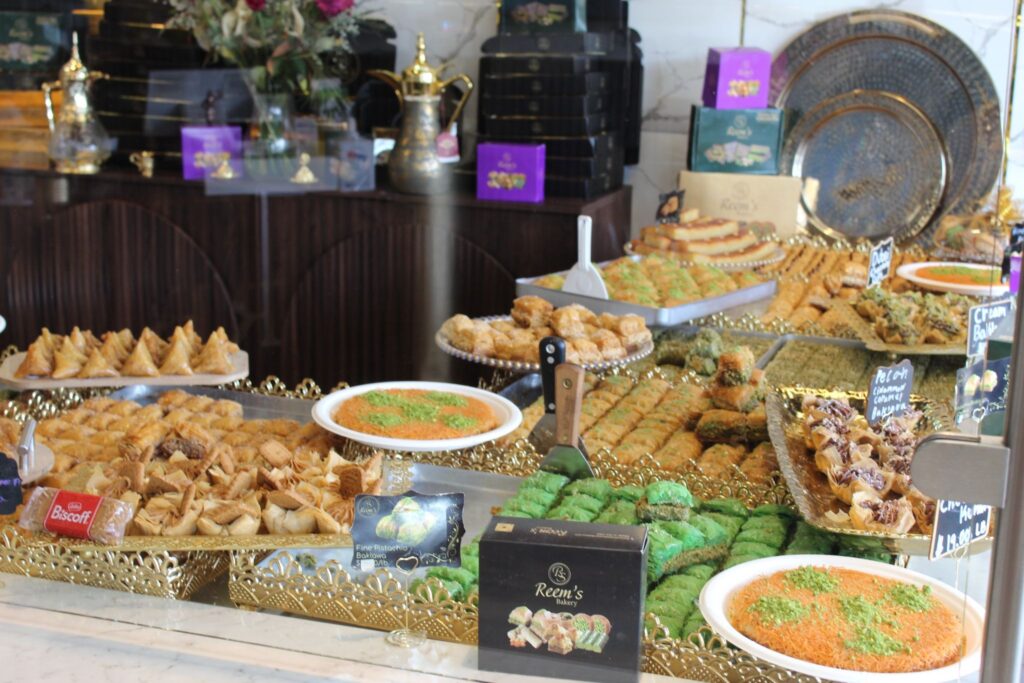
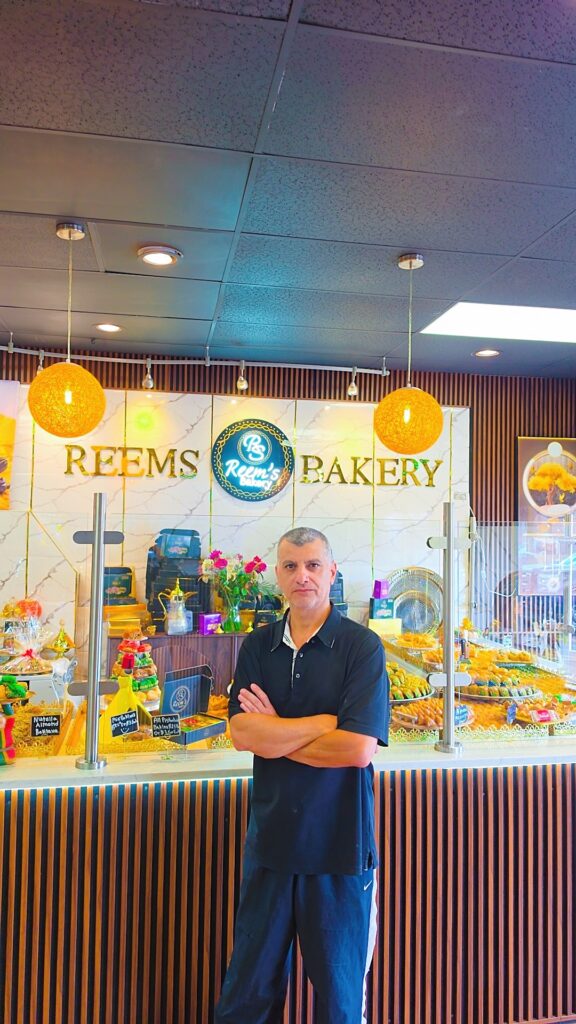
Photo Credit: (Left) Shayla Frank / Arab America , (Right) Courtesy of Bouchra Benlaghhlid
Benlaghlid has a simple standard and she puts it plainly. “I believe in good quality, it’s not about money,” she says. “It is about the quality and the happiness of the customers.” You can taste the conviction in the work. She and Emad keep the baklava honest, good ingredients and a master’s hands, and then they play, folding a flavor the city already loves, the Dubai chocolate that took over every feed, into a pastry that is centuries old. The hardest experiments are still unfinished, a baklava with no sugar, a version that leans salty, another built around spice, each one a small argument with tradition and a step toward something unmistakably hers. It is slow work, and it is how a sweet Denver did not know becomes a sweet Denver lines up for.
Hers is one counter among many carrying a taste of home. At a Yemeni kitchen on Havana Street, the lamb stew called Fahsa arrives boiling in a traditional wooden bowl. An Iraqi market fires fresh bread three times a day and folds manakeesh to order. In east Aurora, a Yemeni coffeehouse pours beans from the Haraz mountains, part of a wave reintroducing Americans to the place where coffee was first cultivated centuries ago.
The House on Parker Road
A community earns its living in its storefronts. It becomes itself somewhere else. In 1964 a small group of Arab immigrant families incorporated the Colorado Muslim Society, opened the state’s first mosque in a rented Denver house, and by 1983 had built something permanent on South Parker Road. Masjid Abu Bakr is still the only building in the metro that reads, at a glance, as a mosque, its brick walls rising to a central dome and a single minaret. Its main hall holds more than eight hundred worshippers, and it has grown by stages over four decades, adding classrooms, offices, and a multipurpose hall for the weddings and funerals that mark a community’s life.
What happens inside is bigger than prayer. The congregation is drawn from nearly every corner of the Muslim world, and the mosque anchors a full campus, a K-8 school in Crescent View Academy, an Islamic high school beside it, and a ring of Middle Eastern markets and restaurants for miles in every direction. On a Friday the parking lot overflows and the whole of that world moves through in a single afternoon. The mosque has taken its share of hard years, feeling the brunt whenever the national mood turned against Muslims, and it has answered each time by building more.
All the Way To The Statehouse
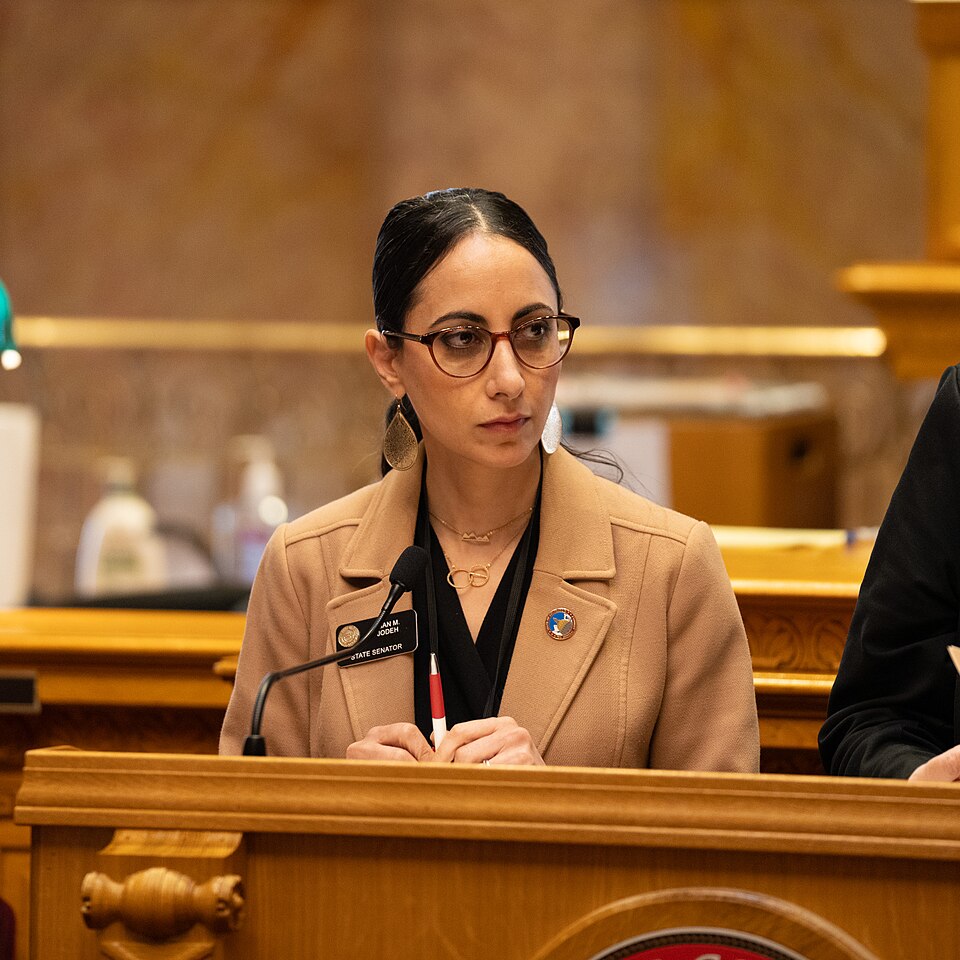
Photo Credit: Photo by WhatMyUserName, CC BY 4.0 via Wikimedia Commons
That same arc, from a suitcase to a seat at the table, runs into the state Capitol. Iman Jodeh grew up in Aurora, a graduate of Overland High and the daughter of Palestinian refugees who, like so many before them, opened a small business and built a life around it. She spoke for the mosque on Parker Road before she ran for anything. In 2020 she became the first Palestinian, the first Arab woman, and the first Muslim elected to the Colorado legislature, and she sits today in the state Senate, where she wrote the bill that created the state’s Office of New Americans, the same work the food halls do at street level, lifted into law.
A hundred years separates the peddler carrying groceries to a coal camp from the baker perfecting a sugar-free baklava, and the line between them runs straight. Both belong to a community that arrived with little and built, storefront by storefront, a place it could call its own, first in the mining towns of the south and now along the busy corridors of Aurora and Denver and in the cities between. That community is still arriving and still building, and the name it has spent a century making is only getting easier to see. As Colorado grows the people grow with it, the community is essential to what makes Colorado the state it is now. From Colorado’s historic start in the coal mines to the immigrant communities it so proudly boasts, Arab Americans aren’t to be forgotten in the making of Colorado’s history.
Want more articles like this? Sign up for our e-newsletter!
Check out our blog here!