Subscribe
to receive news by email

Poll
Will the Trump Administration Shift U.S. Policy in Favor of Palestine?
- No (86%)
- Yes (14%)
 Loading ...
Copyright © 2026 Arab America
Go topThe Hejaz Railway
By: Susie Hayes/Arab America Contributing Writer
For hundreds of years, the only way to get to Mecca and Medina from Damascus was on a camel. That trip would have taken around 40 brutal days, just one way. The route provided little shelter, clean water, and gave way to robberies and attacks on pilgrims. However, this trek was replaced in 1900 under the Ottoman Empire who constructed a railway.
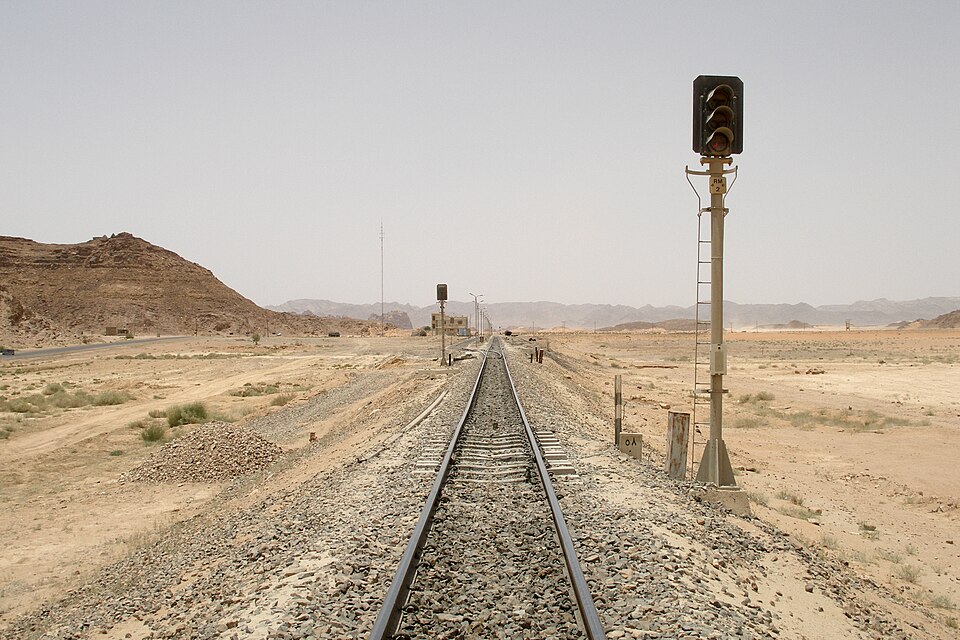
This railway, the Hejaz Railway, was a line that eventually sprawled about 820 miles from Damascus to Medina. It’s one of the more fascinating, yet less known, infrastructure accomplishments of the Ottoman period. The railway gave way to more conversations and exchanges about religion, politics, and the regions history.
Why the Ottomans Built It
Sultan Abdul Hamid II called for the assembly of the train line in September 1900. It is recorded that the goal was simply to grant Muslim’s a faster and safer way to complete their pilgrimage to the Holy Land.
Additionally, at the time of this order to construct, the Ottoman Empire was quickly losing power. European powers were spreading influence across the Middle East. The outermost territories, like the Hejaz region, were hard to control and deter from European influence. With the creation of the railway, Ottomans would be able to quickly move their troops, deliver supplies, ensure established power in distant territories, and act as a protector of Islam.
The Sultan insisted that the railway be funded using donations from Muslims around the world as opposed to taking loans through European banks, keeping the construction faith based. This request for donations reached all the way to India and North Africa. The manufacturing stood as a symbol of Muslim unity at the time when solidarity was needed for the Ottomans.
Building Through the Desert
The assembly was no easy feat. Engineers and other railworkers labored under brutal heat, rough terrain, and territories with nothing around them for miles. The technicalities of the construction were led by German and Ottoman engineers, while the laborers consisted of mostly Ottoman soldiers. Local Bedouin tribes were also involved in the project.
The railway came together fast considering the conditions under which it was being constructed. The line stretched just under 800 miles from Damascus to Medina by 1908, and even better, came in under budget. Stops were constructed on the way in places like Tabuk and Al-Ula, with some of those stops still standing today.
Bridging Cultures
Once the railway was up and running, it moved more than just pilgrims. The project was able to connect cities, tribes, communities, and cultures that had little interaction or knowledge of each other before. Merchants were able to move their services more conveniently. Students and scholars had more access to resources. Towns along the route became more popular since the train brought about more visitors and business. People along the Arabian Peninsula, Syrians, and Jordanians shifted how they viewed travel and how they viewed each other.
Accessible Pilgrimage for More People
One of the largest accomplishments the railway achieved was its religious impact. Before the train, pilgrimages like the Hajj and Umrah were extremely taxing physically and even kept people from attempting the journey at all. Those struggling financially, the elderly, and a host of other Muslims could not afford a trip on camel for over a month.
The railway ensured accessibility for all interested in pilgriming. On the train, the trip could be done in about four to five days. Pilgrims from Damascus had a real, feasible, and safer way to reach the holy cities. A wider range of people were able to make their pilgrimage and it helped keep the journey relevant and possible for Muslims.
Then, World War I…
The booming success of the train did not last long. After World War I broke out, the Ottoman Empire had an alliance with Germany, and the Hejaz Railway transformed into a military target. In 1916, Arab forces rebelled against the Ottoman rule during the Arab Revolt. Eventually, Lawrence of Arabia became a lead in brutal guerrilla attacks.
The Arab revolts typically included blowing up the train tracks, bridges, and stations along the rail route, cutting off a resource for Ottoman supply routes and destroying the functionality basically overnight. The line was completely ruined by the time the war ended in 1918, and it has never been renewed to what it once was.
What’s Left Today
After the first World War, the leadership over the surviving sections were passed onto the new governments in Syria, Jordan, and Palestine. Small stretches of the route have been restored today, mostly for cargo or local use, and old stations are scattered along the old route.
Although the rail was destroyed, the Hejaz Railway still stands as a powerful piece of history. It shows how one project can benefit an empire, connect religions and cultures, and make travel easier for all.
Want more articles like this? Sign up for our e-newsletter!
Check out our blog here!