Subscribe
to receive news by email

Poll
Will the Trump Administration Shift U.S. Policy in Favor of Palestine?
- No (86%)
- Yes (14%)
 Loading ...
Copyright © 2026 Arab America
Go top‘It’s Complicated’: HollyShorts’ Upcoming Short Film about Palestinian Womanhood
By Jahnvi Chopra / Arab American Contributing Writer
HollyShorts Film Festival
Short films premiering at the annual HollyShorts Film Festival have risen in popularity since its launch in 2005. In recent years, numerous well-known short films have been featured, notably Burros (2021), Leylak (2021), and Ninety-Five Senses (2022). These films range from comedy to horror to animation, all coming together at the event to celebrate the art of media creation. Many of these shorts exercise personal expression and convey themes of social commentary to advance a certain message, often relating to politics and identity.
Who’s in the Movie?
This short film is no different. ‘It’s Complicated’ is a brand-new short film that will be premiering at the HollyShorts Film Festival later this month. It carries with it an especially big name due to the involvement of the prominent Oscar-winning actress, Zoe Saldaña, who will be the Executive Producer of the film. She is previously known for her work in Emilia Pérez, Avatar, Guardians of the Galaxy, Star Trek, Pirates of the Caribbean, among many other shows and movies.
Directing the film is Darine Hotait, a Lebanese-American filmmaker who specializes in short films like this one. Also involved in the film is Iman Karram, a distinguished actress, who helped in the writing and production processes alongside a team of other talented individuals, Malibu Mutt Studios, and Splinter Pictures.1 She has been featured in Sacramento, Daft State, Disney’s Descendants, and more. The film is incredibly close to Karram’s Heart, as it’s based on her own experiences with identity and connections with others.
An Interview With Karram
In an interview with The Hollywood Reporter, Karram explains, “It was inspired by a real relationship with my Arabic tutor that profoundly reshaped my understanding of identity and how I want to use my voice as an artist… Growing up in the diaspora, it can sometimes feel like you are disconnected from your roots, or even like an imposter within your own community.”2
She continues to clarify how her experience inspired the premise of the story: “What began as online Arabic lessons with Hana grew into a friendship and a Palestinian sisterhood that made me feel truly seen from the other side of the world. She welcomed me into a culture I didn’t grow up experiencing firsthand, but one that has always been an integral part of who I am. She made me feel enough, exactly as I am, and gave me the courage to embrace my voice, stand in my values, and tell the stories that are important to me.”3
The Premise
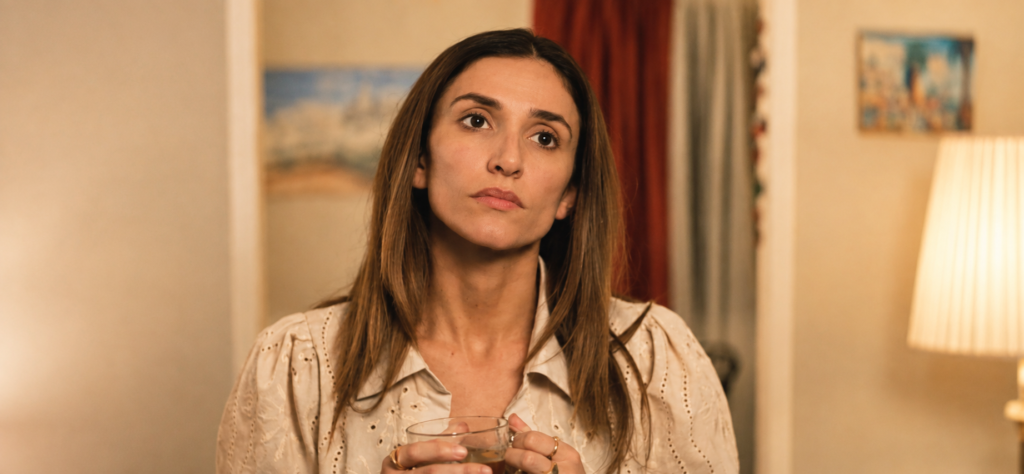
In the film itself, Karram stars as one of the protagonists, Yara, a Palestinian-American screenwriter in Los Angeles. Her co-star, Dina Shuhaiber, acts as Hana, a teacher and poet in Gaza. When Yara begins taking Arabic lessons with Hana, their relationship begins to shift and grow, transforming their once surface-level relationship into a remarkable sisterhood. Together, they must navigate a sudden and tumultuous war that causes their separation, testing their ability to cope with grief, guilt from the diaspora, and the duty to keep Hana’s story alive.
The Meaningful Implications
Just like Karram detailed in her interview, the story is centered around trying to show up for not only a friend, but oneself, in the midst of an adversity so profound that one’s determination to stay connected threatens to abandon them. The burden of the ongoing genocide is indescribable, and remaining committed to the parts of life one cares about likely only gets more difficult with time. The film highlights the issue of Palestine, which continues to be one of the biggest and most controversial international conflicts globally.
The short film also touches on the real-life struggles of handling intersectional identities in the thick of a burdensome situation in one’s home country. The characters also contend with their identities as women, resulting in a unique sort of loss due to their marginalized identities.
The addition of films focused on these topics— gender, war, language, and friendship— offers an opportunity for the viewer to experience others’ stories and identities and how they interact with each other. These are narratives that need to continue to be explored in the largest, most influential film industry in the world, and beyond.
Want more articles like this? Sign up for our e-newsletter!
Check out our blog here!