
Subscribe
to receive news by email

Poll
Will the Trump Administration Shift U.S. Policy in Favor of Palestine?
- No (86%)
- Yes (14%)
 Loading ...
Copyright © 2026 Arab America
Go topFrom Lebanon to the U.S: Tarek Mansour’s Kalshi
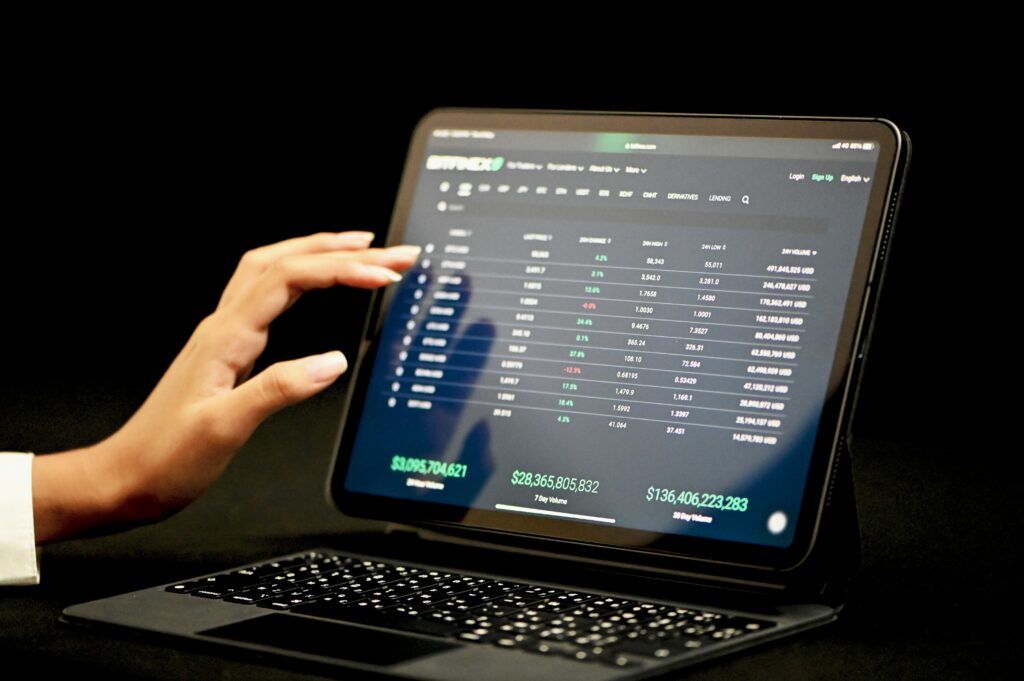
Photo by Kanchanara on Unsplash
By: Megan Guzman Abbott / Arab America Contributing Writer
In the fast world of American finance, few creations have disrupted the status quo like Kalshi has, becoming the first federally regulated prediction market in the U.S. Tarek Mansour, a Lebanese American entrepreneur, transformed what once was a simple observation about risk into a billion-dollar enterprise.
Lebanese Roots and Early Drive
Mansour was born in California in 1996, but before his late teen years, he grew up in Lebanon. Mansour was an athlete growing up, competing as a skier and practicing Taekwondo. In 2014, he attended the Massachusetts Institute of Technology (MIT), where he studied computer science and mathematics. Here, he began to shape his ideas for what would later become his empire.
While at MIT, he secured competitive roles working as an equity derivatives analyst at Goldman Sachs and later as a macro trader at Citadel. There, he noticed a recurring theme: a large portion of global trading was driven by institutions trying to bet on or against future events, like Brexit. In an ideal world, a company worried about a new law passing would simply buy a contract that pays out if the law passes. But traditionally, that kind of direct market didn’t exist. Because people couldn’t trade directly on the outcomes, Wall Street banks created massive workarounds, selling investors proxies for the actual events. These took the form of complex financial packages known as “swaps” and “options.” However, these tools required a finance degree to understand and were often restricted to billionaires and massive corporations.
Here, Mansour found a massive gap. Why force people to buy expensive options when they could trade directly on the event itself?
Building Kalshi
Soon after, Mansour partnered with his classmate Luana Lopes Lara to co-found Kalshi in 2018. Their vision was simple: to build a regulated exchange where everyday people can buy and sell contracts on future events. Mansour would spend years making the case to the Commodity Futures Trading Commission (CFTC), and in November 2020 his dedication finally paid off. Kalshi received official federal approval to operate as a designated contract market.
Yet Kalshi’s biggest milestone was in 2024, when the company won a landmark legal battle against the CFTC, having the right to offer contracts on US elections. This marked the first time legal election contracts were allowed in the US in over a century, shifting the political landscape in the US forever.
The Current Issues with Kalshi
However, in the summer of 2026, states like New York, Washington, and Utah sued or issued injunctions against Kalshi, claiming that it is an illegal gambling ring masquerading as a financial market. These are currently being fought in court.
Likewise, since people can bet on very specific events, sounder trading has become a large issue on the platform. This August, former Congressman George Santos was fined and banned from the platform after he said he was attending the State of the Union and bet against his own attendance on Kalshi, where he then did not show up to the event. Even when it comes to humanitarian crises, Kalshi has faced much moral scrutiny for allowing bets to take place. For Mansour, these hurdles show the inevitable pains of opening a new financial frontier.
Final Takeaway
Creating a new financial asset from scratch has proven to be a large amount of pushback. Yet, Tarek Mansour’s journey from Lebanon to American fintech proves that the most impactful innovations don’t ask for permission. As he bridged complex financial systems with accessibility, Mansour has secured his place as one of the boldest recent Arab American architects of our modern economy.
Want more articles like this? Sign up for our e-newsletter!
Check out our blog here!