Subscribe
to receive news by email

Poll
Will the Trump Administration Shift U.S. Policy in Favor of Palestine?
- No (86%)
- Yes (14%)
 Loading ...
Copyright © 2026 Arab America
Go topFrom the Middle East to Mainstream: Arab Influence on Y2K Music
By: Megan Guzman Abbott / Arab America Contributing Writer
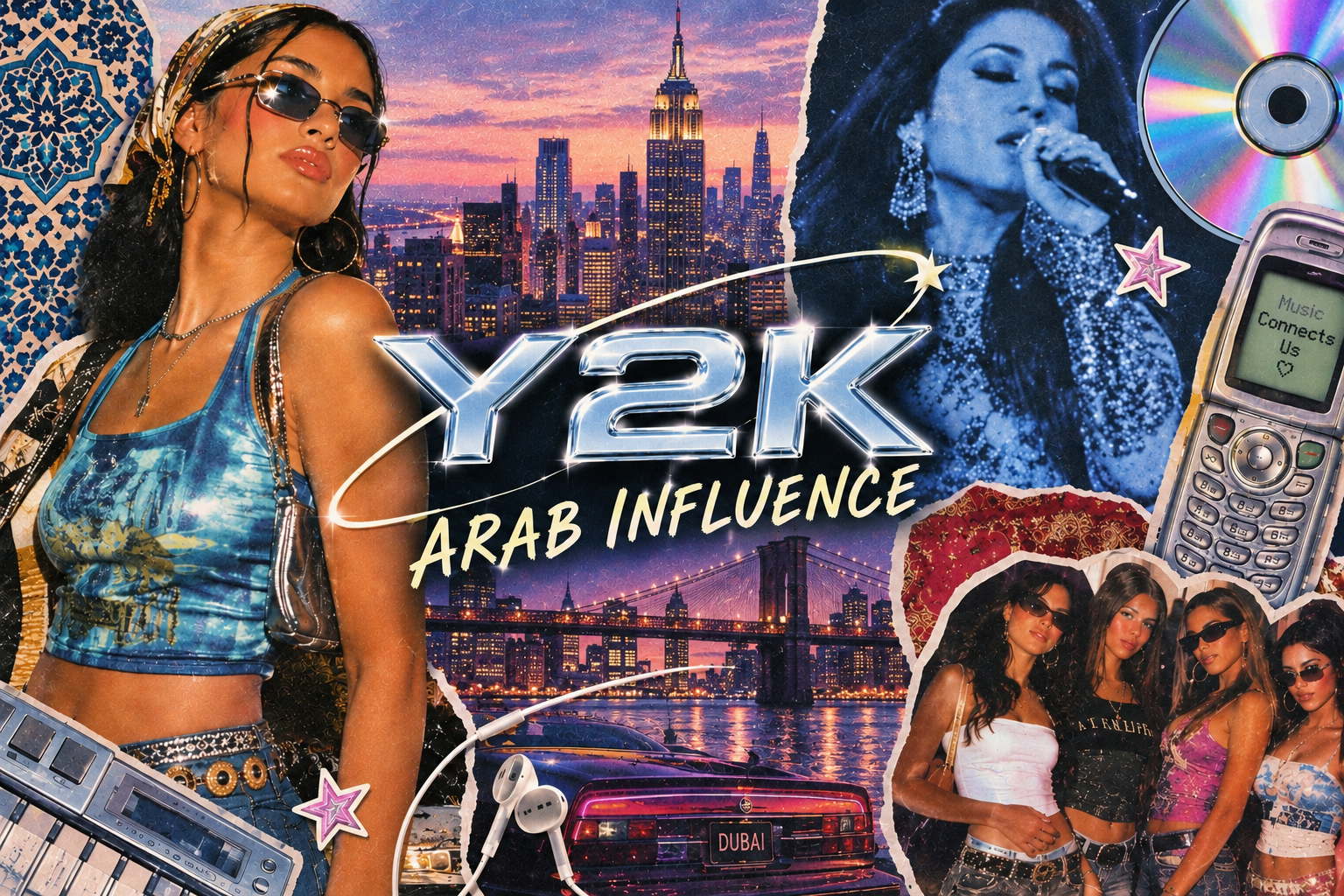
Scroll through TikTok or Twitter when a rising Arab artist drops a Y2K-inspired visual, and the comments sections erupt. These artists, when wearing low-rise pants, belly chains, dramatic eyeliner, or R&B beats, are frequently accused of cultural theft, chasing an early-2000s aesthetic that Arabs supposedly had no part in.
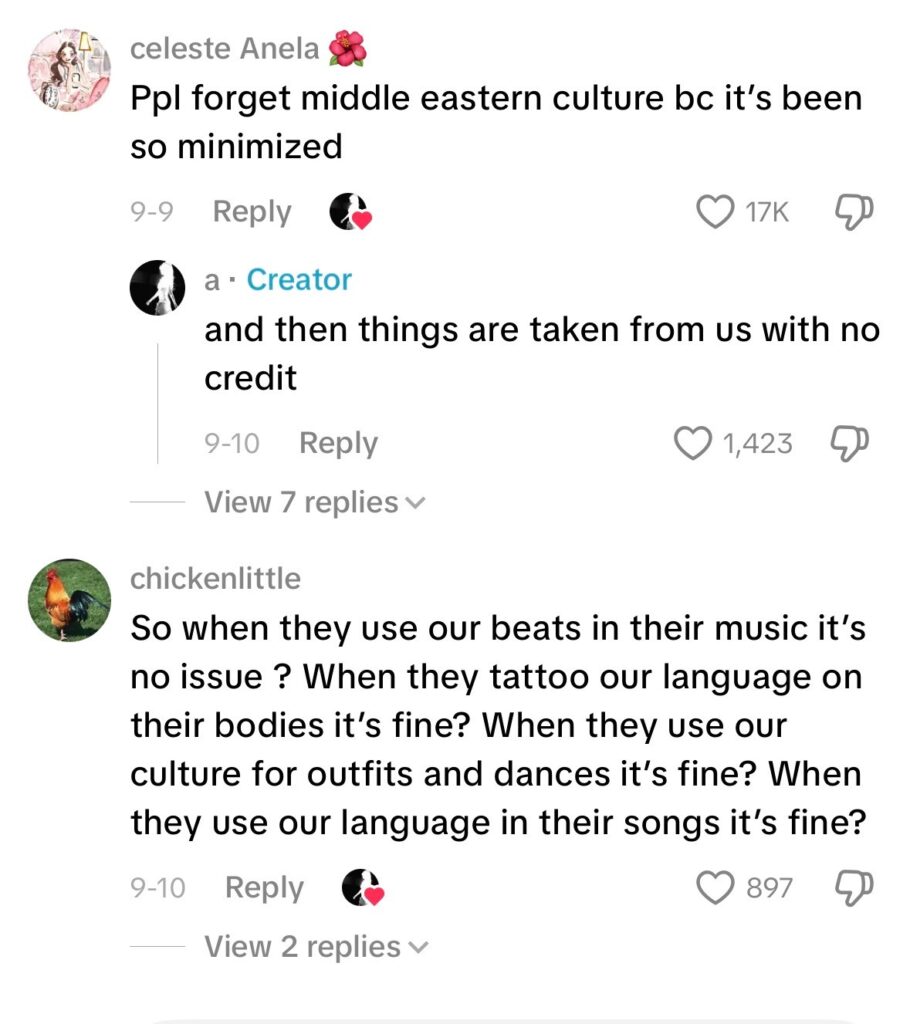
However, this critique is due to the ongoing whitewashing of Black culture and the erasure of Black women, from Aaliyah and Destiny’s Child, who pioneered this movement of Y2K. Yet, when put against Arab musicians, this narrative has a huge blind spot.
The creation of the aesthetics of the Y2K era was not a one-way street. The soundscape and visual identity of 2000s American pop and hip hop were built with inspiration from the Arab and Middle Eastern world, including instruments, Arab scales, and aesthetics.
Sound: Maqamat, Oud, and Heavy 808s
When hip-hop and R&B producers looked toward the new era of music, they wanted something that felt futuristic and cinematic. They found that not in the West, but all the way in the Middle East and North Africa.
Modal Scales (Maqamat): Beatmakers turned to Arabic maqamat, which utilized quarter tones and intervals that created suspense over the standard Western twelve-tone scales.
Classical Arab Instruments: They used the slap of the darbuka, the sound of the ney flute, and the strum of the oud to develop rhythmic sounds on the radio.
Melismatic Phrasing: The tradition of melisma, which is the stretching of a single syllable across notes, was embedded in the vocals of late 90s R&B.
And at the center of this all were producers of Middle Eastern descent such as Scott Storch, who redefined 2000s radio by layering dramatic keyboard riffs for artists such as Fat Joe, 50 Cent, and Beyoncé. Another producer known as Timbaland would mix regional wind instruments and string melodies, while sampling musicians such as Egyptian composer Baligh Hamdy’s “ Khosara Khosara” for Jay-Z’s song “Big Pimpin.” He would later influence Algerian and South Asian records into signature hits for Missy Elliott and Aaliyah.
Global Chemistry: Desert Rose
While hip-hop sampled Middle Eastern and Arab melodies, pop and rock had one of the most popular collaborations in music history: Sting’s 1999 hit “Desert Rose,” featuring Algerian Raï legend Cheb Mami. The song opened with Cheb Mami’s soaring vocals in Arabic:
يا ليلي، آه يا ليل
(Ya lili, ah ya leel… Hadi modda twila, wana nhawwes, ana wa’la ghzalti…)
هذي مدة طويلة وأنا نحوس، أنا وعلا غزالتي
“Oh my night, oh night… It has been such a long time, and I have been searching, searching for my beloved…”
Sting told Mami the theme of longing and love, which allowed Mami to write and improvise his own lyrics and melodies in Algerian Arabic. The track went multi-platinum worldwide.
Futurism, Belly Chains, and Orientalism
The fusion of Y2K was also seen in visual media across MTV:
Cyber Desert Visuals: Music videos produced dunes and digital mirages with metallic bodysuits and futuristic convertibles
Clothing: Henna, kohl-lined eyes became staples of both pop choreography and street style.
Movement Traditions: Dancers merged street dance with isolated hip shimmies and Raqs Sharqi (belly dance).
Nevertheless, Middle Eastern culture and influence were often reduced and romanticized as an exotic fantasy disconnected from real communities.
Jay-Z and “Big Pimpin'”
Yet there are still tensions between cultural appreciation, digital sampling, and ownership, as seen with the legal dispute over Jay-Z’s 1999 hit “Big Pimpin.”
Timbaland built the track’s flute hook around the Egyptian classic “Khosara Khosara” composed by Baligh Hamdy and recorded by Abdel Halim Hafez.
Although a clearance fee was paid to EMI Arabia, Osama Ahmed Fahmy sued Jay Z and Timbaland in 2007 for altering the music or associating it with a track centered on explicit hedonism. In 2018, the US Ninth Circuit Court of Appeals ruled in favor of Jay-Z and Timbaland, saying that Fahmy had given up economic rights in previous contracts and lacked legal standing under U.S. law.
Nevertheless, the case exposed the stark reality of how Western record labels commodified the cultural music of the Global South, often leaving the original creators and heirs without a voice.
Reclaiming a Seat at the Table
When Arab artists today tap into the Y2K nostalgia, whether through clothing or beats, they are not stealing someone else’s history. Black artists rightfully created and set the blueprint for late 90s urban culture. At the same time, Black and Arab producers, composers, and performers were working together to create one of the best eras in fashion and music of all time.
Want more articles like this? Sign up for our e-newsletter!
Check out our blog here!