

Subscribe
to receive news by email

Poll
Will the Trump Administration Shift U.S. Policy in Favor of Palestine?
- No (86%)
- Yes (14%)
 Loading ...
Copyright © 2026 Arab America
Go topIs the Iran War the Beginning of the End of U.S. Influence in the Middle East?
By Aziz Hellal / Arab America Contributing Writer
For decades, the Middle East has been shaped by one dominant power: the United States. Through a wide network of military bases, strategic alliances, and direct interventions in Iraq and Afghanistan, Washington maintained a strong presence across the region.
But today, that dominance is being tested in a way we have not seen before. The ongoing conflict with Iran is not just another crisis—it may be a turning point.
Unlike past wars, this confrontation involves a more capable regional actor, growing global competition, and a Middle East no longer willing to rely on a single power. This raises an important question: Is the Iran war the beginning of the end of U.S. influence in the Middle East, or simply the start of a new phase in how that influence operates?
From Oil-for-Security to Military Presence
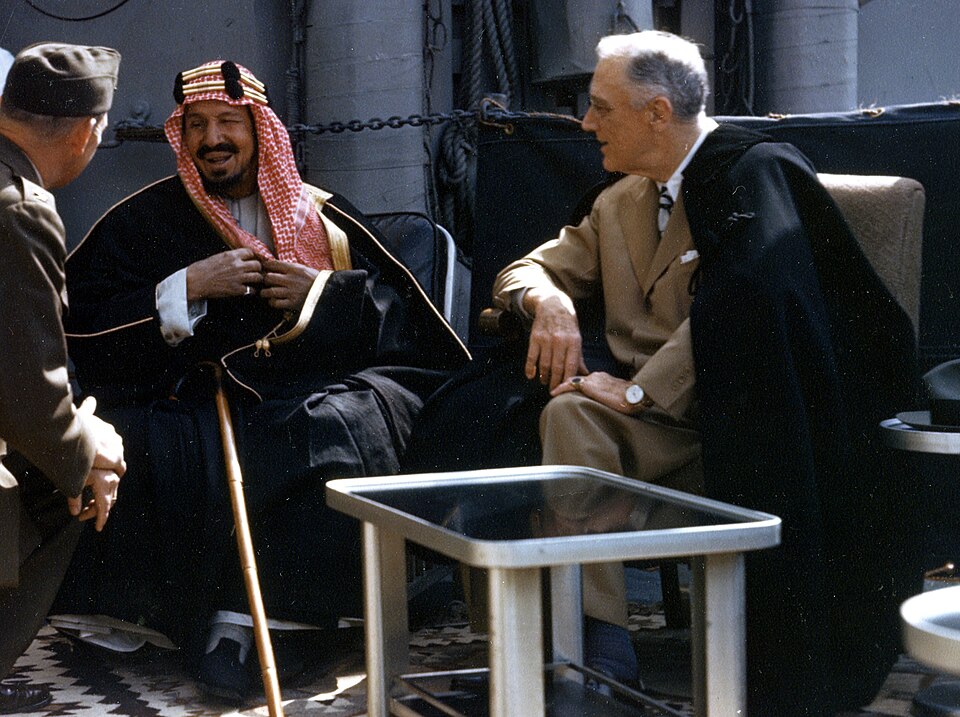
U.S. President Franklin D. Roosevelt meets King Abdulaziz aboard the USS Quincy in 1945
U.S. influence in the Middle East did not begin with large military bases. After World War II, it was primarily built around oil, security guarantees, and close relationships with key governments, especially Saudi Arabia.
A key moment came in 1945, when President Franklin D. Roosevelt met King Abdulaziz aboard the USS Quincy in Egypt’s Great Bitter Lake. That meeting helped establish what later became known as an “oil-for-security” relationship, in which the United States would provide protection in exchange for stable access to energy resources.
The nature of U.S. power in the region changed after the 1990–1991 Gulf War. When Iraq invaded Kuwait, the United States led a large international coalition to push Iraqi forces out. After that, Washington’s military presence in the Gulf became much larger and more permanent, with bases and forces spread across several countries.
This presence allowed the United States to protect key waterways such as the Persian Gulf and the Strait of Hormuz, while also giving it a stronger role in regional security. Washington was no longer just reacting to crises; it was shaping the region’s rules.
Yet this deeper military role came with growing costs and long-term consequences.
The Cost of War and Growing Public Anger
After decades of wars, many in the Middle East no longer see the United States as a stabilizing force—but as part of the problem. Over time, many people in the region began to see U.S. involvement not as a source of stability, but as a source of conflict and imbalance.
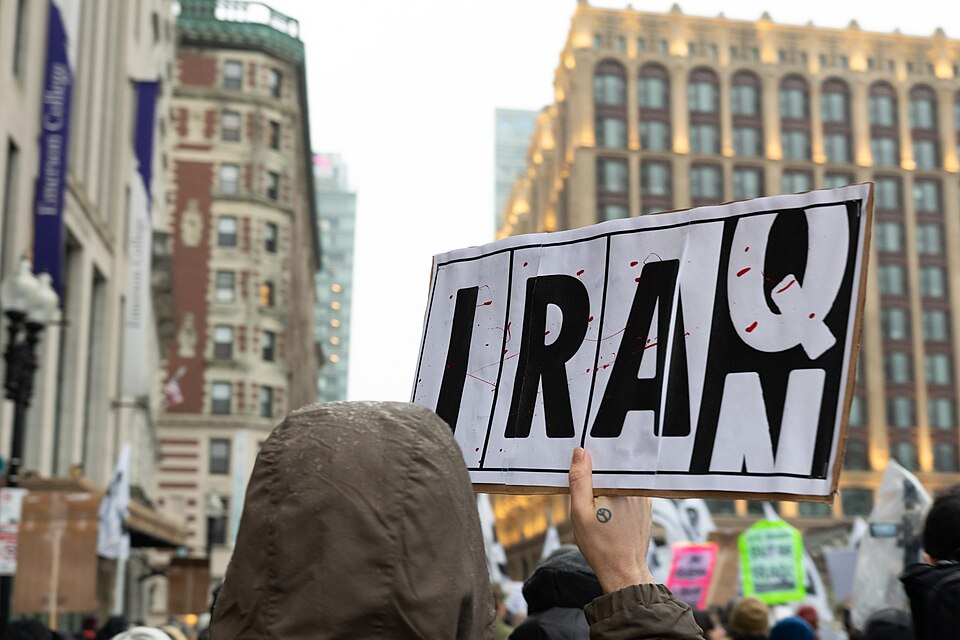
The wars in Iraq and Afghanistan left a deep mark on how people in the Arab World view American power. In Iraq, the 2003 invasion that removed Saddam Hussein also opened the door to years of instability, sectarian violence, and extremist groups.
In Afghanistan, after twenty years of war, the Taliban returned to power. For many people, these wars showed that U.S. military power could destroy governments, but not always build stability.
At the same time, public frustration has grown over how the United States chooses its allies. Many people in the Middle East believe that Washington prioritizes its strategic interests over the needs and voices of ordinary citizens.
Since 2023, anger toward U.S. policy has grown because of the war in Gaza and Washington’s strong support for Israel. Across the Arab world, many people see that support is made at the expense of Palestinian lives and Arab public opinion.
The problem is not only the war itself, but the feeling that U.S. policy often listens more to Israel’s security concerns than to the suffering and political demands of Arab peoples. This has made many in the region question whether the United States can still claim to support stability, human rights, or a fair regional order.
From Gaza to the Gulf: A Region Under Pressure
The wider regional impact has also made public anger stronger. The conflict with Iran and the closure of the Strait of Hormuz affect shipping, energy markets, and the economies of several countries, particularly in the Gulf. For many Gulf states, the crisis showed how quickly a U.S.-Iran confrontation could threaten their own stability, even if they were not directly part of the war.
At the same time, the conflict between Israel and Hezbollah in Lebanon forced large numbers of civilians to leave their homes and has created another layer of fear and uncertainty. For many people in the region, these events have made it harder to separate U.S. policy from the wider instability surrounding them.
The war with Iran adds another layer to this frustration. Instead of calming the region, it risks expanding the cycle of conflict from Gaza to the Gulf. Many Arabs may see another U.S.-backed confrontation as proof that Washington continues to rely on military pressure while ignoring the deeper anger across the region.
If this frustration continues, it may not remain only at the public level. Over time, Arab governments could face more pressure to distance themselves from Washington and build stronger ties with other powers, especially China, which presents itself as less involved in the region’s wars.
Could Public Anger Reshape Alliances?
Over time, public anger in the Middle East may begin to shape political decisions more directly. While many governments in the region still maintain strong ties with the United States, they cannot ignore public opinion forever. As frustration grows, leaders may start to balance their relationships more carefully, reducing their dependence on Washington while exploring new partnerships.
This shift is already becoming apparent. Countries in the region have expanded their economic and political ties with China, which presents itself as a partner focused on trade and development rather than military intervention. Unlike the United States, China does not have a long history of direct involvement in regional wars, making it more appealing to governments seeking stability without internal backlash.
However, this does not mean that U.S. influence will suddenly disappear. The United States still has strong military capabilities, deep alliances, and a long-standing presence in the region. But the nature of its influence may be changing. Instead of remaining the dominant and uncontested power, it may become one of several competing actors.
In the end, the future of U.S. influence in the Middle East may not be decided only by military power, but by how people in the region perceive its role.
If Washington continues to rely on war while ignoring public anger, it may not lose the Middle East overnight—but it could slowly lose its place in it.
Want more articles like this? Sign up for our e-newsletter!
Check our blog here!






.jpg)
_on_14_February_1945_(USA-C-545).jpg)