
Subscribe
to receive news by email

Poll
Will the Trump Administration Shift U.S. Policy in Favor of Palestine?
- No (86%)
- Yes (14%)
 Loading ...
Copyright © 2026 Arab America
Go topPathbreakers of Arab America—Mohammed Taki Mehdi
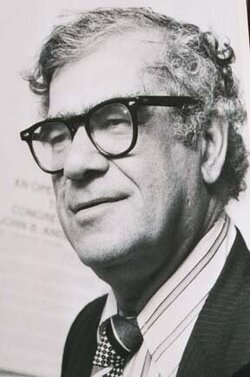
By: John Mason / Arab America Contributing Writer
This is our one-hundred and eighteenth in Arab America’s series on American pathbreakers of Arab descent. The series features personalities from various fields, including entertainment, business, sports, science, the arts, academia, journalism, and politics. Our 118th pathbreaker is Mohammed Taki Mehdi, an Iraqi American political activist and author who became the president of the American Arab Relations Committee and secretary general of the National Council on Islamic Affairs (NCIA). He founded NCIA to spur political awareness and action among Muslims in the U.S. Importantly, Mehdi was one of the earliest pro-Palestinian activists in the U.S., and firm in his defense of the Palestinian cause. He died in New York City on February 23, 1998.
Known to many as ‘the father of the Arab movement in America,’—Mehdi profoundly influenced recognition of Arabs and Muslims and their human and 1st amendment rights
Mohammad Taki Mehdi was born on January 6, 1928, in Kerbala, Iraq, then known as the British Mandate of Mesopotamia. He was the second son born to El Hajj Abdullah and Zahara Mehdi, proprietors of a coffee shop in Karbala. As the second son, Mohammad was expected to help support his elder brother’s higher education, delaying his own graduation from Baghdad’s High School of Commerce. But when he did graduate, Mohammed’s academic achievements ranked him second-highest in Iraq’s national examinations.
Because Iraq’s budding oil industry rapidly raised the nation’s living standards, Mohammad was given a full national scholarship, in his case to the University of California at Berkeley in 1948, on a full Iraqi government scholarship. There, he received a B.A. in 1952, followed by an M.A. and a Ph.D., all in political science, with a specialization in American constitutional law. That specialization and his resulting understanding of the U.S. political system gave Mohammed a distinct leg up in his subsequent career in full-time political activism.
In a story about how he had arrived at Berkeley, related to a scholar and friend, Mohammed said he had “sat down, looked at a map and, hungry for new experiences, searched for the university that took him as far away from Baghdad as he could possibly go. That led him to the University of California at Berkeley. Off he went and suddenly found himself on the campus of free speech and free love, never having seen a woman without a veil covering her face. It was a culture clash of monumental proportions, and it was a defining moment for the young scholar.” Thus began his life of ‘trying to acquaint distant and dissonant cultures with one another.”
Looking back on experiences ranging from the shock of the transition from Baghdad to Berkeley to his years with the Action Committee in New York, Mehdi characterized himself as “one of the most fortunate Arabs and Muslims in the world.” After four years as a teaching assistant at Berkeley, he became director of the West Coast office of the Arab Information Center in San Francisco and, in 1962, transferred to its New York City office.
Later, in 1983, Mehdi played a major role in founding the privately funded and grassroots-oriented National Council on Islamic Affairs. He stressed the fact that while there were then an estimated three million Arab Americans, there were perhaps eight million American Muslims. That, he noted, at the time, made “Islam the second largest religion after Christianity in the United States.” On that premise, he proposed that the National Council, therefore, would seek “to broaden Christian-Jewish organizations across the country into Christian-Jewish-Muslim organizations.” Mehdi attributed to efforts by the NCIA a reference by President Reagan last December to the United States as a country of “churches, temples, and mosques.”
While much of the NCIA’s success stems from the influential positions held by its members within their communities, Mehdi himself expanded the organization’s message through regular nationwide television and radio tours. One of his earliest successes in pressing for recognition of Muslims and Muslim rights was his lawsuit against the New York City Board of Education, requiring it to display Islamic crescents along with Christian and Jewish symbols during the holiday season.
Another battle Mehdi took on was to lead a counterdemonstration by the Action Committee on American Arab Relations against the American Jewish Congress and the Anti-Defamation League. News reporting on the event was that “Those Zionist groups had earlier demanded the removal of a mural depicting Palestinian refugees from the Jordanian pavilion of the New York World’s Fair. It was a time when Arabs in the United States were essentially unorganized, frightened, and politically invisible. The presence of Arab activists who seemed to come from nowhere and who framed their arguments in terms of First Amendment rights took the pro-Israel community by surprise and became a nationwide media event.”
While some reports characterized Mehdi’s debating style as that of “a confrontationist,” he described it as “casual and conversational.” One exception to this, however, might have been a debate with someone like Rabbi Meir Kahane, who is described by some as a “charismatic and energizing figure whose life, work, and tragic assassination continue to evoke deep reflections in Jewish communities worldwide.” Kahane was also a fierce advocate for Jewish rights and survival and spared no emotion in debating the Zionist cause.
Dr. Mehdi was the author of 10 books, including ‘A Nation of Lions,’ ‘Chained,’ ‘Peace in the Middle East,’ ‘Peace in Palestine,’ ‘Kennedy and Sirhan: Why?’ ‘Terrorism: Why America is the Target,’ and he edited ‘Palestine’ and ’the Bible,’ a collection of essays by prominent Christian and Jewish theologians.
A staunch supporter of Palestinians, Mehdi was famously known as one of the earliest pro-Palestinian activists in the U.S.
Dr. Mehdi’s position on the rights of Palestinians to their own state did not always fit the standard view. For example, he took issue with those who maintain that U.N. resolution 242 is a suitable basis for resolving the Israeli-Palestinian conflict. He argued, “Human rights ultimately means a person’s attachment to his home.” He thus saw that mutual recognition of the right of return was the key to the solution. Mehdi averred, “The Holy Land could be called both Israel and Palestine, to satisfy the national aspirations of both peoples, and would be a democratic state governed by majority rule.”
It was reported at the time, “Mehdi acknowledged that his rejection of the two-state solution limits his political coalition-building with human rights-oriented Jews to an individual, rather than group basis.” Nevertheless, such a distinction did not preclude the NCIA’s active dialogue with Christian and Jewish organizations, including the Catholic Archdiocese and the Jewish Board of rabbis in New York. Mehdi was also known as a leading pro-Palestinian activist, and he openly supported the Palestine Liberation Organization.
On Monday, February 23, 1998, Dr. Mohammed T. Mehdi died of a heart attack in New York City. He was 70 years old. Surviving him are his three daughters: Anisa Mehdi, a documentary filmmaker; Janan Chandler; and Laila Hilfinger.
As one of Mehdi’s colleagues, Dr. Lenora Fulani, noted on his passing, “He was also one of the kindest and most spirited people I’ve ever known. All of the anger he felt about the hypocrisy that surrounds U.S. foreign policy toward the Arab and Islamic world never dissuaded him from humor and humanity in his dealings with all. He was a great appreciator of the multitude of the world’s cultures and was a one-man cross-cultural phenomenon.”
Long live his legacy!
Sources:
-“Mohammed Taki Mehdi,” Wikipedia Series on Arab Americans,” 2026
-“Personality—Dr. M.T. Mehdi, Washington Report on Middle East Affairs, 7/1988
-“M.T. Mehdi, voice of Arab America, dies,” UPI Archives, 2/24/1998
-“In Memoriam, Dr. Mohammad T. Mehdi (1928-1998),” Washington Report on Middle East Affairs, 4/1998
-“M. T. Mehdi, a brilliant cross-cultural icon, dies,” Special to Las Vegas Sentinel-Voice,” Dr. Lenora Fulani, 2/12/1998
John Mason, Ph.D., focuses on Arab culture, society, and history and is the author of LEFT-HANDED IN AN ISLAMIC WORLD: An Anthropologist’s Journey into the Middle East, New Academia Publishing, 2017 and of his new novel, WHISPERS FROM THE DESERT: Zaki, a Little Genie’s Tales of Good and Evil (2025), under his pen name, Yahia Al-Banna. He has taught at the University of Libya in Benghazi, Rensselaer Polytechnic Institute in New York, and the American University in Cairo. John served with the United Nations in Tripoli, Libya, and consulted extensively on socioeconomic and political development for USAID and the World Bank in 65 countries.
The views and opinions expressed in this article are those of the author and do not necessarily reflect the position of Arab America. The reproduction of this article is permissible with proper credit to Arab America and the author.
Want more articles like this? Sign up for our e-newsletter!
Check out our blog here!