Subscribe
to receive news by email
Poll
Will the Trump Administration Shift U.S. Policy in Favor of Palestine?
- No (86%)
- Yes (14%)
 Loading ...
Copyright © 2026 Arab America
Go topPathbreakers of Arab America—Arwa Damon
By: John Mason / Arab America Contributing Writer
This is our one-hundred and seventeenth in Arab America’s series on American pathbreakers of Arab descent. The series features personalities from various fields, including entertainment, business, sports, science, the arts, academia, journalism, and politics. Our 117th pathbreaker is Arwa Damon, a former CNN Senior International Correspondent who is currently working on independent documentaries and other forms of storytelling through her company, Scrappy Goat Media. Arwa has over a decade of experience in war zones across the MENA region and has often focused her work on humanitarian stories. She is also president and co-founder of INARA, a humanitarian organization that provides medical treatment to refugee children.
Damon has heroically covered wars all over the Middle East and beyond, and their aftermath in deepening humanitarian crises
Damon was born in Boston on September 19, 1977, to an American father and a Syrian mother. She spent her early childhood years in Wayland, Massachusetts. At the age of six, Damon and her family moved to Morocco, followed by Istanbul, Turkey, three years later, where her father was a teacher and middle school director at Robert College. Damon skipped sixth grade and graduated with honors from Robert College at the age of 16. She then spent a gap year with her aunt and uncle in Morocco before moving to the U.S. to attend Skidmore College in Saratoga Springs, New York. She graduated with honors in 1999, majoring in French and minoring in international affairs. She is fluent in Arabic, French, and Turkish, and, as of the last report, Arwa lives in Istanbul with her three pet cats.
Damon’s link to Arabdom is significant–in addition to her mother’s Syrian background, she is the granddaughter of Muhsin al-Barazi, the former Prime Minister of Syria, who was executed in the August 1949 Syrian coup d’état. Arwa calls herself Syrian American and describes herself as growing up in ”a very cross-cultural household, I always like to say our breakfast was both labneh and zaatar and blueberry pancakes. I felt as if I needed to go into journalism to try to help people explain themselves to each other. I ended up in Iraq, and I basically almost never left covering conflict, or humanitarian crises, or just people.”
As her career aspirations crystallized, Damon focused on journalism as her area of expertise, the Middle East and North Africa (MENA) as her geopolitical frame, and humanitarian stories as her passion. This resulted after 9/11 in a move to Baghdad prior to the beginning of the Iraq War. She began her career at CameraPlanet, a supplier of media content for television newscasts. This was followed in 2004 as her work as a freelancer at CNN’s Baghdad bureau, joining the network as a correspondent in 2006.
In that capacity, Arwa reported on the trials and executions of Saddam Hussein, Barzan Ibrahim Hassan al-Tikriti, and Awad Hamed al-Bandar in January 2007. During the Syrian civil war, Damon traveled multiple times to Syria and to refugee camps for Syrians. After the 2012 Benghazi, Libya attack, she was one of the first journalists to arrive at the scene and is especially known for her recovery of slain U.S. Ambassador J. Christopher Stevens’ personal diary.
Damon’s reporting ranged across the MENA region from time to time, including a story about an anti-poaching park ranger unit that she followed in Odzala National Park in the Republic of the Congo. In West Africa, Arwa, in April 2014, reported on the Chibok, Nigeria schoolgirls kidnapping by Boko Haram, and their pursuit to the islands of Lake Chad in the hunt for the terrorists. She returned to Iraq in the second half of 2016 and covered the Battle of Mosul. Riding with a convoy consisting of press and Iraqi soldiers, she came under heavy fire from IS troops and was trapped. Caught in the middle of it all, Arwa and her cameraman, after 28 hours of entrenched fighting, were rescued by reinforcements from the Iraqi military.
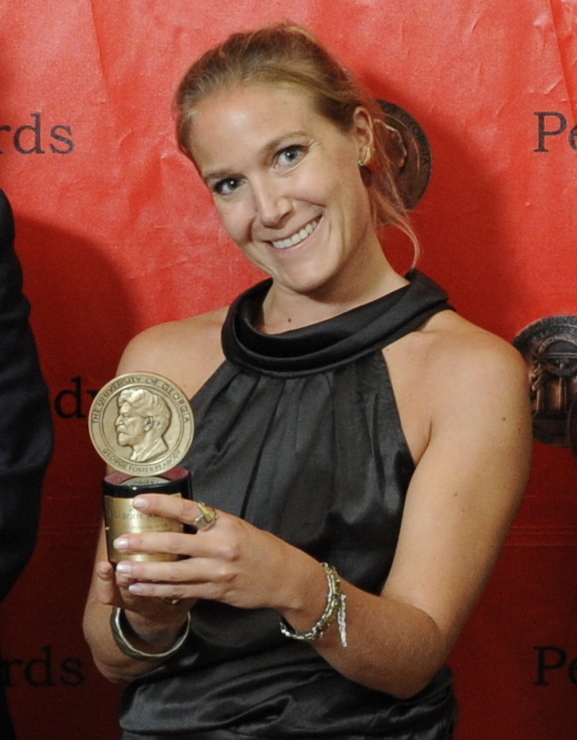
Arwa was a recipient of the International Women’s Media Foundation’s 2014 Courage in Journalism Award. CNN’s 2015 Peabody Award recognized Damon’s “high-risk field reporting” that made the network’s coverage of the Boko Haram story “comprehensive and indispensable.” And, at the height of Europe’s refugee crisis in 2015, Damon followed refugees from Syria and Iraq as they traveled by foot, boat, and train across Hungary and neighboring countries, for which she was recognized with an Emmy Award and a Gracie Award in 2016.
Arwa announced her departure from CNN in June 2022 to focus on her humanitarian work, though she has since done contract reporting for CNN over the past several years.
Turning from sheer news reporting, Damon engaged her humanitarian spirit in providing medical services for children wounded in war
In 2015 Damon, with a co-founder, launched a non-profit organization, International Network for Aid, Relief, and Assistance (INARA), based on her personal experience in war zones and war-torn nations. INARA, a humanitarian aid, 501(c)(3), non-profit organization located in Beirut, Lebanon, provides medical services for children who have been wounded in war zones. It also provides rehabilitation treatment for its beneficiaries. The organization focuses on refugee children from Syria.”
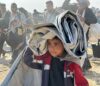
Arwa’s humanitarian work in the MENA region has itself become a subject of news coverage. Her work with children in Gaza became the subject of CNN’s Fareed Zakaria program, ‘Gaza’s Children in Crisis.’ It depicted “the harrowing reality for children in Gaza, describing how the ongoing conflict has left them literally shocked into silence.” In other broadcast venues, Damon has presented stories on “the psychological trauma inflicted on Gaza’s youth. She described how repeated exposure to violence, displacement, and the loss of family members has left many children unable to speak or express themselves, as if their voices have been silenced by the weight of what they’ve witnessed.”
Arwa has especially underscored the mental health crisis among children, “with symptoms of childhood PTSD and long-term emotional damage. Many are too afraid to talk about their experiences, and those who do often struggle to process or articulate what they’ve endured.” Her work is a response to what has become the much broader humanitarian emergency in Gaza, “where emergency aid is in short supply, and displacement has forced families to live in overcrowded, unsafe conditions. She emphasized the urgent need for psychological support, safe spaces, and access to education to help children recover and rebuild their lives.”
Damon was also interviewed by Amy Goodman, on ‘Democracy Now,’ about Arwa’s “Report from Gaza: Palestinians Feel They Are Being ‘Slowly Exterminated’ in Israel’s Genocide.” Damon averred, “So, when we look at the nature of what is happening in Gaza, you can’t spend a day here, Amy, and not come away with the notion that you are witnessing a population that is being slowly exterminated. And I say ‘slowly’ because, yes, bombs kill quickly, but disease and starvation are slow killers. And that is what a lot of people are facing here.”
In another discussion of Arwa’s humanitarian work, ‘Gaza’s Wounds,’ in a Center for Strategic and International Studies podcast, she spoke again on the war damage to Gaza as a result of Israel’s attacks on Hamas: “And I’ll just give you two examples pertaining to Gaza’s children. We have a case of a little girl. She is out of Gaza. She got out. She’s in Egypt with her aunt. The bomb killed her mother, and she was in her mother’s arms when the impact occurred. Her mother’s body actually ended up protecting her. And so, the aunt got this little girl and her brother out. When our team first started working with her, she was completely nonverbal. She was non-interactive with other children. She was terrified of everything and everyone around her. But over the course of just a few weeks, she began to come out of her shell a little bit. She began to interact a little bit. You can see the impact that the focus on mental health has had on her.”
“But in Gaza, I also saw the death of the human soul. The Gazans are zombies. Death of souls on that scale, psychological wreckage at that level, I’ve never seen anywhere. At a certain point, I went through Rafah, and the streets were filled with refugee tents, and people, and booths, and there were hardly any vehicles, because there’s no fuel, so transportation is via carts and donkeys, and people move between them slowly.”
It is easy to see how a seasoned journalist might shift from “pure” reporting to providing humanitarian assistance. It’s like you see so much damage to people and to the human soul; it’s like they are begging for your mercy. Clearly, Arwa Damon had seen all the possible damage that war had wrought on a people, many of them her people, and it tugged at her soul. That is what evoked in Arwa the humanitarian spirit to support, especially children damaged by war and its aftermath.
Sources:
-“Arwa Damon,” Wikipedia Series on Arab Americans,” 2026
-“Facing the Truth: CNN’s Arwa Damon,” Vogue Magazine Archive, by Heidi Mitchell
7/14/2014
“Report from Gaza: Palestinians Feel They Are Being ‘Slowly Exterminated’ in Israel’s Genocide,” Democracy Now, 11/14/2024
-“Arwa Damon: Gaza’s Wounds,” Center for Strategic and International Studies, Transcript from a CSIS podcast, November 26, 2024
-“A Nation Turned into ‘Zombies’: The Gaza War Through the Eyes of a Foreign Correspondent,” Arwa Damon, CNN, 2024
John Mason, Ph.D., focuses on Arab culture, society, and history and is the author of LEFT-HANDED IN AN ISLAMIC WORLD: An Anthropologist’s Journey into the Middle East, New Academia Publishing, 2017 and of his new novel, WHISPERS FROM THE DESERT: Zaki, a Little Genie’s Tales of Good and Evil (2025), under his pen name, Yahia Al-Banna. He has taught at the University of Libya in Benghazi, Rensselaer Polytechnic Institute in New York, and the American University in Cairo. John served with the United Nations in Tripoli, Libya, and consulted extensively on socioeconomic and political development for USAID and the World Bank in 65 countries.
The views and opinions expressed in this article are those of the author and do not necessarily reflect the position of Arab America. The reproduction of this article is permissible with proper credit to Arab America and the author.
Want more articles like this? Sign up for our e-newsletter!
Check out our blog here!