Subscribe
to receive news by email
Poll
Will the Trump Administration Shift U.S. Policy in Favor of Palestine?
- No (86%)
- Yes (14%)
 Loading ...
Copyright © 2026 Arab America
Go topReligious Diversity in Tunisia
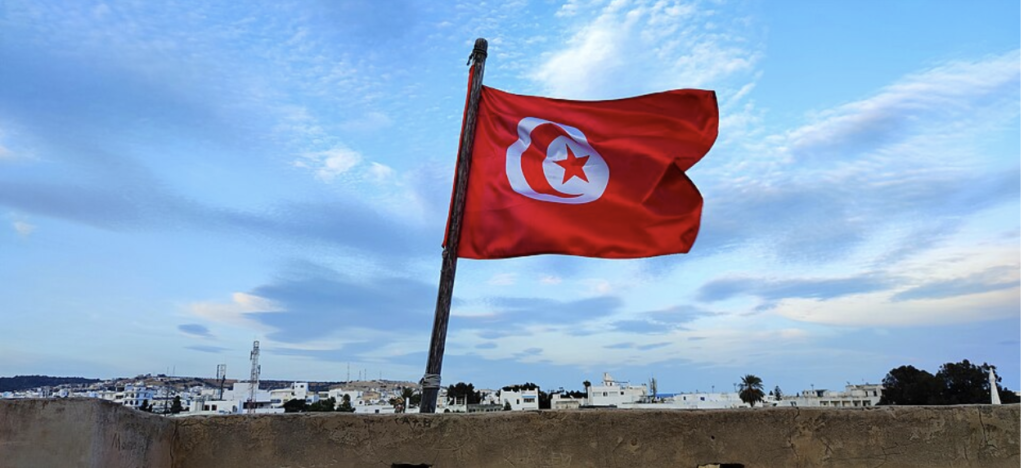
Photo Credit: Lassaad Aouichaoui (Wikicommons)
By: Nadia Boughanmi / Arab America Contributing Writer
Tunisia, a country known for its strong Islamic heritage, yet has an unknown sense of diversity. Tunisia is 99% Sunni Muslim, however other religious groups dominate varying towns across the country. Other Abrahamic faiths co-exist in the country, due to its secular government and the right to freedom of religion. Tunisia is unique in the region for its strong sense of secularism, while also having religious ties to a diverse group of religions.
Christianity and Judaism make up a majority of the other percentage of religious groups in the country. Each accounts for its own unique traditions, but still tied together by the customs of the country. Christianity is most prominent in the capital city of Tunis, where the Romans had once conquered and brought Christianity. Judaism, however, is prominent in the south of Tunisia, having a dense population on the island of Djerba.
Islam
As it is commonly known, Tunisia is known as an Islamic country, even though it has grown to be a secular and democratic nation. Sunni Muslims make up 99% of the religious population in the country. The adhan, Islamic call to prayer, is heard throughout every Tunisian street as well.
Islam was brought to Tunisia by the Umayyad Caliphate, where the holy city of Kairouan was established. Institutions were built and the Arab Muslims began cultural integration into the Amazigh world of Tunisia. Eventually the rest of the Maghreb was conquered and was known as Ifriqiya.
Tunisia also holds the 4th holiest site of Islam in the city of Kairouan. Kairouan holds one of the largest Islamic monuments of North Africa. It was an example of a town that had successful diffusion of Arabo-Muslim values and civilization in the Maghreb region. This town holds heavy religious significance in modern day as well, being considered one of Tunisia’s most conservative cities.
“Islamic principles” are also widespread throughout the country. Time off for Eid and adjusted schedules for Ramadan are found. Prayer times are respected with breaks given and the adhan, call to prayer, is played throughout the whole country. Halal foods are extremely accessible, with nearly everything in the country being certified halal.
Christianity
Christianity is a smaller group in Tunisia, but it still is alive and thriving. Christianity, in the branch of Roman Catholicism, was brought to Tunisia by the Romans. Carthage is an infamous site of the Romans, whom had brought Christianity there, and the neighboring capital city of Tunis. Even though both cities are predominantly Muslim, Christianity still made a mark on the cities.
In Tunis, the Catholic Church stands tall, being made of beautiful Tunisian and Catholic mosaics. It is open to all, with a large population of Catholics in the country attending mass there on Sundays. Church bells being rung echo through the capital city for all to hear, along with the Islamic adhan. 80% of the Christian population in Tunisia is Catholic, so this church is a key part of religious ceremonies for the community.
Historically, Carthage was the hub for Christianity. It was the center in which Christianity had been brought to and then diffused to other cities in the nation. It was also a key beginning for church leadership in the North African region.
Judaism
Judaism is the third largest religion in Tunisia. It has a very prominent community on the island of Djerba. Tunisia is home to one of the last traditional Jewish communities in the Arab world. Jewish presence in Tunisia dates back to over 2,000 years ago, where there were Jewish quarters around the country.
The Hafisa Quarter is tucked away in the northeastern part of the Medina in Tunis. It is one of the most densely populated Jewish areas in all of North Africa. It houses both native Tunisian Jews and ones that have immigrated from Italy and Spain due to historical expulsions.
Djerba houses one of the oldest standing Jewish communities that are active within the Arab world. The southeastern coast of the island houses two towns that surround the most prominent synagogue in Tunisia. Hara Kabira and Hara Saghira are two neighborhoods that surround the El Ghriba Synagogue. Both Arabic (Darja) and Hebrew are spoken within the communities.
Religious Diversity Under Secularism
Even though Tunisia is classified as a Muslim country, it still has a very secular mindset with freedom of religion. Alcohol is legal to purchase throughout the country, laws are not based on Islam and modesty nor hijab are mandatory in the country. Anyone is able to practice their religion of choice freely and breaks for a variety of holidays that surround mostly Abrahamic faiths are given. Christmas, Eid and Passover are all widely celebrated throughout the country.
Tunisia is run on a civil law system, giving freedoms and equality to all religions while still accommodating the large Muslim population of the country. All laws, except inheritance laws, are completely based on the civil, secular system. With there being an abolition of religious courts, various religions were able to flourish freely based on their own beliefs rather than a set of beliefs from a custom they don’t follow.
Want more articles like this? Sign up for our e-newsletter!
Check our blog here!