Subscribe
to receive news by email

Poll
Will the Trump Administration Shift U.S. Policy in Favor of Palestine?
- No (86%)
- Yes (14%)
 Loading ...
Copyright © 2026 Arab America
Go topCardamom’s Journey West: How Arab Influence Reaches Kitchens Worldwide
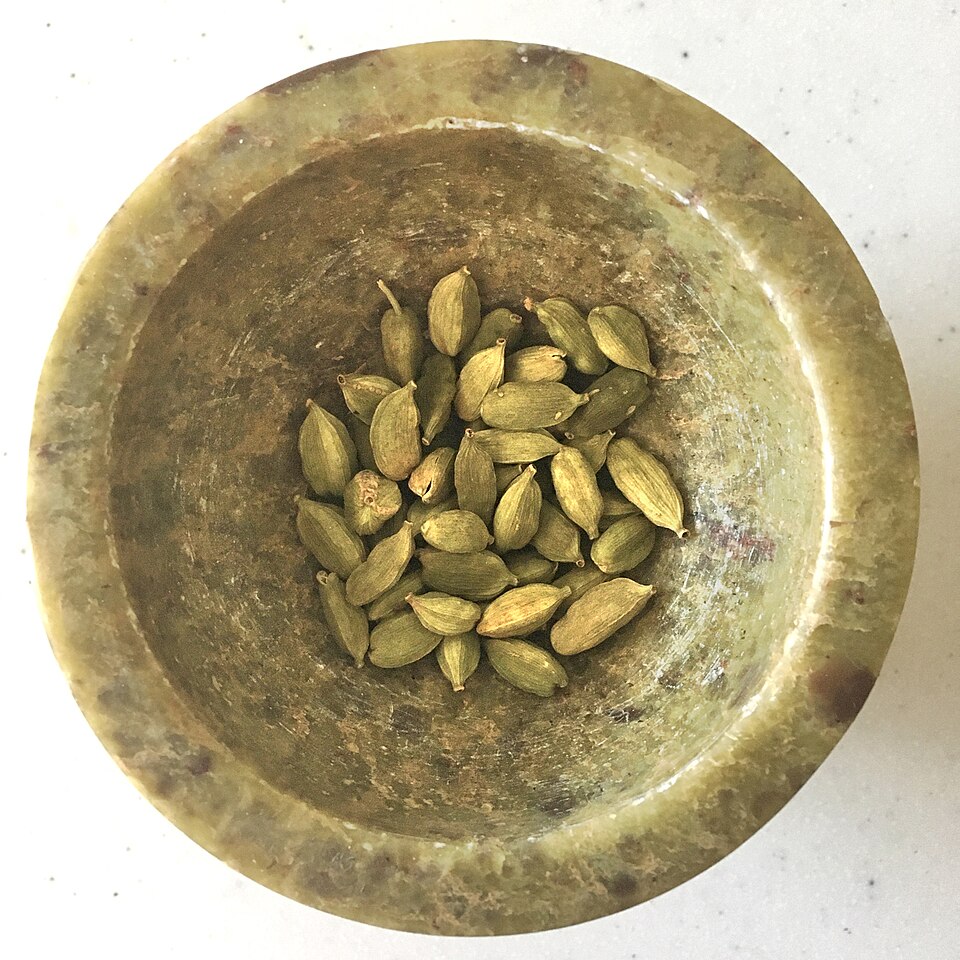
Cardamom in the Arab World
By: Connor J. Buss / Arab America Contributing Writer
Last week I baked one my favourite dishes from Finland: korvapuusti. The baked cinnamon rolls feature cardamom, a spice that finds a home in every Finnish household. However, cardamom is not from anywhere near Finland, it is not even grown there. It had me thinking, how did cardamom make it here, and how did it become a staple spice in Finnish cuisine?
Cardamom is a spice originating in India and Southeast Asia. The spice requires an extremely specific climate to grow, keeping most places from growing it. Such begs the question, how did it make it so far? The world’s biggest producer is all the way in Guatemala, how did it get there?
Arab Influence
To answer the question, we need to look at the Arab world. Trade routes dating all the way to ancient history have Arab nations in the spotlight. Any trade that went between Europe, Africa, or Asia almost always passed through the Near East. As a result, while the crop could not grow in most of the Arab world, Arabs were still introduced to the crop and were responsible for spreading it all across the three aforementioned continents.
Geography’s favour of Arabs strengthened the region as the global center for the spice trade. Economies were strengthened and influence spread through a spice. The trade of cardamom became an international unifier, with countries falling in love with the spice and increasing mutual trade with Arab groups, most notably the Ottoman Empire. Cardamom also became a peacemaker, as people would avoid conflicts to keep the trade stable. The spice even brought cultures together over the common love for the spice.
International relationships even brought the Ottomans to shelter Swedish king Charles XII, a gratuity that is repaid with the heavy use of cardamom in Sweden still today. The relationship between the two countries was built upon the spice trade and economic cooperation.
Cardamom in the Arab World
Geopolitics aside, cardamom became a commodity within the Arab world as well. It was treated with a value similar to gold and gems, a reputation still maintained as cardamom is the third most expensive spice in the world.
Specifically, the use of cardamom is not just reserved for Finns and Swedes. One of the Arab worlds’ most popular drinks is cardamom mixed into coffee. It is one of the most basic symbols of hospitality on the Arabian Peninsula, and frankly is absolutely delicious.
Cardamom also carries medicinal value, even more so looking back into history. As a supplement, it is used to soothe the stomach and cure headaches. It’s rich in antioxidants, which fight bacteria and find success in mitigating disease. It was used for this purpose in the Arab world as early as 1550 BCE in Egypt.
In India, the Ayurvedic system of medicine, based on early Brahmanic texts, recommended that cardamom be chewed after meals to increase the flow of saliva, help digestion and eliminate bad breath, and millions of Indians do precisely that today.
Arab Imports
Cardamom is hardly grown in the Arab world. This is due to the specific climate cardamom needs to grow, which the Arab world lacks. However, as nations came to discover the spice passing through trade, demand for it grew. As a result, most of today’s top importers are Arab countries, with the top two being Saudi Arabia and UAE.
Cardamom’s symbol of hospitality creates its high demand. For example, higher amounts of cardamom used in coffee is often used for special occasions or to honour a guest. It is considered a display of generosity and good manners.
Cardamom finds its highest consumption rates between Ramadan and the Hajj, the Muslim pilgrimage to Mecca. This is because millions of Muslims enter the country during this period, and the ceremonial use of cardamom is practiced for the ritual. Additionally, during the holy month of Ramadan many families practice a tradition of making cardamom coffee in preparation to break the daily fast.
The world’s biggest grower of cardamom is Guatemala, a country that consumes almost none of it. In fact, the country produces two-thirds of the entire world’s supply. The economy relies on it, with it being called “more important than coffee” in provinces responsible for its growth. It’s export destination? The Arab countries, with Saudi Arabia leading.
The trade of cardamom has created strong relationships between the Arab world and countries across the globe, with economic cooperation off of a soothing flavour. The market has grown over thousands of years, and ancient relationships ensure that it will continue to grow.
Want more articles like this? Sign up for our e-newsletter!
Check out our blog here!