Subscribe
to receive news by email

Poll
Will the Trump Administration Shift U.S. Policy in Favor of Palestine?
- No (86%)
- Yes (14%)
 Loading ...
Copyright © 2026 Arab America
Go topTo Detach Lebanon's Conflict from Iran's is Both Unwise and Unjust
By: Ghassan Rubeiz / Arab America Contributing Writer
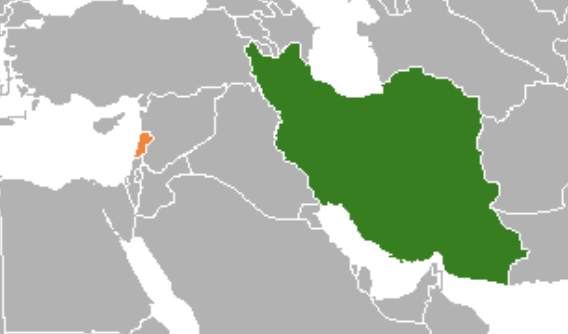
The diplomatic landscape of the Middle East is moving in two directions simultaneously. High-stakes negotiations between Washington and Tehran are losing momentum — positions have hardened, deadlines have slipped, and Trump has signaled his patience is exhausted. Yet on a closely related front, dialogue between Lebanon and Israel is gaining unexpected traction; US officials now suggest the two countries are “on their way” toward a political understanding. At the very moment Washington appears ready to abandon diplomacy with Iran, it is presenting Lebanon and Israel as potential partners in peace – despite increasing ceasefire violations on the battlefield. This gap between the two tracks is not a paradox — it is a strategic incoherence that may define the region’s near future.
A common thread links both tracks. In each case, Iran and Hezbollah are being asked to disarm or face severe consequences. Tehran must surrender its highly enriched uranium, abandon its long-range missiles, and cease supporting armed regional proxies. Hezbollah must give up its rockets and drones. What makes this parallel more consequential is who is issuing the demands: the United States and Israel — the builders respectively of the world’s first and the Middle East’s only nuclear arsenals — are insisting that Iran dismantle its distant nuclear capabilities. And the state that maintains a longstanding occupation of Lebanese territory is calling on Hezbollah to lay down its arms. These contradictions are not incidental. They are the load-bearing walls of the region’s instability.
Some policy circles speak of “finishing” Hezbollah as though military pressure, sanctions, and isolation could compel Lebanon’s most powerful non-state actor to surrender. This is not only unrealistic — it is historically blind. For Hezbollah, armed resistance is not a temporary posture. It is rooted in a narrative of defending Lebanese land from occupation. As long as Israel maintains its presence in the south and beyond— and as long as Israeli officials openly discuss advancing their lines to the Litani River, deep inside Lebanese territory — Hezbollah’s armed status remains politically defensible to its constituency. Occupation has never produced disarmament in Lebanon. It has always produced resistance.
This is why calls for the Lebanese Armed Forces to retake the south by force are risky. The LAF is one of the few institutions trusted across sectarian lines — not because it has protected borders, but because it has prevented internal conflict. To demand it disarm a largely Shiite militia, when a significant portion of its own ranks is Shiite, risks fracturing the one institution that has held Lebanon together through its darkest moments. Hezbollah is battle-hardened, forged through decades of direct confrontation with Israel. The LAF has never fought a major external war. Its strength lies in preserving domestic peace, not testing the country’s fragile unity.
Washington compounds the contradiction. It is the primary backer of the Lebanese army, yet also the principal supporter of Israel’s military campaigns and the chief architect of Hezbollah’s international isolation. No diplomatic rhetoric resolves that structural conflict of interest.
The United States has been here before. In 1983, Lebanon was pushed into signing a peace agreement with Israel that lacked genuine national consensus. Washington backed it enthusiastically, convinced that momentum and pressure could substitute for balanced dialogue. The agreement collapsed within weeks, deepening civil conflict and accelerating the very radicalization it was meant to prevent. Arrangements imposed under duress are not peace — they are a prelude to rupture. That lesson apparently still needs learning.
The future of Lebanese-Israeli relations cannot be separated from the trajectory of the US – Iran confrontation. If that confrontation escalates, Israel may expand its operations in Lebanon, extending its occupation, deepening civilian devastation, and entrenching the narrative of resistance it seeks to defeat.
Hezbollah will not be disarmed by pressure, force, or wishful thinking. Its demilitarization requires a comprehensive political settlement built on three interlocking foundations. First, Israel must withdraw from all occupied Lebanese territory. Second, Washington must pursue serious diplomatic engagement with Tehran rather than oscillating between negotiation and threat — the regional order cannot stabilize while the US – Iran relationship remains a permanent crisis. Third, the United States must shift its role from an unconditional patron of Israeli military power to a genuine broker of a just and lasting peace — one that addresses Palestinian rights alongside Lebanese sovereignty and Iranian security and stature.
These are not idealistic demands. Diplomacy that ignores them does not advance peace. It postpones the reckoning while deepening the wound.
Ghassan Rubeiz is the former Middle East Secretary of the World Council of Churches. Earlier, he taught psychology and social work in his country of birth, Lebanon, and later in the United States, where he currently lives. He has contributed to political commentary for the past twenty years and has delivered occasional public talks on peace, justice, and interfaith topics. You can reach him at rubeizg@gmail.com
The views and opinions expressed in this article are those of the author and do not necessarily reflect the position of Arab America. The reproduction of this article is permissible with proper credit to Arab America and the author.
Want more articles like this? Sign up for our e-newsletter!
Check our blog here!