

Subscribe
to receive news by email

Poll
Will the Trump Administration Shift U.S. Policy in Favor of Palestine?
- No (86%)
- Yes (14%)
 Loading ...
Copyright © 2026 Arab America
Go topTunisia’s Handling of Migrants
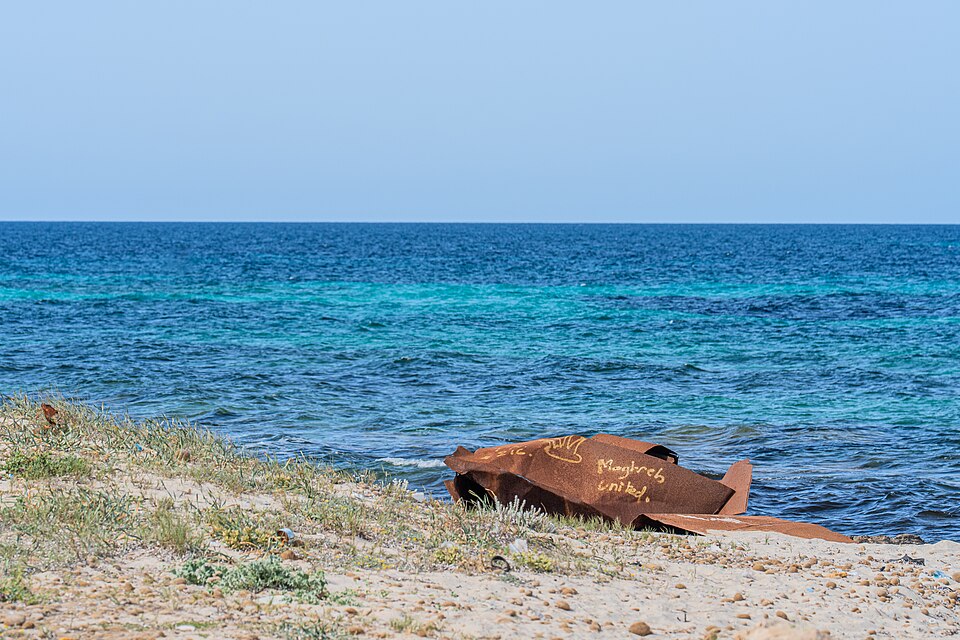
Photo Credit: Skander Zarrad (Wikicommons)
By: Nadia Boughanmi / Arab America Contributing Writer
Tunisia has taken a spotlight in the media, but not for the right reasons. In the past few years, Tunisia has seen an influx of migrants into and out of the country. People from Libya to Sub-Saharan Africa have attempted to take refuge in Tunisia, to then make it to Europe.
Boats of migrants have attempted to make the cross from Tunisia to Italy and France in unstable conditions. This has resulted in the loss of lives, an irresponsibility from Tunisian border control and the EU funding of Tunisia’s borders to become more regulated. This leaves a broader question of what the future plan is for dealing with this on-going issue.
Libya
In recent years, the UN has put out a warning on the crisis happening at the Tunisian-Libyan border. There are mass amounts of foot traffic from migrants and asylum seekers. People from neighboring nations, like Sudan and Somalia enter Libya, in order to make the journey to Tunisia.
The border between Libya and Tunisia is where the majority of the incoming migration flow is. Neither country has strict border control for entering one another, so it makes it quite easy for migrants to travel between them. After they make it to Tunisia, they either stay in the country to work or use boats to travel to Italy and other parts of Europe. The flow into Europe off the coast of Tunisia has caused major tensions between the EU nations and Tunisia.
Sub-Sahara
Sub-Saharan migrants make up a larger population of migrants in Tunisia. There are an estimated 10,000 sub-Saharan migrants in Tunisia. These migrants do not have proper living arrangements, equal access to jobs and little to no access to basic necessities. Over 70% of the migrants fit into that category of lack of access.
Migrants from the sub-Saharan region have made an impact on the Tunisian economy in a beneficial way. They contribute their laboring resources to the country, despite the lack of integration they face. Xenophobia and stereotypes are amongst the reality of sub-Saharan workers. However, many migrants in the work force don’t plan to stay long, as Tunisia has become a “port country.”
Sub-Saharan migrants have begun to use Tunisia as a “ticket” to the EU. Due to the growing border crisis in Tunisia, it has become extremely easy for migrants to get into the country and then flee by boat to Europe. The path to Europe by boat is not an easy one. Hundreds, thousands even, of migrants have died due to the rough conditions of the Mediterranean Sea. The mass deaths have raised another question on humanitarian issues in the region.
Europe
The EU nations have played a huge role in the migrant crisis of Tunisia. It was expressed that they did not want to accept the growing number of migrants coming out of Tunisia’s port. Sharing a similar view, Tunisia didn’t want to accept migrants back or keep the influx of migrants entering at the Libyan border.
After countless discussions, the EU and Tunisia had come to an agreement. That there would be regulations and funding set in place to slow the amount of migrants going into Europe. This agreement was something that the public didn’t want and didn’t ask for. Many were extremely disappointed in all governments involved due to the lack of safety and empathy for the migrants.
Italy and Germany both send millions of euros to Tunisian border officials in order to keep it “secure,” essentially keeping migrants from traveling to Europe by boat and expelling them back to the places they are attempting to seek refuge from.
German forces had “aided” Tunisian ones by supplying arms and funding to keep the forces “strong.” This system of supply was all put in place to ensure that Tunisia’s migrant crisis would no longer trickle over to Europe. Italian and German governments have “buffed up” the Tunisian Coast Guard in order to keep migrants from crossing the sea. Detentions, torture and horrible treatment have been the reality of many of the migrants caught by officials.
Tunisia’s Future Plan
As of now, the Tunisian government hasn’t changed their future plan on the migration crisis. However, the International Organization of Migrants has put together a plan to aid Tunisia in the crisis. The plan consists of strategies to aid Tunisia in obtaining its economic goals, while not continuing the in-humane treatment of migrants. The IOM in Tunisia has plans to amplify their area-based approach. They want to ensure that there is safe access to public services for migrants, so that the government can aid these people without continuing the negative treatment.
The IOM in Tunisia wants to put a focus on the basic human rights of migrants, granting them safe and healthy lives. The IOM plans to expand health services of migrants as well as helping them keep their resilience in difficult times. There is a plan and want for the IOM to increase coordination between national and regional authorities to reinforce said public mechanisms. (IOM Strategy for Tunisia 2025-2030)
Want more articles like this? Sign up for our e-newsletter!
Check our blog here!