

Subscribe
to receive news by email

Poll
Will the Trump Administration Shift U.S. Policy in Favor of Palestine?
- No (86%)
- Yes (14%)
 Loading ...
Copyright © 2026 Arab America
Go topLibya’s Jarra: 10,000 Years in Pottery
By: Nourelhoda Alashlem / Contributing Writer
Over 10,000 years ago, early human civilizations in Libya were already using clay vessels to cook plants and grains, making it one of the world’s earliest known traditions of pottery use.
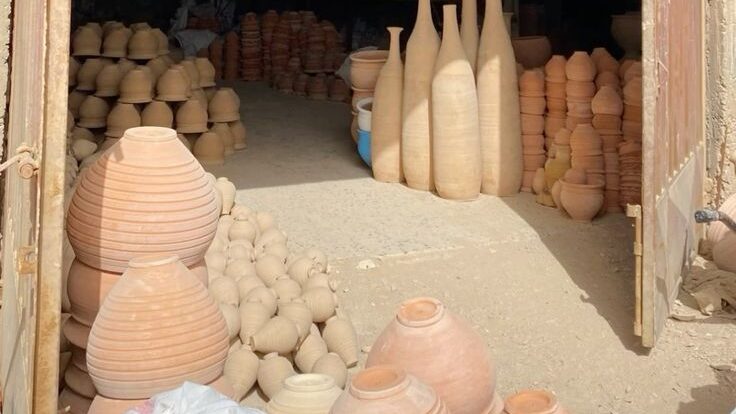
What may appear today as a simple clay pot, known as the “jarra,” carries a long history rooted in Libyan culture and innovation. From its role in daily practices to its presence in pottery craft and through a folklore performance, the jarra reflects a continuous tradition in Libya that connects ancient knowledge to modern cultural expression today.
Ancient Origins of Pottery in Libya
Archaeological evidence from sites such as Takarkori and Uan Afuda (site of the earliest painted rock) located in the Tadrart Acacus Mountains of southwestern Libya, demonstrates that pottery was used by hunter-gatherer communities long before the development of agriculture. Residue analysis of unglazed pottery fragments revealed plant oils and waxes, confirming the cooking and processing of grasses, seeds, and aquatic plants.
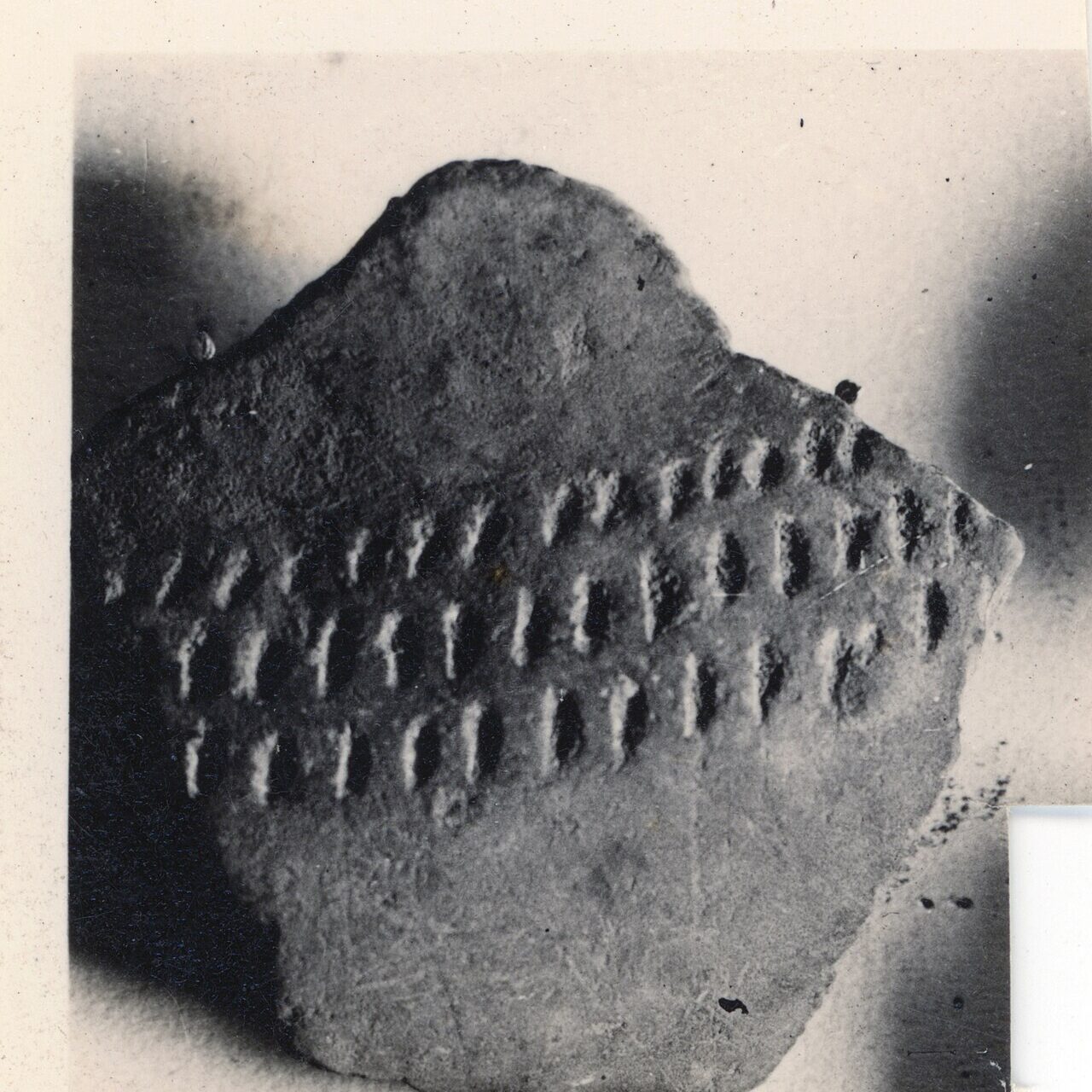
The scientists said the food was “a kind of porridge” that made up the staple diet when there was no meat from hunting.
These findings show that Libya is among the earliest known regions where pottery was used for cooking rather than decoration, as early as 10,000 years ago, according to new evidence. The researchers discovered this by analyzing the carbon isotope ratios of oily residues preserved in the pottery.
At the time, the Sahara region was not the desert seen today but a green and fertile environment with lakes and vegetation. The use of pottery in this context shows a sustained knowledge of plant processing and environmental adaptation over thousands of years.
The Libyan pottery evidence suggests that plant materials were not just used occasionally but were processed repeatedly and systematically. Libya emerges as a key site in the history of human experience as a site of early experimentation and adaptation.
Gharyan and the Continuity of Craft
Gharyan and the Continuity of Craft
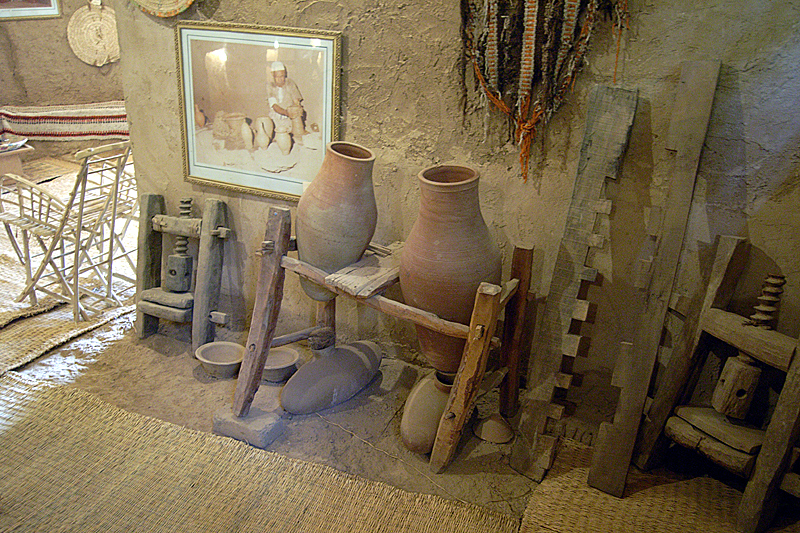
In the city of Gharyan, pottery is still a major part of daily life. The town is known across Libya for its ceramic workshops and handmade clay products. Many potters learned the craft from their fathers and grandfathers, continuing techniques that have been passed down for generations.
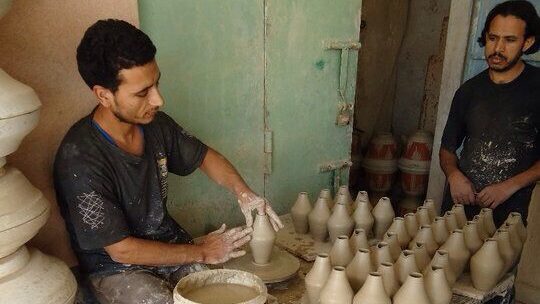
Artisans shape clay by hand or on a wheel and fire it in traditional kilns. At the same time, some workshops have started using more modern tools, such as new ovens and pottery machines, to keep up with demand and improve production.
Despite this, potters face challenges. Many say they “lack proper equipment and support to grow the industry. from the government.” They point out that Libya has strong natural materials for pottery, comparable to countries like Tunisia and Algeria, but needs more investment to fully develop the craft and to revive this ancient craft.
Despite these challenges, pottery remains active in Gharyan. Shops display jars, plates, and other pottery ware for locals and visitors.
The craft continues to survive through practices in an attempt to show how tradition can stay relevant while adapting to change.
The Jarra Dance
In southern Libya, especially in the Fezzan region, the jarra is not only used in daily life.
It also appears in celebration through what is known as the Jarra dance, or “رقصة الجرّة.” Other cities throughout Libya, such as Derna, also have a version of this dance under variations of names. This performance is commonly seen at weddings and community gatherings.
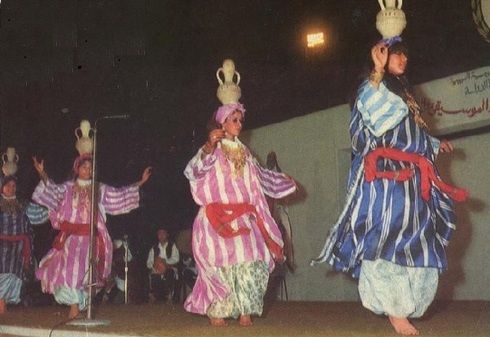
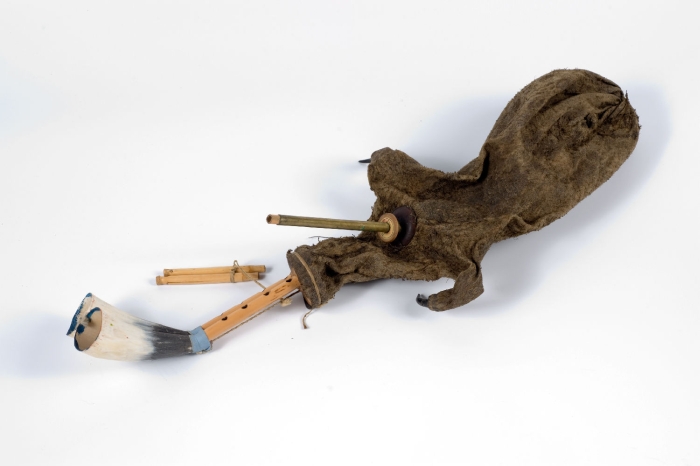
The dance centers on a performer who places the clay jars on their head and moves in rhythm to drums and the zukra, a traditional Libyan instrument similar to a bagpipe.
As the performance continues, more jars may be added one by one, stacked carefully on top of each other. The dancer continues moving without using their hands while spinning and swaying their hips.
Watch a video of the Jarra dance performance below:
The Jarra Continues
The jarra is not only one of the earliest known uses of pottery but also one of the clearest examples of continuity in Libyan cultural life.
In Gharyan, pottery remains tied to local identity, even as the industry faces limits in tools, support, and market access. Some artisans are adapting by selling their work online, while others continue using traditional methods passed down through generations.
At the same time, practices like the Jarra dance are seen less often than before. The presence is still there, but not at the same scale as it was before.
This calls for more direct support. There is a need for investment in local artisans, access to better equipment, and stronger cultural recognition.
Efforts at the national level, along with recognition from organizations such as UNESCO, can help protect and document these traditions.
Want more articles like this? Sign up for our e-newsletter!
Check out our blog here!








_TMnr_3402-1.jpg)