
Subscribe
to receive news by email

Poll
Will the Trump Administration Shift U.S. Policy in Favor of Palestine?
- No (86%)
- Yes (14%)
 Loading ...
Copyright © 2026 Arab America
Go topPathbreakers of Arab America—Laila Lalami
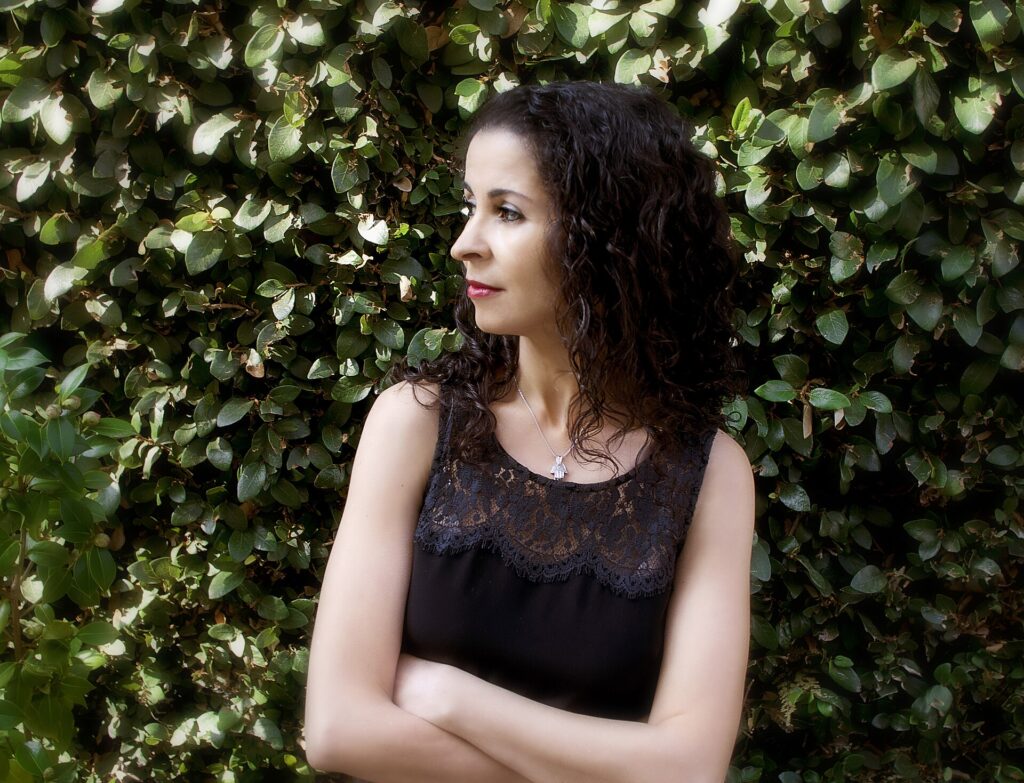
By: John Mason / Arab America Contributing Writer
This is our one-hundred and nineteenth in Arab America’s series on American pathbreakers of Arab descent. The series features personalities from various fields, including entertainment, business, sports, science, the arts, academia, journalism, and politics. Our 119th pathbreaker is Dr. Laila Lalami, a renowned Moroccan American novelist and essayist, distinguished professor of creative writing, and author of six well-received books. Laila uses her platform to address issues of identity, migration, and justice, including the rights of Palestinians.
Moroccan American Laila Lalami’s cultural roots illuminate another world of literary innovation
Laila Lalami was born in Rabat, Morocco on February 24, 1968, to working-class parents. Her parents “fostered a home environment rich in reading materials despite lacking higher education themselves.” Laila has very fond memories of her parents: they were “constant readers, often engaging with newspapers and books, as exemplified by an early memory of them seated opposite each other at the kitchen table perusing the daily press.” She attributes this literary interest even of working-class families “to French colonial legacies which persisted in education and culture following the country’s 1956 sovereignty from France.”
Laila reported that from a young age her literary exposure centered on French-language works, “beginning with children’s comics like Tintin and Asterix, which introduced her to narrative storytelling amid Morocco’s multilingual landscape of Moroccan Arabic, Standard Arabic, and French.” When she enrolled in a French primary school, she developed bilingual proficiency in French and Arabic, “navigating a society where French remained prominent in elite and educational spheres during the 1970s and 1980s.”
While the foreign language background of Laila’s education in Morocco tended to foster practical career paths, such as medicine or engineering, typical of growing economies, Laila’s family background where literary interests prevailed, nudged her towards a focus on language and writing. From primary school, Laila went on to the Université Mohamed V de Rabat, from which she obtained the equivalent of a liberal arts degree . That led her to study in Britain for a master’s degree in linguistics from University College London in 1990. By then, in 1992, she knew exactly where she was headed, moving to the University of Southern California for a PhD. in linguistics.
By 1996, Laila had begun her publishing career. Her literary career was influenced by the work of Palestinian American intellectual Edward Said, each with their own Arab backgrounds, but who shared sentiments towards oppressed people everywhere, but especially Palestinians and other Arabs. Besides her six books, about which more below, she has excelled in literary criticism, cultural commentary, and opinion pieces, which have appeared in ‘The Boston Globe,’ ‘Boston Review,’ ‘The Los Angeles Times,’ ‘The Nation,’ ‘The New York Times,’ ‘The Washington Post,’ ‘The Daily Beast,’ among others. In 2016, she was named both a columnist for ‘The Nation’ magazine[ and a critic-at-large for ‘The Los Angeles Times Book Review.’
Lalami’s first book, ‘Hope and Other Dangerous Pursuits,’ published in 2005, follows four Moroccan migrants who attempt to enter Spain by boat. The reader is taken back and forth between Morocco and Spain in telling the characters’ tales of their crossing and fateful ends of their journey. The book received wide critical acclaim.
Her second book, the novel ‘Secret Son,’ 2009, is a coming-of-age story set in the slums of Casablanca. It’s about a young college student who discovers his father, thought to be dead for many years, who lives in the same city. The development of the relationship with his father, however, is “threatened by social and political unrest in the city.” The novel becomes an exploration of “themes of identity and class in a world increasingly divided by political ideology.” It, too received accolades, including nomination for the Orange Prize.
‘The Moor’s Account,’ Lalami’s third book, published in 2014, concerns a Moroccan slave, Estevanico, “documented as part of the ill-fated Narváez expedition of 1527 and was one of four survivors to reach Mexico City in 1536.” Seen through his own eyes, Estevanico later led expeditions as the first black explorer of America. The novel won the American Book Award and was a finalist for the Pulitzer Prize for Fiction.
In 2019, Lalami published yet another novel, ‘The Other Americans.’ The book begins with “the suspicious death of a Moroccan immigrant in a hit-and-run accident in a small town in California, and is told from the perspectives of nine different characters who are connected to him.” It was a finalist for the National Book Award for Fiction. Her next book, ‘Conditional Citizens: On Belonging in America,’ is a non-fiction collection of essays on the theme of American identity and citizenship.
Lalami’s most recent novel, ‘The Dream Hotel,’ published in 2025 concerns “a chilling near-future surveillance state.” It is about Moroccan American archivist Sara Hussein, who is followed, then detained in a retention center “after an algorithm flags her dreams as evidence of impending violent intent.” A story fit for our surreal times, “As Sara navigates arbitrary restrictions in the former elementary-school prison, Lalami interrogates the erosion of privacy in the age of data mining and predictive justice.” The novel was praised as “chillingly original and eerily close to reality.” It earned starred reviews.
Looking back on what has become a highly successful literary career, Laila observed, “I never expected to become an immigrant or to be writing fiction in English, but these two decisions have had a profound impact on my creative and critical thinking. My fiction frequently deals with themes of home, and my characters tend to be outsiders, people who don’t quite fit in anywhere.” On U.S. citizenship, she took some exception, noting, “definitely after 9/11, that’s when I really started to notice that just because you are a citizen does not mean that you are treated the same as everyone else.”
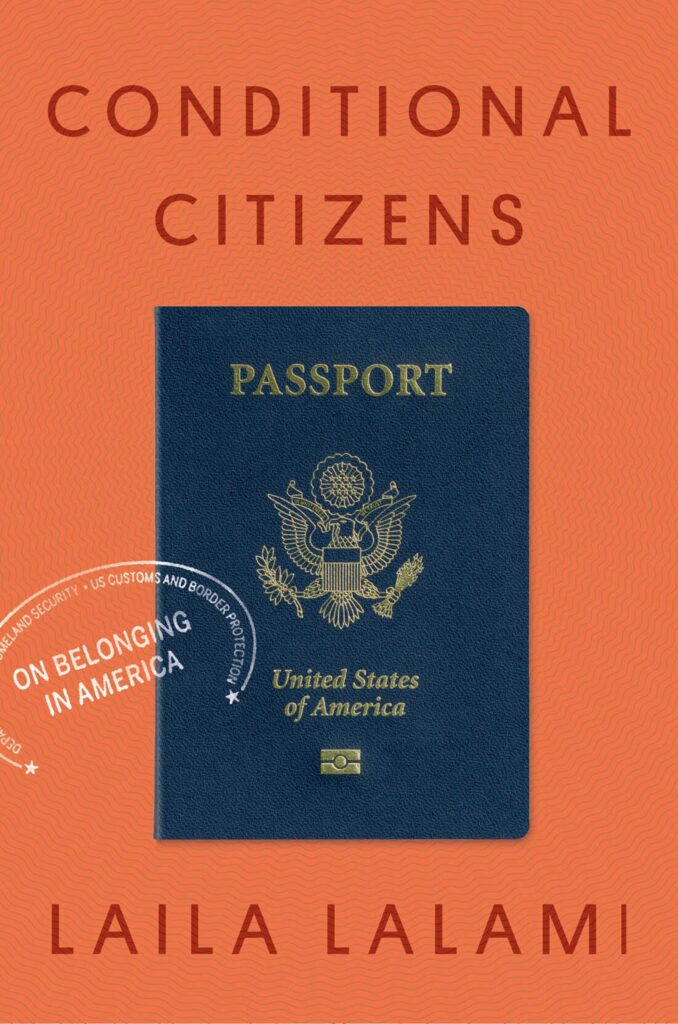
“Faces of Palestine-Laila Lalami, Advocate for Palestinian and Human rights”
Lalami has used her platform to draw attention to the struggles of Palestinians, particularly through her participation in events like the Palestine Festival of Literature, where she has spoken out against the Israeli occupation. Reporting about her underscores her storyline narratives, which “challenge dominant narratives about identity and belonging, particularly those that marginalize Palestinians and other displaced peoples.”
When it comes to Lalami’s representation of Palestinians and other marginalized communities, she is characterized as “promoting empathy and understanding.” In that respect, Laila’s novels often explore themes of displacement and migration, fostering greater empathy for her characters: “By writing about Moroccan and Palestinian characters, Lalami provides much-needed representation for these communities in global literature, offering nuanced perspectives on their struggles.”
In both her essays and public speaking engagements, Lalami continuously addresses matters of human rights. She uses these occasions to “educate audiences about the importance of human rights, including the rights of Palestinians, contributing to a broader understanding of global justice issues.”
In this moment of social division in our country, the combined literary writings and public speaking engagements of Dr. Laila Lalami are critical to maintaining a voice of equanimity and sanity.
Sources:
-“Laila Lalami,” Wikipedia Series on Arab Americans,” 2026
-“Laila Lalami, biography,” ‘Being Wicked’ website, 2026
-“’Conditional Citizens’ Examines What It Means to Be an American,” interview with Laila Lalami, National Public Radio Morning Edition, 9/22/2025
-“Faces of Palestine-Laila Lalami, Advocate for Palestinian and Human rights,” 1/26/2026
John Mason, Ph.D., focuses on Arab culture, society, and history and is the author of LEFT-HANDED IN AN ISLAMIC WORLD: An Anthropologist’s Journey into the Middle East, New Academia Publishing, 2017 and of his new novel, WHISPERS FROM THE DESERT: Zaki, a Little Genie’s Tales of Good and Evil (2025), under his pen name, Yahia Al-Banna. He has taught at the University of Libya in Benghazi, Rensselaer Polytechnic Institute in New York, and the American University in Cairo. John served with the United Nations in Tripoli, Libya, and consulted extensively on socioeconomic and political development for USAID and the World Bank in 65 countries.
The views and opinions expressed in this article are those of the author and do not necessarily reflect the position of Arab America. The reproduction of this article is permissible with proper credit to Arab America and the author.
Want more articles like this? Sign up for our e-newsletter!
Check out our blog here!