Subscribe
to receive news by email

Poll
Will the Trump Administration Shift U.S. Policy in Favor of Palestine?
- No (86%)
- Yes (14%)
 Loading ...
Copyright © 2026 Arab America
Go topPathbreakers of Arab America—Shibley Telhami
By: John Mason / Arab America Contributing Writer
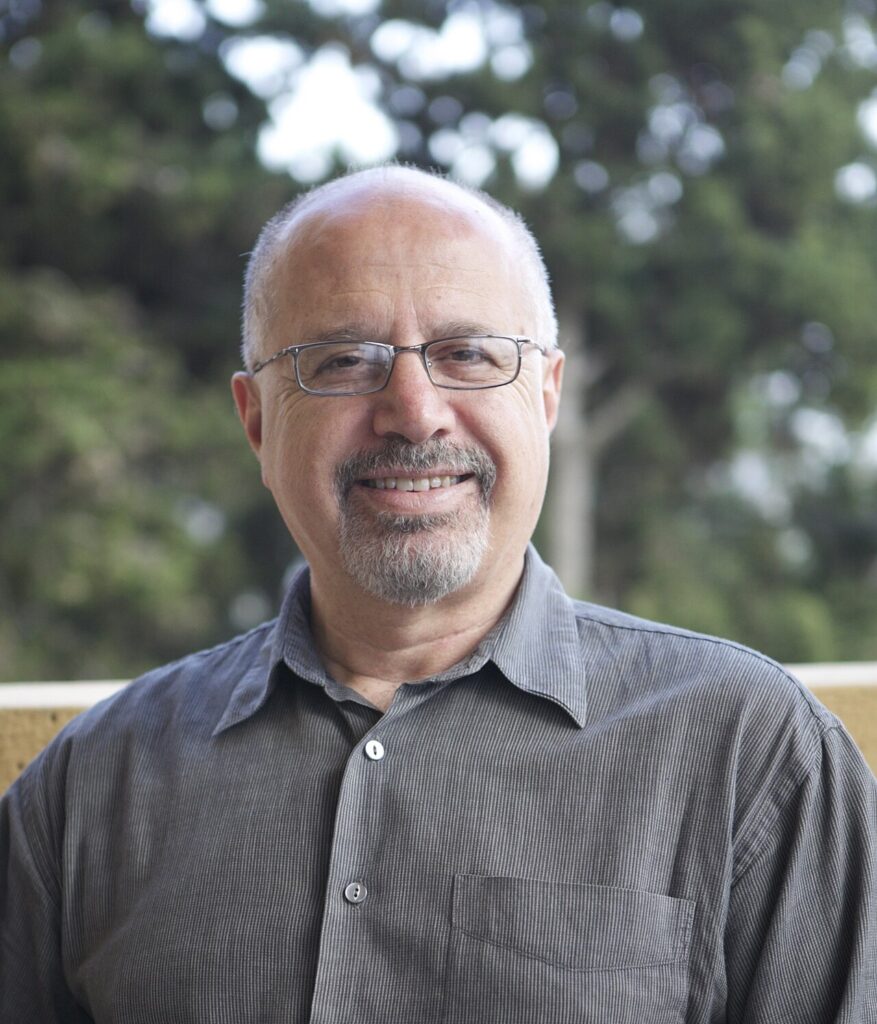
This is our one-hundred and sixteenth in Arab America’s series on American pathbreakers of Arab descent. The series features personalities from various fields, including entertainment, business, sports, science, the arts, academia, journalism, and politics. Our 116th pathbreaker is Shibley Telhami, the Anwar Sadat Professor for Peace and Development, Distinguished Scholar-Teacher, and the Director of the University of Maryland Critical Issues Poll. Telhami has advised every U.S. administration from George H.W. Bush to Barack Obama. His focus on the role of public opinion is especially relevant to current perceptions of Americans regarding the attack on Iran under the current circumstances.
Grounded in his family’s pre-1948 and his own post-1948 Israel Arab experience, Telhami is imbued with strong principles of peace-making, development, and resilience
Shibley Telhami was born on July 31, 1951, to Arab parents in a village outside Haifa, Israel. Fluent in Arabic, Hebrew, and English, he has lived in the United States since age 19. As Telhami recollected, his upbringing “was marked by modest rural conditions, lacking running water or electricity, which included fetching water by donkey rides to a nearby well.” His father, “Zeki, was among the first villagers to attend high school and aspired to become the first to complete college, but regional conflicts derailed these ambitions.” Telhami’s mother, Terese, “was born in Haifa and completed only fourth grade before the 1948 war forced her family to seek refuge in the village on Mount Carmel.”
In retrospect, Telhami avers that the experiences of his family in pre-1948 Palestine and his own in post-1948 Israel instilled in him “core values of egalitarianism, resilience, and education as pathways to opportunity, aligning with the ethos of the United States.” Not by coincidence, at age 19, Telhami emigrated to the U.S. “with $150 and a one-way ticket, influenced by the contrasts between his village roots and aspirations for broader horizons amid the Arab Israeli context.”
Telhami received his PhD. In Political Science from the University of California, Berkeley in 1986. Prior to that, he received an M.A. from the Graduate Theological Union at Berkeley in 1978. Shibley received a B.A. from Queens College of the City of New York in 1974. He has taught at several universities, including Cornell University, The Ohio State University, the University of Southern California, Princeton University, Columbia University, Swarthmore College, and the University of California at Berkeley.
He is presently a professor in the Department of Government and Politics at the University of Maryland, College Park, and occupies the University’s chair as the Anwar Sadat Professor for Peace and Development. Telhami is a political scientist specializing in international relations, American foreign policy, and Middle Eastern politics with a particular focus on the role of public opinion.
Besides teaching, Telhami serves on several boards involved in foreign policy, education, employment, and human rights. He is a member of the Council on Foreign Relations and serves on the board of the Education for Employment Foundation and several academic advisory boards. He has served on the board of Human Rights Watch (and as chair of the Advisory Committee of Human Rights Watch/Middle East). He has also served on the board of the United States Institute of Peace.
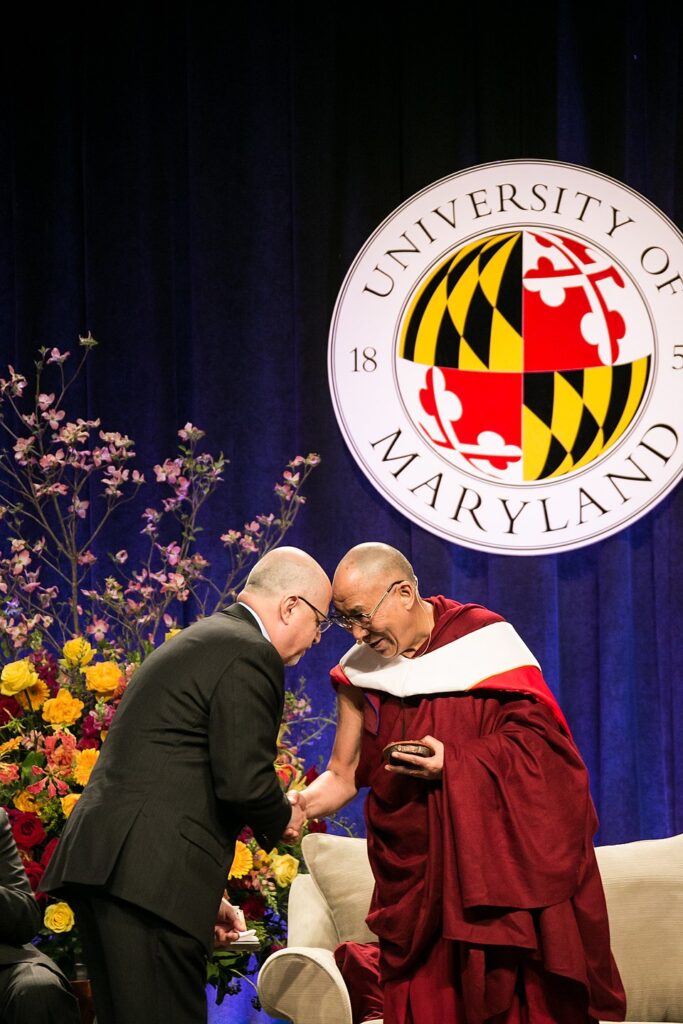
He has served as an advisor to the U.S. Mission to the U.N. (1990–91) and as an advisor to former Congressman Lee H. Hamilton, and as a member of the U.S. delegation to the Trilateral U.S.-Israeli-Palestinian Anti-Incitement Committee, which was mandated by the Wye River Agreements. He also served on the Iraq Study Group as a member of the Strategic Environment Working Group.
His best-selling book, ‘The Stakes: America and the Middle East,’ was selected by Foreign Affairs as one of the top five books on the Middle East in 2003. In addition, his most recent book, ‘The World Through Arab Eyes: Arab Public Opinion and the Reshaping of the Middle East,’ was published in 2013. The Carnegie Corporation of New York, along with ‘The New York Times,’ named Telhami as one of the “Great Immigrants” for 2013. Telhami is a recipient of the Excellence in Public Service Award, bestowed by the University System of Maryland Board of Regents in 2006, and the University of Maryland’s Honors College 2014 Outstanding Faculty Award.
Telhami’s critical research of American opinion on the possibility of attacking Iran “under current circumstances.”
The latest University of Maryland Critical Issues Poll was implemented just as the Trump administration mobilized U.S. military forces in the Middle East and President Donald Trump threatened “possible military actions against Iran if it does not reach a negotiated deal with the United States.” At that point, Americans were presented with the strong possibility of being at war in the Middle East once again. Just prior to the war against Iran, then, the Maryland poll found “21% of Americans favor the United States initiating an attack on Iran, 49% oppose, and 30% say they don’t know.” The poll was carried out February 5th – 9th among a sample of 1,004 U.S. adults, with a margin of error of 3.5 percentage points.
Of the 21% of respondents who said they favored an attack on Iran, 40% were Republicans, 6% Democrats, and 21% independents. Overall, of the 49% who said they opposed an attack, 25% were Republicans, 74% Democrats, and 51% independents. Notably, many more Republicans (35%) than Democrats (19%) said they didn’t know.
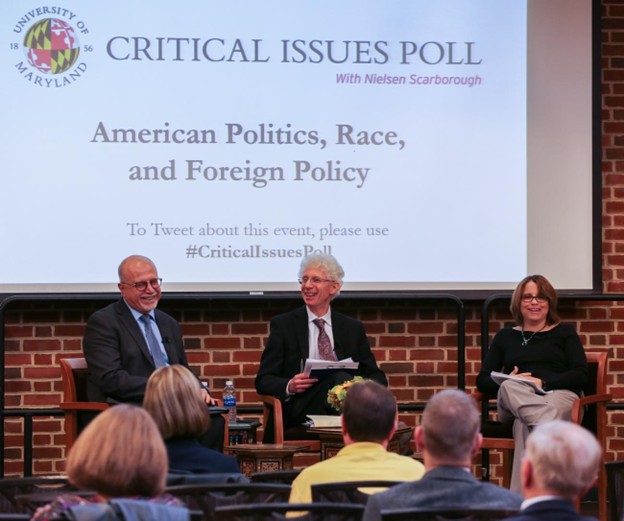
We need to keep in mind that Maryland public opinion research on the possibility of war with Iran could, in fact, change over time depending on the circumstances of such a war. More recent wartime polls suggest that disapproval has been sustained, with a Pew Research Center survey released Wednesday showing that a full 61% of Americans now disapprove of the Administration’s handling of the conflict.
Political polling aside, Shibley Telhami’s commitment to research, analysis, and conflict resolution in the Arab World and the Middle East is remarkable. He has not only influenced the thinking of innumerable students across the U.S., but he is also now helping the American public to see and understand the profound effects of U.S. public policy on the prospects for peace across the Middle East.
Telhami clearly has not forgotten his roots in a conflict-ridden Israel-Arab context and now in a broader, seemingly endless conflict-ridden Middle East challenge. His peacemaking skills are needed now perhaps more than ever.
Sources:
-“Shibley Telhami,” Wikipedia Series on Arab American,” 2026
-“Shibley Telhami Biography,” University of Maryland Department of Government and Politics,” 2026
-“Do Americans Favor Attacking Iran Under the Current Circumstances?” University of Maryland Critical Issues Poll Findings, Shibley Telhami, Principal Investigator, April 2026
John Mason, Ph.D., focuses on Arab culture, society, and history and is the author of LEFT-HANDED IN AN ISLAMIC WORLD: An Anthropologist’s Journey into the Middle East, New Academia Publishing, 2017 and of his new novel, WHISPERS FROM THE DESERT: Zaki, a Little Genie’s Tales of Good and Evil (2025), under his pen name, Yahia Al-Banna. He has taught at the University of Libya in Benghazi, Rensselaer Polytechnic Institute in New York, and the American University in Cairo. John served with the United Nations in Tripoli, Libya, and consulted extensively on socioeconomic and political development for USAID and the World Bank in 65 countries.
The views and opinions expressed in this article are those of the author and do not necessarily reflect the position of Arab America. The reproduction of this article is permissible with proper credit to Arab America and the author.