
Subscribe
to receive news by email

Poll
Will the Trump Administration Shift U.S. Policy in Favor of Palestine?
- No (86%)
- Yes (14%)
 Loading ...
Copyright © 2026 Arab America
Go topIsrael’s Avoidance Politics and the Search for a Common Future
By: Ghassan Rubeiz / Arab America Contributing Writer
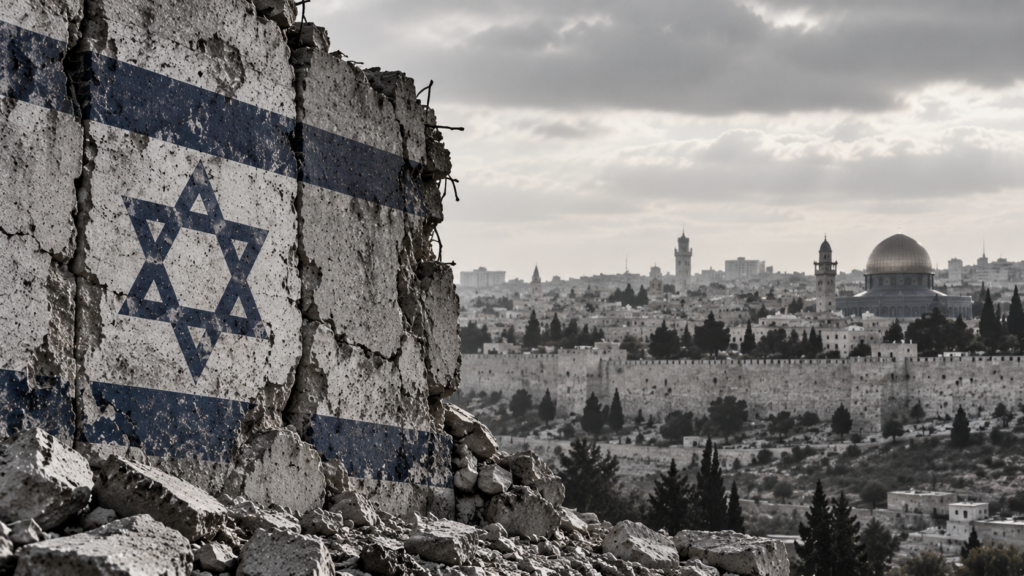
Israel enters the October 27 elections in a condition of acute psychological and political disorientation. The electorate remains deeply affected by the trauma of October 7, and public debate is narrowly focused on recovery, leadership accountability, and security reform. Issues related to occupation, Palestinian political rights, and the structural drivers of instability are largely absent. As Haaretz analyst Amos Harel observed, Israelis are “trying to feel protected again, not to understand how the protection failed,” and who bears responsibility for that failure. This encapsulates a broader national tendency to prioritize emotional reassurance over analytical inquiry.
The omission of the occupation from electoral discourse is not merely a political oversight; it reflects a profound cognitive dissonance. Israeli society continues to center its own trauma while marginalizing the conditions that contributed to the eruption of violence. Despite evidence that Netanyahu was warned about the impending attack, voters disagree about whether the primary failure lies with political leadership or intelligence institutions. But they share a near-consensus in excluding Palestinian suffering from the causal chain. Palestinian pain has been effectively eliminated from the Israeli political imagination.
This pattern suggests more than insensitivity. Many Israelis appear to view the occupation as an intractable problem. When a society perceives a conflict as unresolvable, it often resorts to avoidance mechanisms: minimizing the issue, relegating it to the background, or normalizing chronic insecurity as a permanent condition. Such avoidance carries long-term costs. Gaza remains a site of severe humanitarian violations, and intensifying settler extremism in the West Bank poses escalating risks to regional stability. The ethical and strategic implications of these developments cannot be indefinitely deferred.
Understanding this avoidance requires attention to underlying behavioral and sociopolitical dynamics. Israeli responses may reflect trauma conditioning, in which “Palestinian” becomes associated with threat. They may also reflect addiction to land grabbing. Alternatively, the paralysis may stem from living in a perpetual insecurity environment that constrains political imagination. These dynamics contribute to what might be termed a “collective amnesia” regarding Palestinian political agency. Yet diagnosing Israeli behavioral politics does not, on its own, provide Palestinians with a roadmap for advancing their national aspirations.
Palestinians may need to consider how to reintroduce the possibility of coexistence into Israeli long-term strategic thinking. Given the entrenched Israeli resistance to recognizing Palestinian statehood, Palestinians could signal that they, too, acknowledge the demise of the two-state paradigm. Extensive territorial fragmentation in the West Bank and the devastation of Gaza render a sovereign Palestinian state increasingly implausible.
Some Palestinians—and a few Israelis—are beginning to ask whether a post-election Israeli leadership could surprise the region by declaring a genuine commitment to peace with the Arab world and full acceptance of all Palestinians living between the Jordan River and the Mediterranean Sea. This idea is not entirely fanciful. On October 11, in a Word On The Street article ( What if Bibi Wins) former Israeli diplomat and peace advocate Jeremy Ben-Ami articulated a similar vision, arguing that Israel must embrace the principle that it “does not want to rule over another people forever – and that it does not want to expel them from the land.” Such statements, while aspirational, indicate that alternative thinking exists within segments of Israeli society.
A more viable long-term alternative may lie in proposing a shared political framework—potentially a binational federation developed gradually and in stages—that distributes authority across both populations and offers a sustainable democratic model. By contrast, a fragmented Palestinian state would likely be weak, unstable, and prone to border conflict.
The implications of resolving the Palestinian question extend beyond the immediate conflict. Palestine remains a central regional issue, shaped by colonial legacies and contemporary geopolitical rivalries. For Israel, political integration with Palestinians is arguably more structurally coherent than reliance on distant Gulf alliances. Regional initiatives such as the Abraham Accords have intensified geopolitical polarization and contributed to broader conflict dynamics, including confrontations involving Iran and its allies. A shared governance model in historic Palestine could serve as a stabilizing paradigm for the region.
At present, Israeli politics is not conducive to dialogue. Movement toward an alternative to the status quo is more likely to emerge from external pressures, particularly shifts in American public opinion regarding Israel’s long-term strategy and its implications for U.S. interests. Additional openings could arise from changes in political leadership in both countries, renewed cooperation between Arab Israelis and liberal Jewish parties, strengthened partnerships between Arab and Jewish civic groups in the United States, and the restoration of open intellectual debate on Middle East issues within American academic institutions. Parallel Palestinian political renewal—including leadership consolidation and articulation of a coherent vision for coexistence—would further enhance the credibility of alternative political frameworks.
Israelis may not yet be prepared to confront the full extent of Palestinian suffering. Nevertheless, Palestinians can take steps that make future engagement more conceivable. A political horizon that emphasizes shared governance rather than territorial partition may eventually allow both peoples to ask how they might construct a mutually beneficial future.
Ghassan Rubeiz is the former Middle East Secretary of the World Council of Churches. Earlier, he taught psychology and social work in his country of birth, Lebanon, and later in the United States, where he currently lives. He has contributed to political commentary for the past twenty years and delivered occasional public talks on peace, justice, and interfaith subjects. You can reach him at rubeizg@gmail.com
The views and opinions expressed in this article are those of the author and do not necessarily reflect the position of Arab America. The reproduction of this article is permissible with proper credit to Arab America and the author.
Want more articles like this? Sign up for our e-newsletter!
Check our blog here!