

Subscribe
to receive news by email

Poll
Will the Trump Administration Shift U.S. Policy in Favor of Palestine?
- No (86%)
- Yes (14%)
 Loading ...
Copyright © 2026 Arab America
Go topWhat's Next for the Student Movement for Palestine?
By: Luma Alaraje / Arab America Contributing Writer
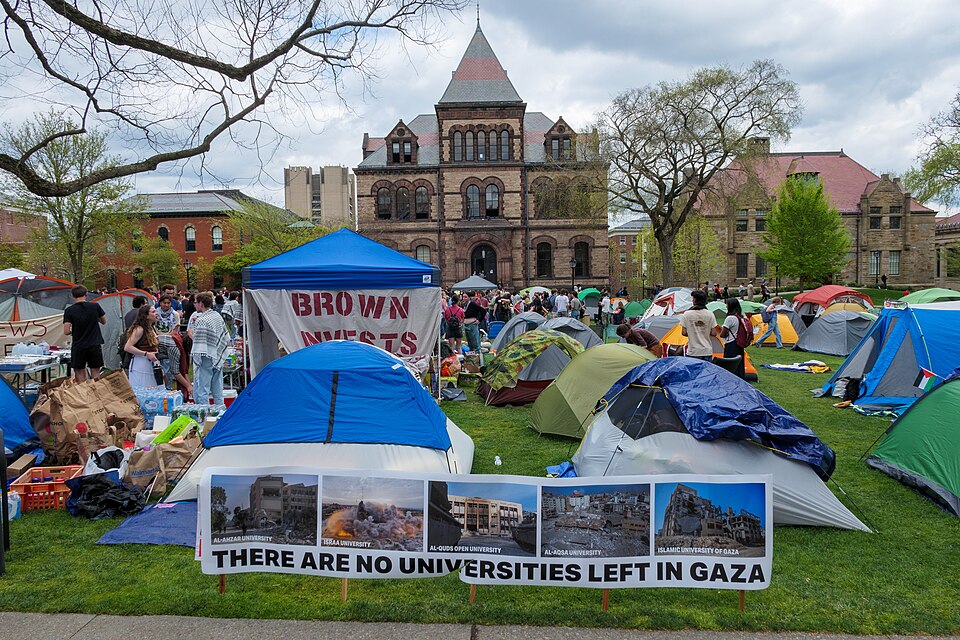
Since October 2023, students across the United States and around the world have played a significant role in organizing for Palestinian liberation. Through campus demonstrations, divestment campaigns and encampments, students have pushed their universities to address their institutional ties to Israel and the ongoing genocide in Gaza. In the spring of 2024, these demonstrations became particularly visible across American college campuses, drawing national attention to the student movement for Palestine. However, as time has passed, questions have emerged about the movement’s current state and what student organizing looks like today.
After the Encampments
The aftermath of the encampments in 2024 brought new questions about the risks of participating in student activism for Palestine. The encampments undoubtedly brought widespread attention to student demands for divestment and the larger movement, but they also brought students into direct conflict with university administrations and law enforcement. Students were arrested by law enforcement and faced academic disciplinary actions against them, for exercising their first amendment right to protest. Institutional repression became an important part of the conversations surrounding the student movement.
At The Ohio State University, these tensions became particularly visible in April 2024. On April 25, hundreds of demonstrators gathered on the university’s South Oval and set up tents as part of a pro-Palestinian encampment. Protesters called on the university to disclose and divest its investments connected to Israel. By 10 P.M. that evening, the Ohio State University PD made the decision to move in and disperse the encampment, arresting 36 protestors and charging them with criminal trespassing. The university defended its response by arguing that the encampment violated campus rules prohibiting overnight events. However, for protesters, the arrests raised questions about how their university responded when they demanded transparency and accountability. The situation at Ohio State was not an isolated incident, but rather a part of a greater trend of confrontations between university administrators and their students that continues on today.
The consequences of these confrontations also extended beyond the encampments themselves. At Ohio State, the legal process continued even after the demonstrations ended. Protesters remained facing criminal trespassing charges and awaiting court proceedings months later. The possibility of arrest and/or disciplinary action led many student organizers to factor in risk to their organizing for Palestine.
Disciplinary Actions & Policies
Some universities took disciplinary measures against their students in other ways. On campuses nationwide, there was a growing trend of revocations of students’ diplomas due to their Palestine activism. Some students experienced their degrees being withheld for their activism. Others were suspended, and even expelled, for their participation in pro-Palestine events. These actions against students made activists have to choose between their education and their right to free speech.
Furthermore, the Trump Administration threatened pro-Palestine activists with deportation, regardless of their citizenship status. Students like Mahmoud Khalil, Leqaa Kordia and many others were detained and held in ICE custody for extended periods of time. This was a directly unconstitutional policy, as decided by federal judge, Noel Wise. Regardless of this ruling, Mahmoud Khalil and other students are still facing threats to their citizenship and safety. These examples exhibit the lengths to which University and institutional repression go to ensure silence from their students.
After the encampments, universities began taking different approaches to restricting the student movement. OSU, and many other universities, amended their policies to disallow the staking of any structures into the ground, including tents. This was just one of the restrictive policies that were enacted post-encampments in an attempt to suppress student activism. The most recent restrictive policy enacted by Ohio State is one against chalking the cement, an activity done by all students, including those in the student movement. These policies continue to expand, creating further barriers for student organizers in mitigating the risks of their activism.
What’s Next?
Campus repression may have changed how students approach organizing. Arrests, disciplinary threats and conflict with university administrations have made the consequences of campus activism riskier for students. The future of the student movement depends on how students respond to these pressures. As we are continuing to see, students are coming up with ways to subvert restrictive policies, to continue holding their institutions accountable and to ensure that their advocacy is not going unheard. The encampments may have marked a particularly visible moment in the movement, but they were never the only measure of its strength. The student movement may not consistently take shape of large demonstrations as it did in 2024, but in nevertheless continues on through students at every university, despite institutional repression.
Want more articles like this? Sign up for our e-newsletter!
Check our blog here!